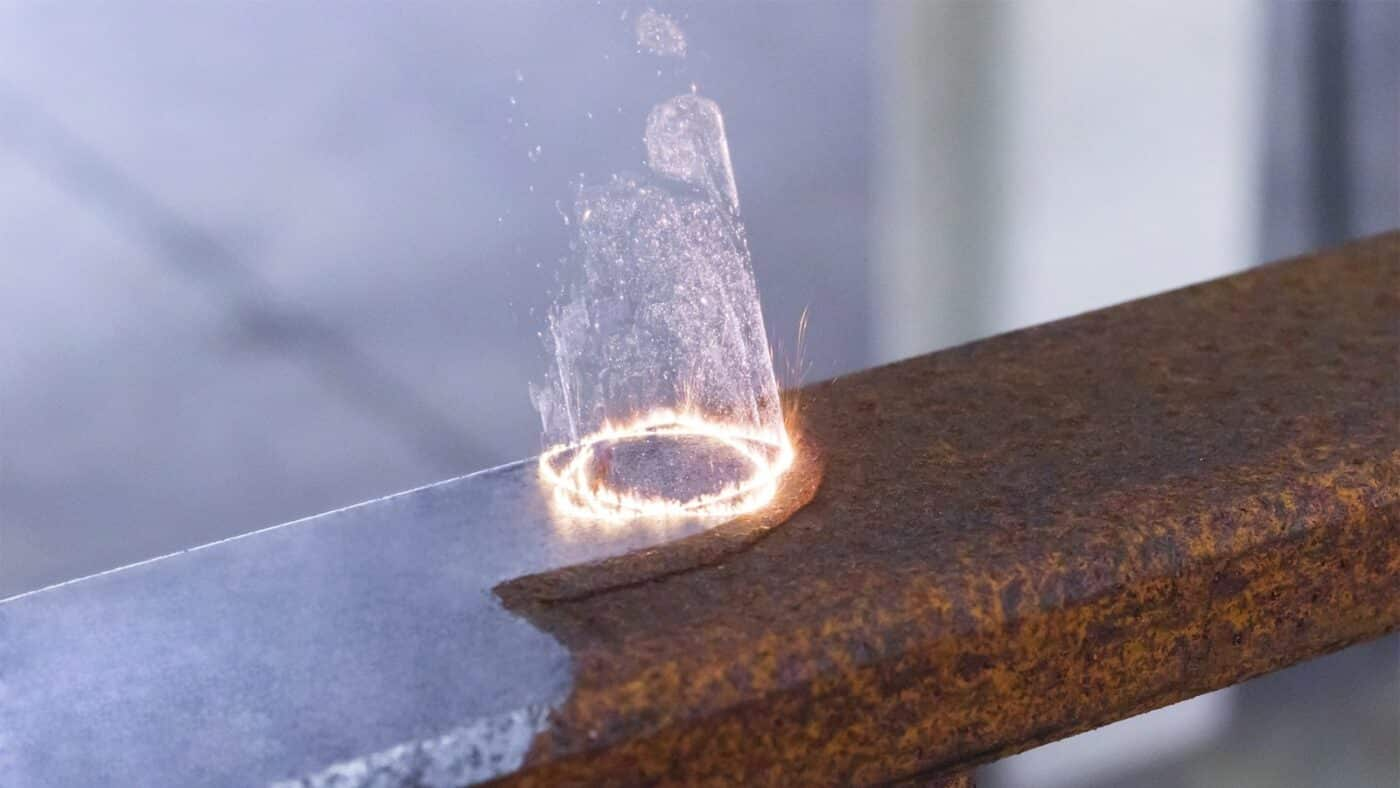
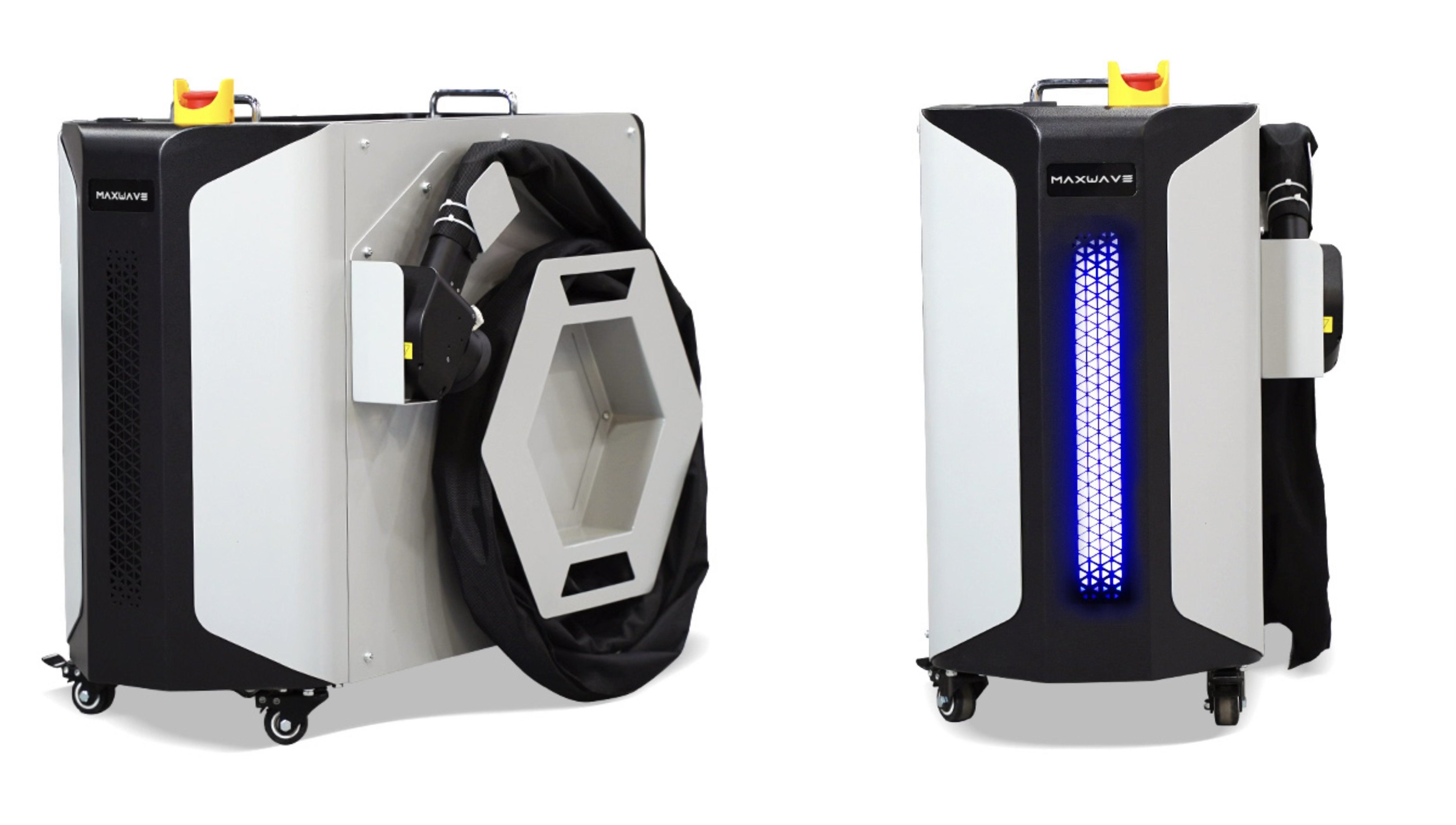
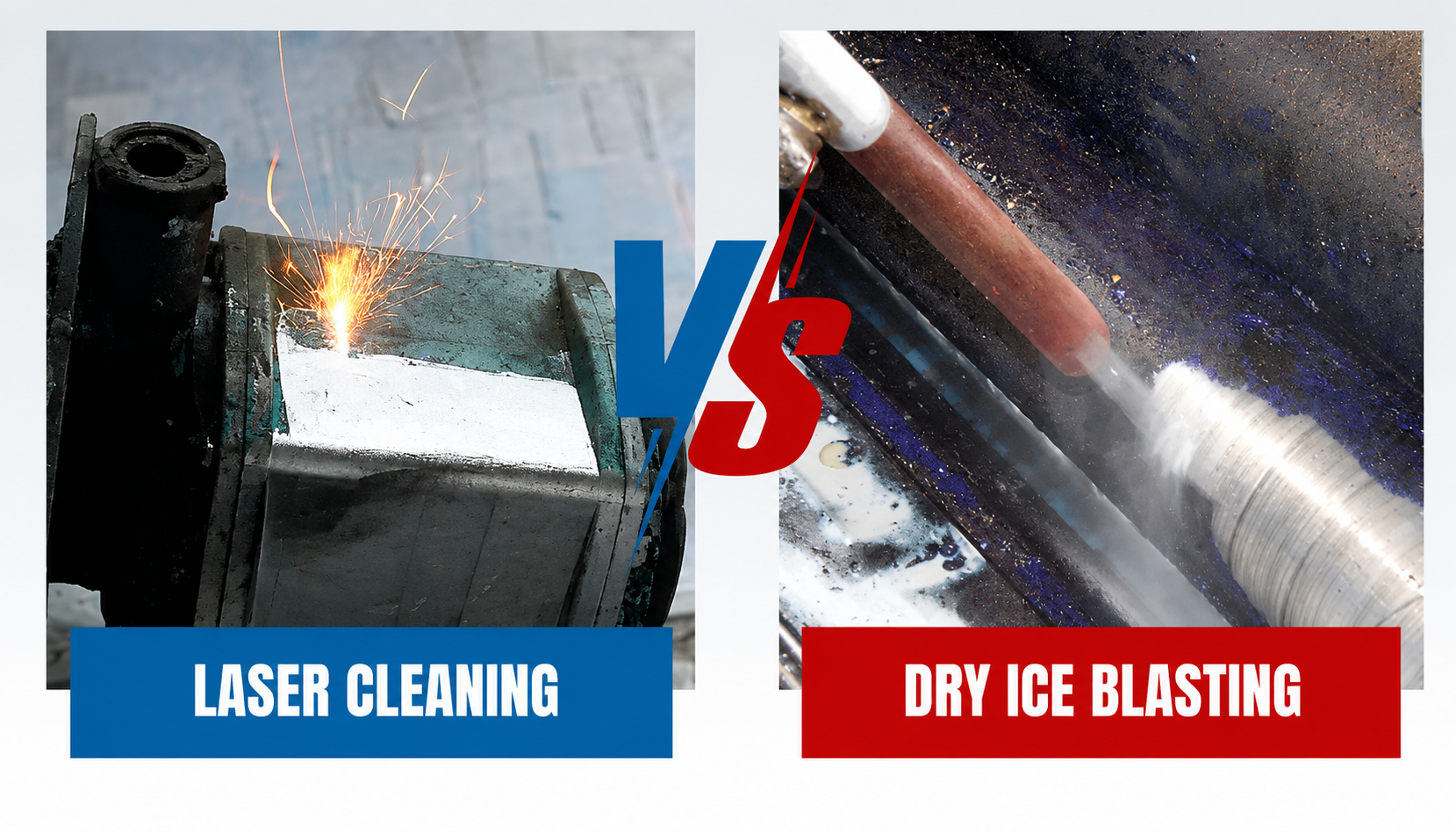
Choosing a laser cleaner should not begin with the highest wattage you can afford.
A 200W pulsed laser may be a better choice than a 1000W continuous-wave machine for automotive panels, precision molds, aluminum parts, and delicate coatings. A 1500W or 3000W continuous-wave laser may be far more productive when removing heavy rust or paint from thick structural steel.
The correct power depends on four practical factors:
The base material, the type of contamination, the acceptable level of heat input, and the amount of surface you need to clean each day.
Wattage matters, but it is only one part of the process. Pulse duration, pulse energy, scan width, scan speed, beam quality, focus, and the number of passes also affect cleaning speed and substrate protection. Laser-cleaning parameters must be optimized for the actual material and coating rather than selected from wattage alone.
Laser Cleaner Wattage at a Glance
Laser Power | Recommended Type | Best For | Main Limitation |
|---|---|---|---|
100W pulsed | Nanosecond pulsed | Precision cleaning, light oxide, small molds, delicate parts | Slow on thick rust and large areas |
200W pulsed | Nanosecond or MOPA pulsed | Automotive panels, weld preparation, oil, light rust and paint | Limited bulk-removal speed |
300W pulsed | Pulsed fiber | General workshop cleaning, molds, paint, medium rust | Higher cost than low-power CW systems |
500W pulsed | High-energy pulsed | Larger molds, stubborn coatings, higher daily workload | Still slower than CW on large steel surfaces |
1000W pulsed | Industrial pulsed | Fast, controlled coating removal and automated precision cleaning | Expensive and often unnecessary for small shops |
1000–1500W CW | Continuous wave | Heavy rust and paint on thick carbon steel | Greater heat input and less suitable for delicate parts |
2000W CW | Continuous wave | Tanks, beams, machinery and large industrial surfaces | Requires stronger cooling, power and fume control |
3000W CW | Continuous wave | Shipyards, bridges and high-volume infrastructure cleaning | Excessive for most workshops and precision work |
The most common buying mistake is comparing a pulsed laser and a CW laser only by their wattage. A 500W pulsed cleaner and a 500W CW cleaner are different tools designed for different jobs.
First Decide: Pulsed or Continuous Wave?
Before choosing between 100W and 3000W, decide how the laser energy should be delivered.
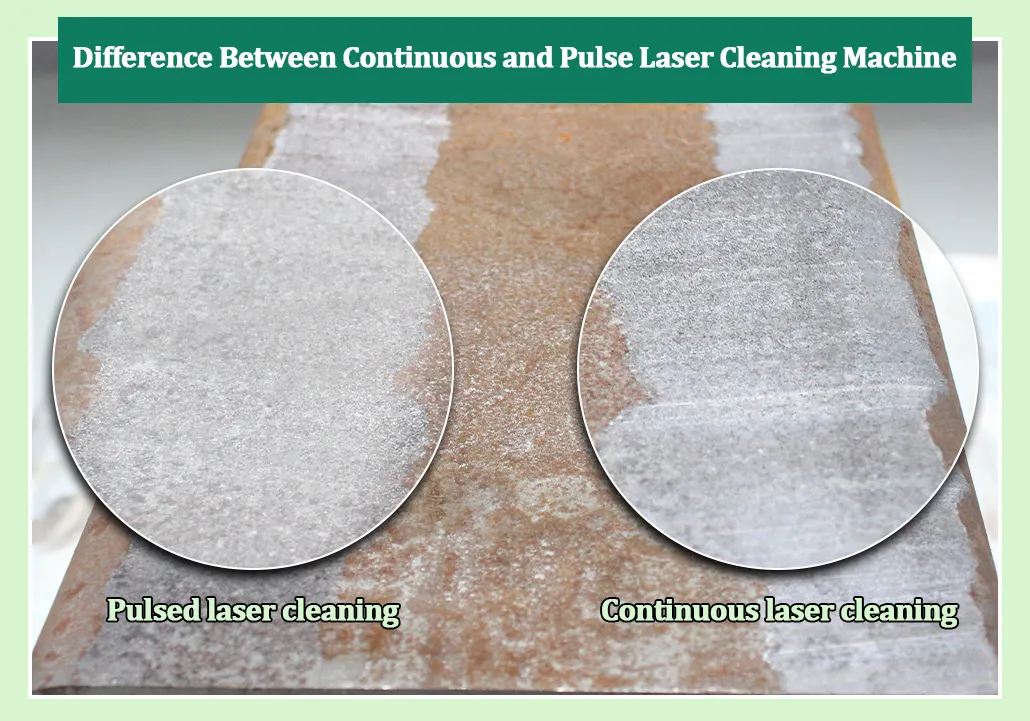
Pulsed Laser Cleaning
A pulsed laser releases energy in short bursts. These pulses can produce high peak power while keeping average heat input more controlled.
That makes pulsed systems easier to use when the contamination must be removed without significantly changing the substrate underneath. Nanosecond pulsed fiber lasers are widely used for precision cleaning, coating removal, surface preparation, marking, and texturing.
Pulsed cleaning is generally the better choice for:
Thin metal;
Aluminum and copper;
Automotive panels;
Precision molds;
Sensitive machined surfaces;
Localized paint removal;
Welding and bonding preparation;
Restoration and conservation work.
Its main disadvantage is cost. A pulsed laser source is usually more expensive than a CW source with the same average wattage.
Continuous-Wave Laser Cleaning
A continuous-wave laser delivers a steady stream of energy.
This makes it effective for fast bulk removal on materials that can tolerate sustained heat, particularly thick carbon steel, structural components, industrial machinery, and large-area rust removal.
CW systems normally offer more cleaning power for the purchase price, but their continuous heat input increases the risk of discoloration, melting, warping, or changing the surface finish when parameters are too aggressive.
Choose pulsed when substrate protection and process control are the priority. Choose CW when the part is robust and large-area productivity matters more.
What Actually Determines the Wattage You Need?
1. Base Material
The substrate sets the first limit.
Thin sheet metal, polished molds, aluminum, copper, precision components, and heritage materials usually need tighter heat control. For these applications, a pulsed system is normally safer than a high-power CW machine.
Thick carbon steel, cast iron, large beams, storage tanks, and heavy machinery can tolerate more sustained energy. These are the applications where 1000W to 3000W CW systems become practical.
Material thickness also matters. A power level that works safely on a thick steel plate may distort a thin automotive panel.
2. Contamination Type
A thin oxide film is not the same job as heavy pitted rust.
Light contamination includes oil, grease, soot, light oxidation, welding discoloration, and thin surface residue.
Medium contamination may include normal workshop rust, carbon buildup, release agents, and one or two layers of paint.
Heavy contamination includes thick rust, mill scale, marine coatings, industrial epoxy, and multiple coating layers.
The stronger and thicker the contamination, the more energy or additional passes will normally be required. However, increasing wattage is not always the answer. Laser mode, pulse duration, scan speed, and beam profile can change laser cleaning quality even when average power remains the same. In one published application test, a 500W single-mode laser produced cleaner epoxy removal than a 1000W multimode system, although the 1000W system removed material faster.
3. Required Surface Finish
Some jobs only require visible rust removal. Others require a controlled surface for welding, bonding, painting, or coating.
A precision application may need to preserve mold texture, dimensions, or existing surface roughness. In that case, control is more important than maximum speed.
A fabrication shop preparing thick steel before welding may accept a more aggressive process if it removes rust quickly and produces a repeatable surface.
Define the required finish before choosing the power.
4. Daily Workload
Cleaning a few weld seams each day is different from processing an entire storage tank.
Low-volume repair work favors portability and control. High-volume industrial work requires a larger scan width, longer duty cycle, better cooling, and a higher-power source.
Buy for your realistic daily workload, not the largest project you might receive once a year.
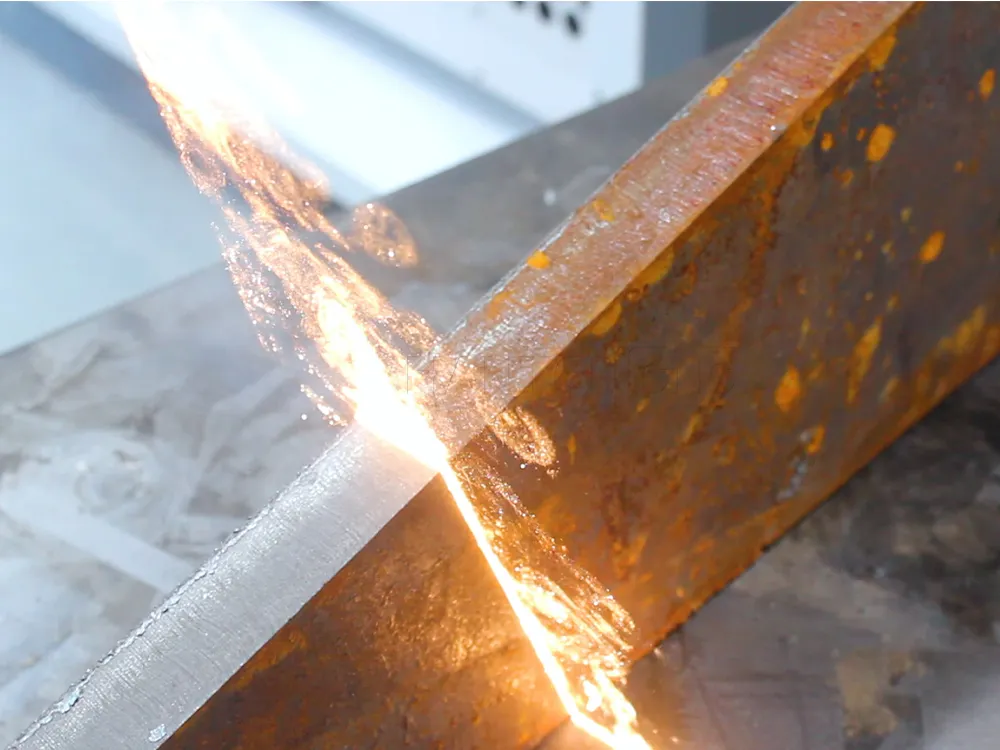
100W Pulsed Laser Cleaner: Best for Precision Work
Best for: Light oxide, oil, soot, small molds, electronic components, fine tooling, restoration, and localized cleaning.
A 100W pulsed machine is not simply a weak laser cleaner. It is a precision tool.
Low-power short-pulse systems can achieve high peak pulse power while controlling average heat input. Commercial low-power cleaning systems are commonly offered for small surfaces and gentle processing, with official product ranges extending from approximately 12W to 200W.
Choose 100W when the cleaning area is small, the substrate is valuable, and removing too much material would be more costly than working slowly.
Main limitation: It is inefficient for heavy rust, thick paint, large frames, and production work requiring several square meters per hour.
200W Pulsed Laser Cleaner: Best for Automotive and Light Industrial Cleaning
Best for: Automotive panels, weld seams, light rust, thin paint, oil, grease, small molds, and maintenance work.
A 200W pulsed cleaner offers more practical production speed than a 100W system while maintaining good control over heat-sensitive components.
It is a strong starting point for body shops, repair companies, maintenance contractors, and businesses that work on a mixture of thin steel, aluminum, and precision parts.
A portable 200W laser cleaning machine can also be easier to move between customer sites than a higher-power water-cooled industrial system.
Main limitation: It may require several passes on thick coatings and is not designed for rapid cleaning of large structural steel surfaces.
300W Pulsed Laser Cleaner: Best General-Purpose Pulsed Option
Best for: Medium rust, paint removal, automotive chassis, molds, machinery, weld preparation, and mixed workshop projects.
For many small and midsize industrial users, 300W is one of the most versatile pulsed power levels.
It provides enough output for practical rust and coating removal while retaining the control needed for molds, machined parts, and moderate-sensitivity substrates.
Commercial short-pulse systems in the 150W to 600W class are used for mold cleaning, lubricant removal, partial paint stripping, surface preparation, and restoration.
Choose 300W when your projects vary and you need one machine to handle more than light precision cleaning.
Main limitation: It remains a controlled-cleaning machine rather than a high-speed solution for ship plates, bridges, or heavily corroded large structures.
500W Pulsed Laser Cleaner: Best for Higher Workshop Throughput
Best for: Larger molds, stubborn coatings, heavier rust, industrial maintenance, production fixtures, and repeated daily cleaning.
A 500W pulsed cleaner increases productivity without giving up the main advantage of pulsed technology: concentrated energy with controlled heat input.
It is useful when a 200W or 300W system can achieve the required result but would take too long across the expected daily workload.
This power level also suits automated cells and production lines where cleaning quality and cycle time must remain consistent.
Main limitation: High-power pulsed systems are significantly more expensive than 1000W or 1500W CW machines. Buyers should only pay the premium when substrate protection or surface quality requires pulsed operation.
1000W Laser Cleaner: Confirm Whether It Is Pulsed or CW
A 1000W quotation is incomplete unless the supplier states the laser mode.
1000W Pulsed
Best for: High-speed precision coating removal, large molds, automated surface preparation, aerospace components, and industrial processes that need both control and productivity.
High-power pulsed systems can increase processing speed while preserving selective removal and a relatively narrow heat-affected area. Industrial pulsed cleaning and texturing systems are available at powers reaching 2000W for demanding production applications.
A 1000W pulsed cleaner is usually an industrial investment rather than a general repair-shop machine.
1000W CW
Best for: Rust, paint, oil, and coatings on thick steel structures, fabrication equipment, machinery frames, and large workshop parts.
A 1000W CW cleaner is often the entry point for bulk industrial rust removal. It provides higher area coverage than low-power pulsed equipment and normally costs much less than a 1000W pulsed system.
Main limitation: It is not the best choice for thin automotive panels, polished molds, delicate aluminum, or components where surface finish must remain unchanged.
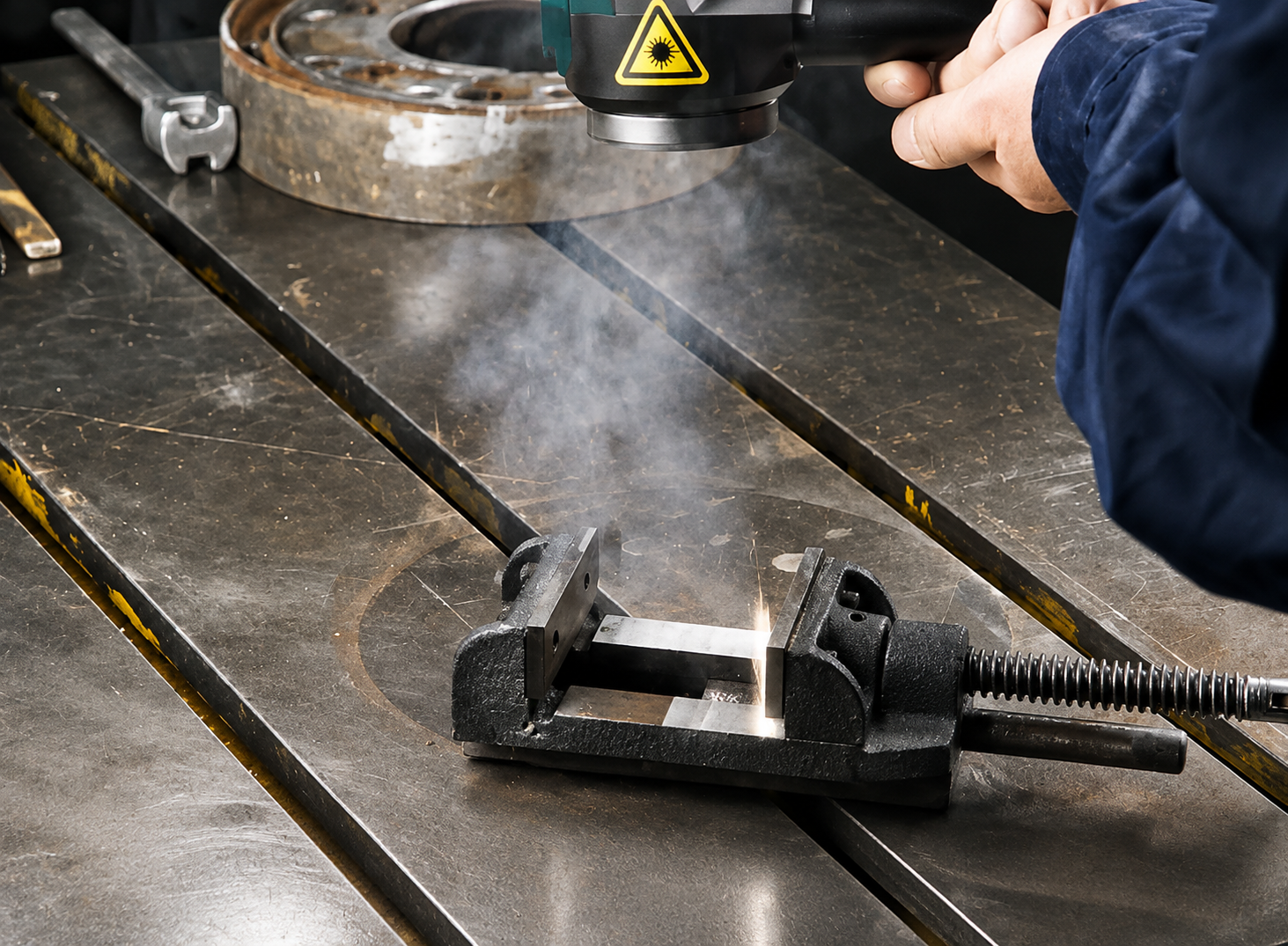
1500W CW Laser Cleaner: Best All-Round Industrial CW Option
Best for: Heavy machinery, steel frames, pipelines, storage tanks, fabrication shops, and contractor work.
A 1500W CW laser cleaner provides a useful balance between productivity, equipment size, and power consumption.
It is more suitable than a 1000W system when the contamination is heavier, the scan area is larger, or the operator must complete regular commercial rust-removal projects.
For many industrial cleaning contractors, 1500W is a practical middle ground: more productive than entry-level CW equipment without moving immediately to the infrastructure and heat input of a 3000W system.
Main limitation: It still requires careful parameter control on thinner steel and coated surfaces.
2000W CW Laser Cleaner: Best for Large Steel Components
Best for: Large tanks, structural beams, railway components, industrial machinery, heavy rust, and thick paint on robust steel.
At 2000W, the laser cleaner becomes a high-throughput industrial tool.
It is appropriate when surface area and project speed justify the extra power. High-power commercial cleaning systems are used for large-area processing and are available at powers up to approximately 2000W and beyond.
The complete system—not only the laser source—must be sized correctly. Cooling capacity, electrical supply, scan head, fiber length, extraction, and operator protection all become more important.
Main limitation: Using a 2000W CW machine for occasional small jobs may increase capital cost, power requirements, and heat risk without creating meaningful productivity gains.
3000W CW Laser Cleaner: Best for Heavy Infrastructure
Best for: Shipyards, bridges, large steel structures, industrial refurbishment, heavy mill scale, and continuous large-area cleaning.
A 3000W CW laser cleaner is designed for projects where production speed is the main priority and the substrate is thick enough to tolerate sustained energy.
It can support wider scanning, faster travel, and large daily coverage when integrated with the correct cooling and fume-extraction system.
This tier is usually appropriate for established industrial contractors, shipbuilding operations, infrastructure maintenance, and automated or semi-automated production—not first-time buyers handling occasional rust removal.
Main limitation: It offers little benefit when most work involves small parts, thin materials, precision surfaces, or limited monthly volume.
Which Wattage Fits Your Application?
Application | Recommended Starting Range |
|---|---|
Historical objects and delicate surfaces | 50–100W pulsed |
Small molds, oil and light oxide | 100–200W pulsed |
Automotive panels and weld preparation | 200–300W pulsed |
General mold, paint and workshop cleaning | 300–500W pulsed |
High-volume precision coating removal | 500–1000W pulsed |
Heavy rust on thick workshop steel | 1000–1500W CW |
Tanks, beams and large machinery | 1500–2000W CW |
Shipyards, bridges and infrastructure | 2000–3000W CW |
These are starting ranges, not guaranteed final selections.
A supplier should still test the actual part, contamination, and required finish before recommending a production parameter set.
Common Wattage Selection Mistakes
Choosing wattage before choosing laser mode. A high-power CW machine cannot automatically replace a lower-power pulsed cleaner when the substrate is heat-sensitive.
Buying for theoretical maximum demand. A 3000W system that runs at reduced output most of the year may produce a worse return than a properly utilized 1000W or 1500W system.
Ignoring pulse energy and beam quality. Two pulsed cleaners with the same average wattage can produce different cleaning speed and surface quality.
Using generic speed claims. Cleaning speed changes with coating thickness, rust condition, scan width, overlap, number of passes, and required finish.
Skipping sample testing. Even experienced laser manufacturers use application testing to determine the correct process window. IPG recommends sending a sample or application details to an application laboratory before finalizing a cleaning system.
What Should You Verify Before Buying?
Before ordering a laser cleaner, provide the supplier with photographs and, when possible, an actual sample.
The test should use your substrate, contamination, thickness, and required finish. Ask the supplier to record the laser type, average power, pulse parameters, scan width, scan speed, number of passes, cleaning time, and condition of the substrate after cleaning.
Also confirm the machine’s cooling system, electrical requirements, cleaning-head weight, fiber length, fume-extraction needs, laser safety package, warranty, spare-parts prices, and technical support.
A successful test on your own part is more valuable than any generic wattage chart.
Conclusion
The correct laser-cleaner wattage depends on the job—not on which machine has the largest number on its nameplate.
Choose 100W to 300W pulsed for precision parts, automotive panels, molds, thin metal, and applications where substrate protection matters most.
Choose 300W to 1000W pulsed when you need more production speed but still require controlled coating removal and a high-quality surface.
Choose 1000W to 3000W CW for thick steel, heavy rust, paint, machinery, tanks, shipbuilding, and large-area industrial cleaning where throughput is the priority.
Most importantly, do not confuse average wattage with cleaning capability.
The best laser cleaner is the lowest power system that can achieve the required finish at your target production rate without damaging the part.
Not sure which power level fits your application? Send LaserCleanerPro photos or samples of the part, along with the base material, contamination type, approximate thickness, and daily workload. The engineering team can test the application and recommend a suitable pulsed or CW laser cleaner before you purchase.