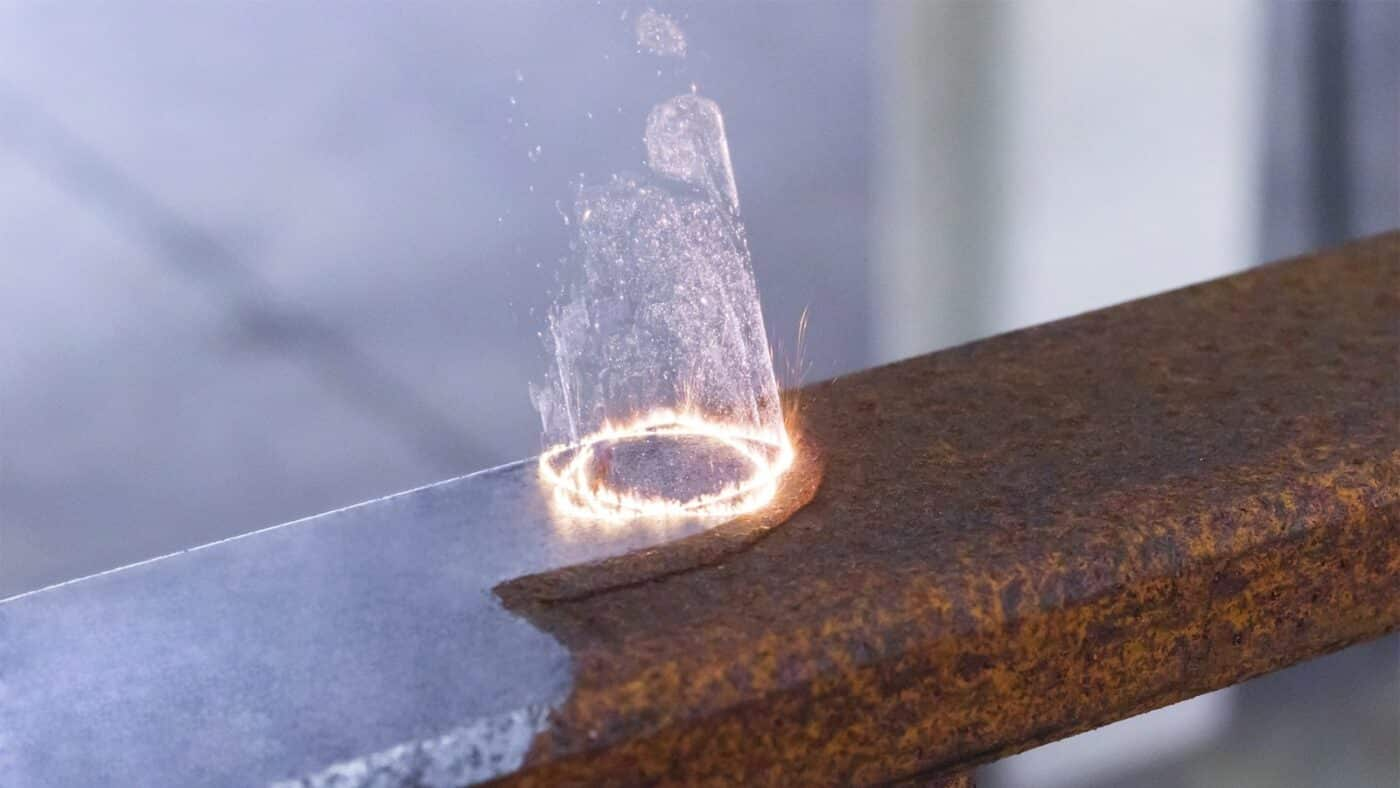
Pulsed and continuous-wave laser cleaning machines can both remove rust, paint, oxide, oil, and other surface contamination. However, they do not remove material in the same way, and they are not designed for the same types of work.
Pulsed laser cleaning is generally better for thin metal, precision parts, molds, automotive panels, aluminum, and applications where protecting the substrate is the main priority.
Continuous-wave laser cleaning is generally better for thick carbon steel, heavy rust, large structures, and industrial projects where cleaning speed and area coverage matter most.
The right choice should not be based on wattage alone. A 300W pulsed laser and a 1500W continuous-wave machine may both remove rust, but their speed, heat input, purchase cost, and effect on the underlying material will be very different.
This guide compares the two technologies and explains which one is better for automotive repair, mold cleaning, structural steel, heavy equipment, shipyards, and general rust-removal businesses.
Pulsed vs. Continuous Laser Cleaning at a Glance
Comparison Factor | Pulsed Laser Cleaner | Continuous-Wave Laser Cleaner |
|---|---|---|
Energy delivery | Short, high-peak-power pulses | Continuous energy output |
Common power range | Approximately 50W–1000W+ | Approximately 1000W–3000W+ |
Best for | Precision cleaning and sensitive materials | Large-area industrial rust removal |
Heat input | Easier to control | Higher and more continuous |
Cleaning speed | Slower on large, heavily rusted surfaces | Faster on thick steel and broad surfaces |
Surface control | Better for selective, layer-by-layer removal | Better for aggressive bulk removal |
Typical materials | Thin steel, aluminum, molds, precision components | Thick carbon steel, beams, tanks and machinery |
Purchase price | Usually higher per watt | Usually lower per watt |
Main advantage | Protects the substrate and surface detail | Higher throughput and lower labor cost at scale |
Main limitation | Slower and more expensive for large areas | Greater risk of heat damage on sensitive parts |
Neither technology is universally better. Pulsed lasers prioritize control, while continuous-wave lasers prioritize production speed.

How Does Pulsed Laser Cleaning Work?
A pulsed laser releases energy in very short bursts rather than as a constant beam.
Each pulse can produce high instantaneous peak power, allowing the rust or coating to absorb enough energy to crack, vaporize, or separate from the substrate. Between pulses, there is a short interval in which heat can dissipate.
This energy pattern makes pulsed cleaning easier to control on materials that may warp, discolor, soften, or lose dimensional accuracy under sustained heat.
The operator can adjust parameters such as pulse width, pulse frequency, scan speed, beam overlap, focus, and output power to remove contamination gradually.
This makes pulsed laser cleaning especially useful when the objective is not simply to expose clean metal, but to remove contamination while preserving the original surface geometry and finish.
Main Advantages of Pulsed Laser Cleaning
Pulsed lasers provide strong control over heat input and material removal. They can clean around edges, engraved details, mold cavities, narrow weld zones, and other areas where an aggressive continuous beam could damage the part.
They are also suitable for selective coating removal. An operator may remove rust or paint from one area while leaving a nearby coating, surface treatment, or precision feature largely unaffected.
Portable air-cooled pulsed systems are available at lower power levels, making them practical for repair shops and mobile contractors.
Main Limitations of Pulsed Laser Cleaning
The main disadvantage is productivity on large surfaces.
A low- or medium-power pulsed machine may clean an automotive panel, mold, or local rust patch efficiently, but it can become too slow for hundreds of square meters of structural steel.
Pulsed laser sources also tend to cost more than continuous-wave sources with the same average wattage.
You are paying for process control and substrate protection—not simply for raw removal speed.
How Does Continuous-Wave Laser Cleaning Work?
A continuous-wave, or CW, laser delivers a steady stream of energy to the surface.
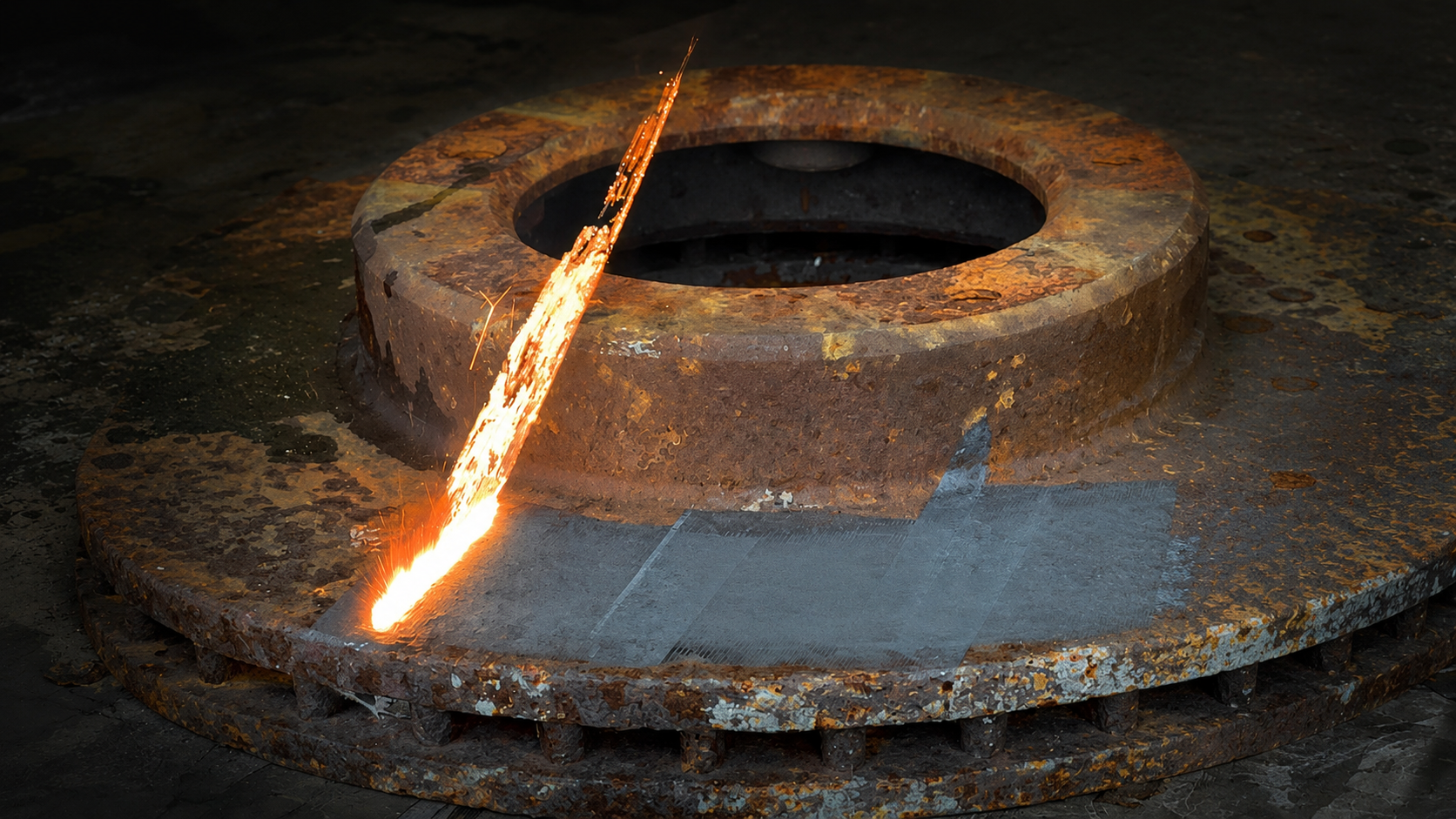
This sustained energy heats and breaks down rust, paint, oxide, and other contamination over a wider area. When used on thick, heat-tolerant steel, a CW laser can remove large amounts of material much faster than a lower-power pulsed system.
Continuous-wave laser cleaners are commonly available in 1000W, 1500W, 2000W, and 3000W configurations.
They are often used for industrial equipment, structural steel, storage tanks, pipelines, railway components, heavy machinery, bridges, and shipbuilding.
Main Advantages of Continuous-Wave Laser Cleaning
The strongest advantage is throughput.
A high-power CW system can cover more surface area during a shift, reducing labor time and project duration. This can significantly lower the cleaning cost per square meter when the work involves large, repetitive steel surfaces.
CW laser sources also provide more wattage for the purchase price than high-power pulsed sources.
For contractors cleaning heavy rust from thick steel, this combination of lower equipment cost per watt and higher area coverage can create a stronger return on investment.
Main Limitations of Continuous-Wave Laser Cleaning
Continuous energy creates more sustained heat in the workpiece.
If the material is thin, polished, heat-sensitive, or dimensionally critical, incorrect parameters may cause discoloration, roughening, warping, melting, or changes in the original surface condition.
This does not mean CW cleaning always damages the material. Scan speed, focus, beam width, power, and operator technique can all reduce heat input.
However, the process window is less forgiving on thin or valuable components than it is on thick structural steel.
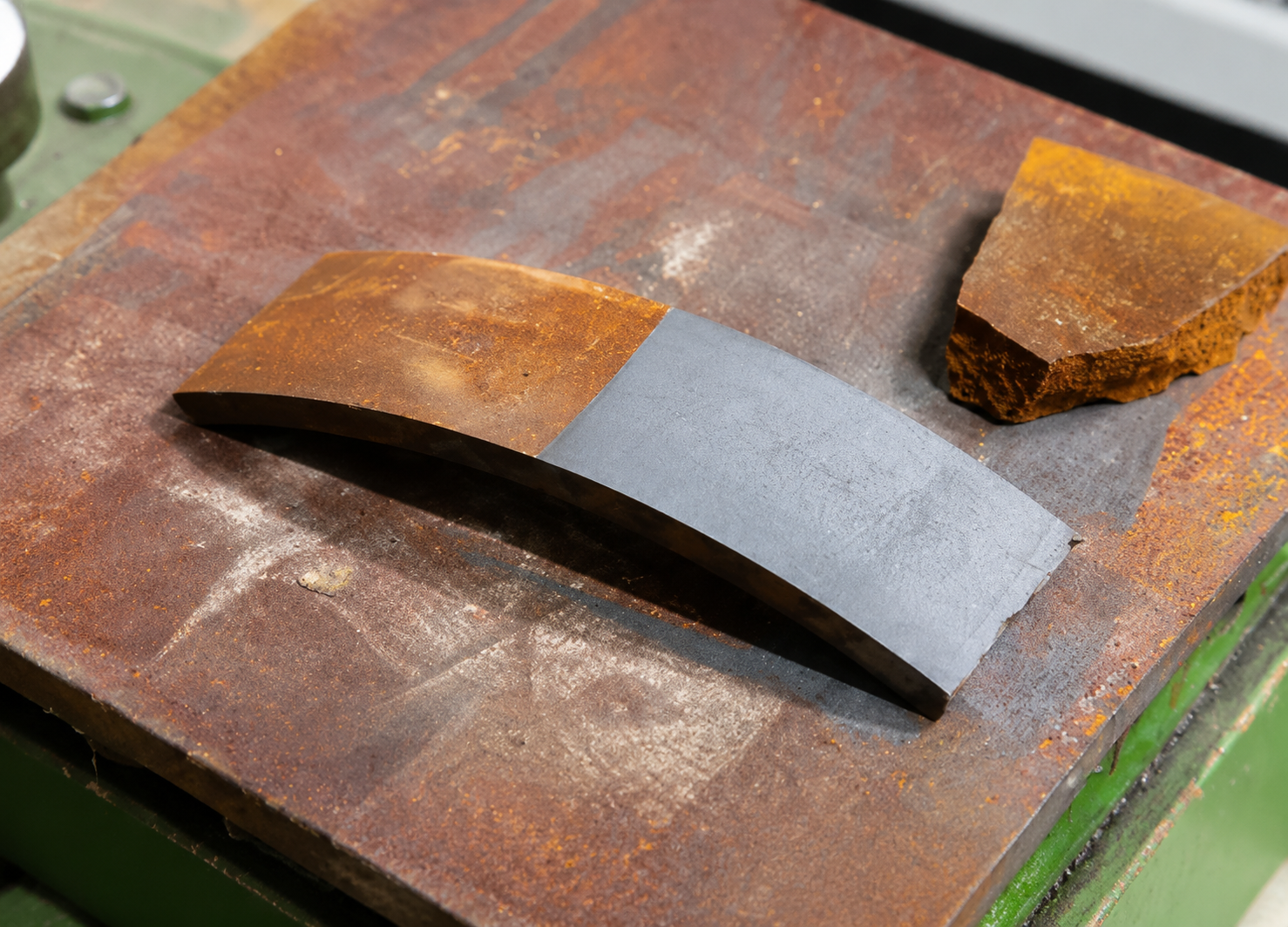
Why You Should Not Compare Pulsed and CW Lasers by Wattage Alone
A 500W pulsed cleaner and a 500W CW laser cleaner machine do not behave like two versions of the same machine.
The wattage figure generally describes average power. It does not fully describe pulse energy, peak power, beam quality, pulse duration, scan pattern, or energy density at the surface.
A pulsed laser may deliver concentrated energy during each pulse and then stop briefly. A continuous-wave laser delivers its rated energy without the same cooling interval.
As a result, two machines with similar average power may have very different cleaning speed and substrate effects.
When comparing quotations, confirm:
Whether the laser is pulsed or continuous wave;
Average power;
Pulse energy and pulse-width range for pulsed systems;
Beam mode and scan width;
Cleaning speed under stated test conditions;
The material and contamination used during the test;
The condition of the substrate after cleaning.
A supplier who compares a pulsed and CW machine using only watts is not giving you enough information to make a reliable decision.
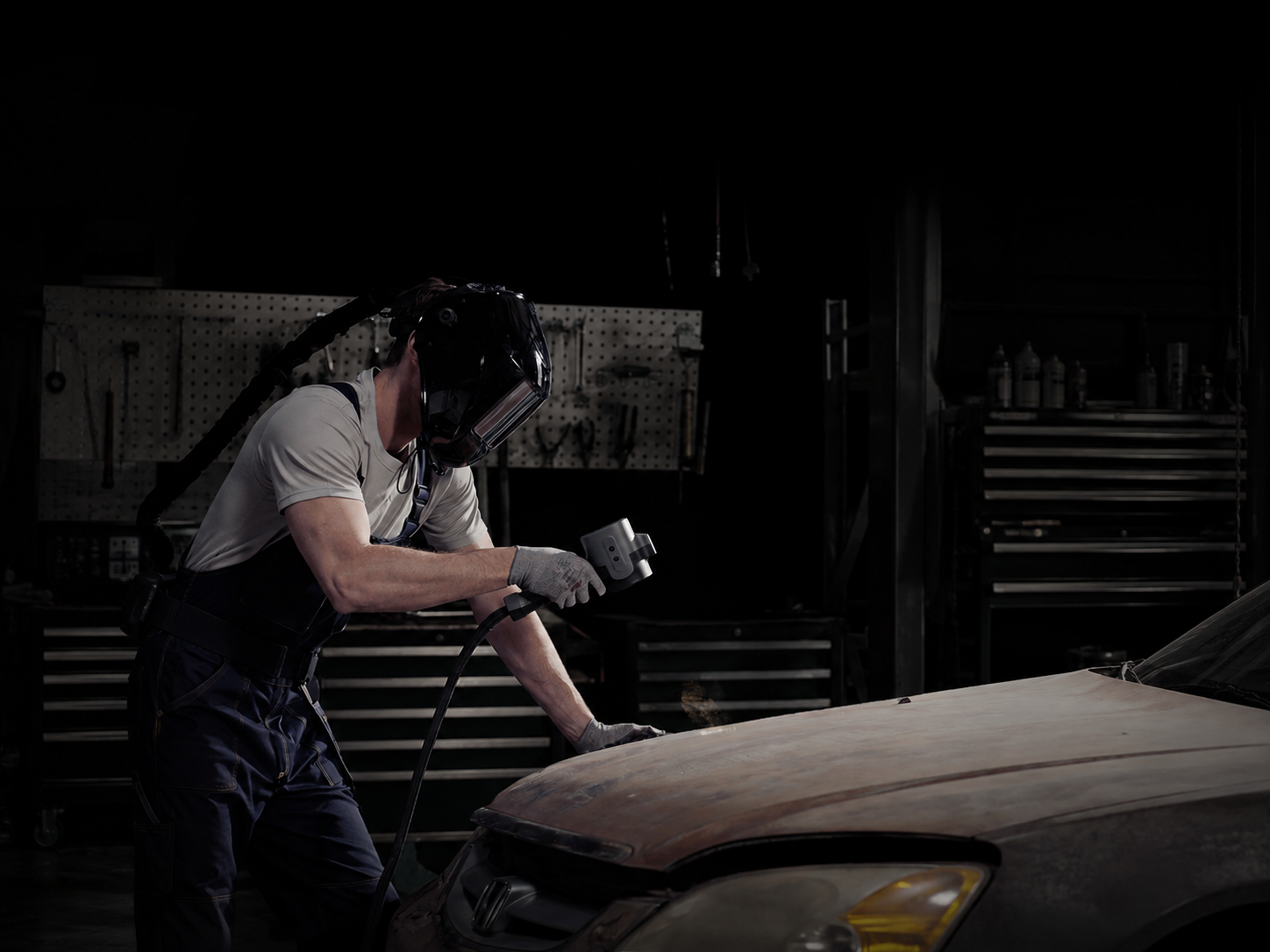
Which Is Better for Light Rust and Thin Metal?
Pulsed laser cleaning is normally the safer choice.
Thin automotive panels, stainless sheets, aluminum components, copper parts, and polished surfaces can react quickly to sustained heat.
A pulsed machine allows the operator to remove light rust, oxidation, oil, or thin paint with more control over the underlying material.
This makes it suitable for:
Classic car restoration;
Body-panel repair;
Welding preparation on thin sheet;
Aluminum and stainless components;
Localized corrosion;
Painted parts requiring selective removal.
The objective in these projects is usually not maximum square meters per hour. It is achieving a clean surface without distortion, heat marks, or unnecessary surface roughness.
A CW machine may still be used on thicker hidden automotive structures or robust steel sections, but it requires careful parameter control.
For visible thin panels, a pulsed system generally provides the lower-risk process.
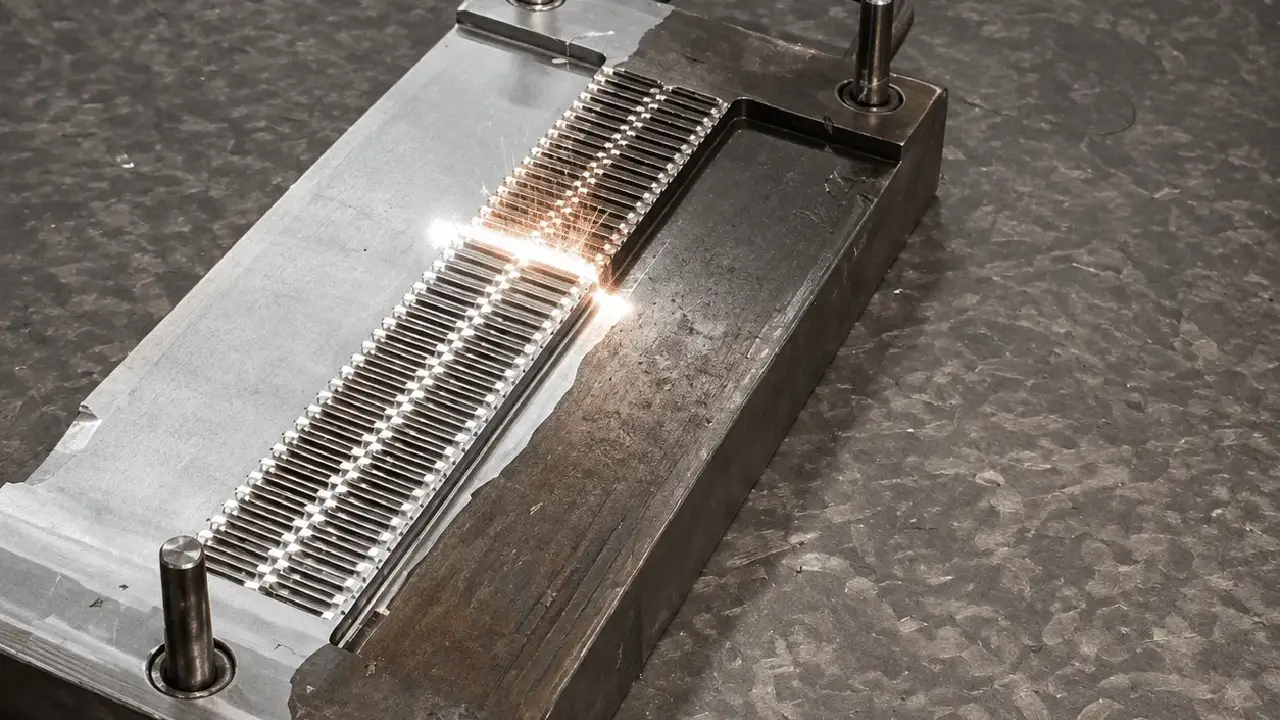
Which Is Better for Precision Molds and High-Value Components?
Pulsed laser cleaning is usually the better option.
Injection molds, tire molds, dies, tools, aerospace components, and precision mechanical parts may contain small grooves, engraved details, polished areas, and tight dimensional tolerances.
Aggressive cleaning can alter those features even when the part appears visually clean.
Pulsed cleaning can remove carbon deposits, release agents, oxidation, oil, and coating residue in a more controlled way. The operator can adjust the process to follow detailed geometry without introducing abrasive media or excessive thermal load.
This makes it useful when replacing the component would cost much more than the additional cleaning time.
For these applications, the supplier should demonstrate not only contamination removal but also the condition of the mold texture and dimensions after cleaning.
The best result is not simply a clean mold—it is a clean mold that still produces the same part.
Which Is Better for Heavy Rust on Structural Steel?
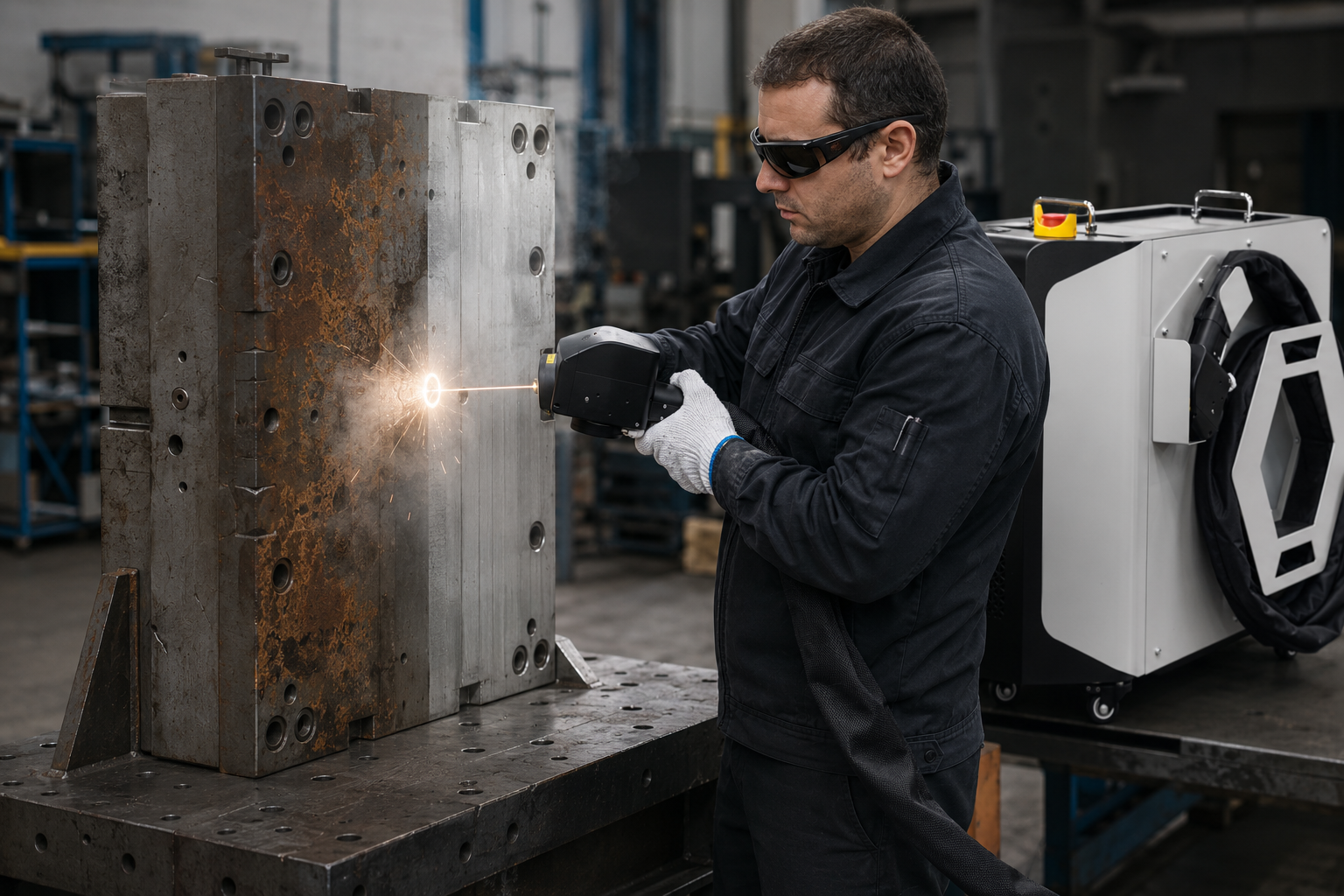
Continuous-wave cleaning is usually the more productive choice.
Warehouse beams, steel frames, machinery bases, bridge components, ship plates, and storage tanks often contain thick rust, old coatings, mill scale, and corrosion spread across large areas.
A low-power pulsed cleaner may eventually remove the contamination, but the number of passes and labor hours can make the project commercially impractical.
For heavy-duty rust remove projects, a 1000W to 3000W CW laser cleaner can provide much higher area coverage on thick carbon steel, particularly when productivity matters more than preserving a highly refined surface finish.
This makes CW equipment suitable for:
Steel fabrication;
Heavy equipment maintenance;
Railway frames;
Storage tanks;
Pipelines;
Bridges;
Shipyards;
Large industrial refurbishment.
The substrate should still be monitored for heat, discoloration, and unwanted changes in surface roughness.
CW is the better choice when the material is robust and labor hours—not microscopic surface preservation—drive the project cost.
Which Is Better for Paint and Rust Together?
The answer depends on the material underneath and the required finish.
When several layers of paint, primer, rust, oil, and residue are present on thick structural steel, CW cleaning may remove the complete stack faster.
When the substrate is thin, galvanized, polished, or located near heat-sensitive components, pulsed cleaning provides more selective control.
For industrial paint remove projects involving thin, galvanized, polished, or heat-sensitive materials, pulsed cleaning usually provides better control and a lower risk of substrate damage. It may also be preferable when one coating layer must be removed while another coating or surface treatment remains intact.
Before selecting the machine, identify:
The number and type of coating layers;
Approximate coating thickness;
Rust severity beneath the coating;
Base material and thickness;
Nearby rubber, plastic, seals, wiring, or sensitive components;
Required surface condition after cleaning.
Mixed paint and rust can generate substantial fumes, especially when removed quickly with a high-power CW laser. Fume extraction must be sized for the coating and removal rate.
Never test an unknown industrial coating without first identifying the material and planning suitable extraction and filtration.
Which Machine Is Better for Mobile Cleaning Contractors?
The answer depends on the contractor’s customer base.
A portable pulsed system is often better for mixed, lower-volume jobs involving automotive parts, molds, tools, weld seams, aluminum, stainless steel, and localized rust.
It usually requires less electrical and cooling infrastructure and may be easier to transport between customer sites.
A CW system is more appropriate when most contracts involve thick steel, heavy machinery, large frames, tanks, or industrial structures.
Higher-power CW machines may require a water chiller, heavier power unit, stronger electrical supply, and larger extraction system. They are still mobile, but the complete setup is more substantial.
Choose the machine that matches the work you perform every week—not the widest possible list of applications in a sales brochure.
Pulsed vs. CW Cleaning Cost
A pulsed machine often costs more per watt, but that does not automatically make it more expensive to own.
On precision parts, its ability to avoid warping, discoloration, rework, or component replacement can be more valuable than faster cleaning.
A CW system may have a lower purchase price relative to its wattage and a lower labor cost per square meter on large steel surfaces.
The real cost should include:
Total cleaning cost = equipment depreciation + electricity + labor + cooling + fume extraction + setup + maintenance + rework risk
For high-volume structural steel, labor is often the biggest difference. A faster CW system spreads operator time and equipment cost across more surface area.
For high-value molds or automotive panels, damage prevention may matter more than hourly throughput.
The lower-cost machine is the one that produces the required result with the least total labor, damage, rework, and downtime.
Pulsed vs. CW Selection Guide
Application | Better Starting Choice | Why |
|---|---|---|
Light rust on automotive panels | Pulsed | Better heat control |
Aluminum or thin stainless steel | Pulsed | Lower distortion risk |
Precision molds and tooling | Pulsed | Better detail and surface preservation |
Localized weld preparation | Pulsed | Controlled treatment of small areas |
Mixed repair-shop applications | Pulsed | Greater material flexibility |
Heavy rust on thick carbon steel | CW | Faster bulk removal |
Large machinery and steel frames | CW | Higher area coverage |
Storage tanks and pipelines | CW | Better productivity on large surfaces |
Ship hulls and bridges | CW | Suitable for high-volume industrial work |
Paint over thin or sensitive metal | Pulsed | More selective coating removal |
Thick coatings on structural steel | CW | Faster removal when heat is acceptable |
These are starting recommendations rather than fixed rules. Final selection should be based on an application test.
Common Buying Mistakes
Choosing the Highest Wattage
More power does not automatically produce a better result.
A 2000W CW cleaner may be highly productive on structural steel but unnecessarily aggressive for thin panels, molds, and small repair work.
Buying excessive capacity also increases power, cooling, extraction, and safety requirements.
Treating Pulsed and CW as Equivalent
The same wattage does not mean the same process.
Always confirm the laser mode, pulse parameters, beam characteristics, and test conditions.
Trusting Generic Speed Claims
Cleaning speed changes with rust severity, coating thickness, scan width, number of passes, focus, and the required finish.
A speed measured on loose surface rust should not be used to estimate a job involving thick scale or multi-layer epoxy.
Ignoring the Required Finish
Removing visible rust is not always enough.
A surface intended for welding, adhesive bonding, painting, or precision molding may need a specific level of cleanliness and roughness.
Skipping Sample Testing
A generic rusty steel plate does not represent your automotive panel, mold, tank, or production component.
Always test the actual material and contamination before purchasing the machine.
What Should You Verify Before Buying?
Provide the supplier with an actual part or a representative sample whenever possible.
The test should use the same base material, thickness, contamination, and required finish as your real application.
Ask the supplier to record the laser type, average power, pulse settings where applicable, scan width, scan speed, number of passes, total cleaning time, and condition of the surface after cleaning.
Also confirm the electrical supply, cooling system, cleaning-head weight, fiber length, extraction requirements, protective equipment, warranty coverage, spare-parts prices, and technical support.
For sensitive or precision parts, evaluate whether the process changes the color, roughness, dimensions, hardness, or coating beneath the contamination.
For production work, calculate the total setup-to-finish time rather than only the time when the laser is actively cleaning.
A complete application test is more reliable than any universal pulsed-versus-CW comparison chart.
Conclusion
Pulsed and continuous-wave laser cleaner machines are both effective for rust removal, but they are designed around different priorities.
Choose a pulsed laser cleaning machine when you work with thin metal, automotive panels, molds, precision parts, aluminum, stainless steel, or applications where protecting the substrate is essential.
Choose a continuous-wave laser cleaning machine when you work mainly with thick carbon steel, heavy rust, industrial machinery, tanks, structural components, ships, bridges, or other large surfaces where speed is the main priority.
The decision should be based on the part you clean most often—not the maximum wattage available.
Pulsed cleaning wins on precision and substrate protection. CW cleaning wins on large-area speed and industrial productivity.
Not sure which technology fits your rust-removal work?
Send LaserCleanerPro photos or samples of your parts, together with the base material, thickness, contamination type, required finish, and expected daily workload. The engineering team can compare pulsed and CW cleaning on your actual application and recommend the configuration that delivers the required result without unnecessary power or cost.