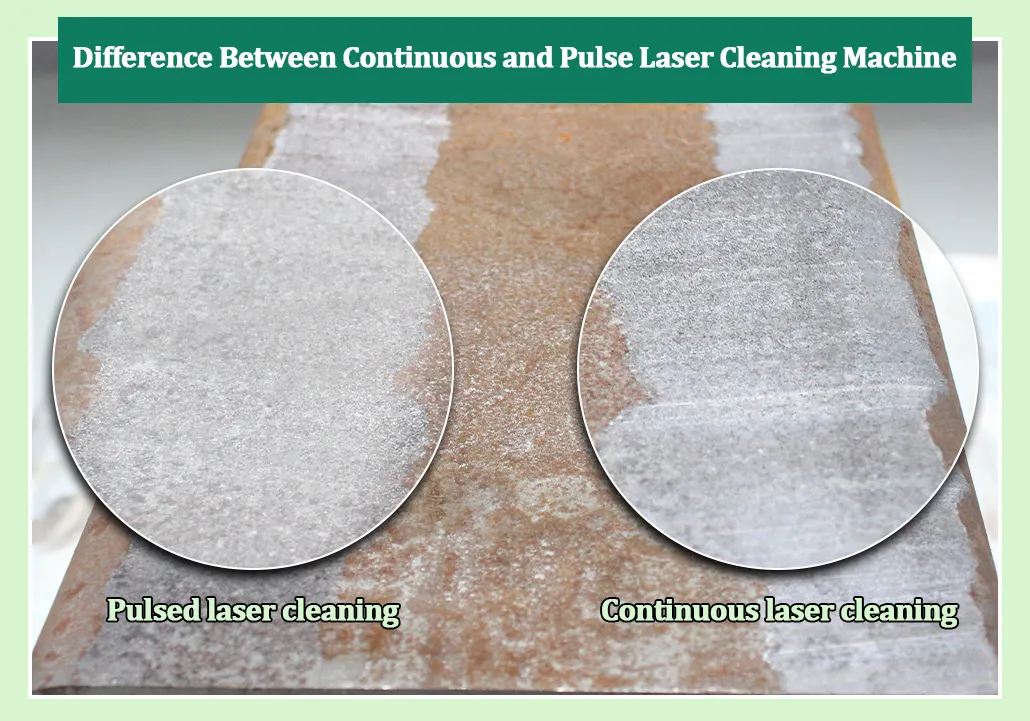
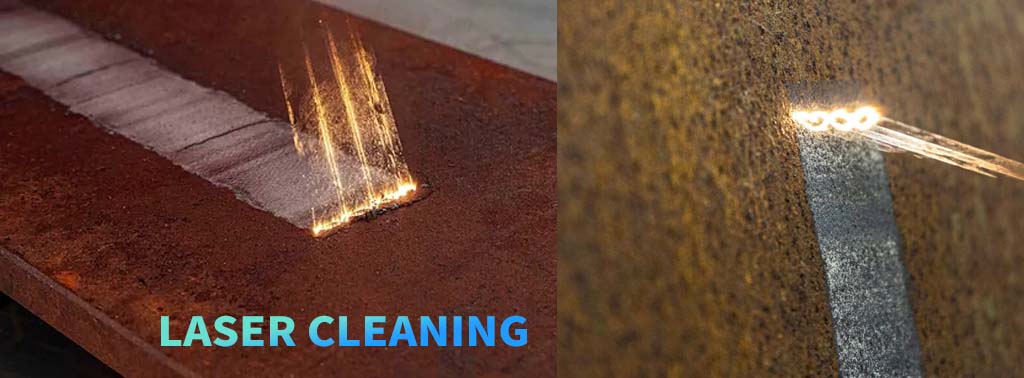
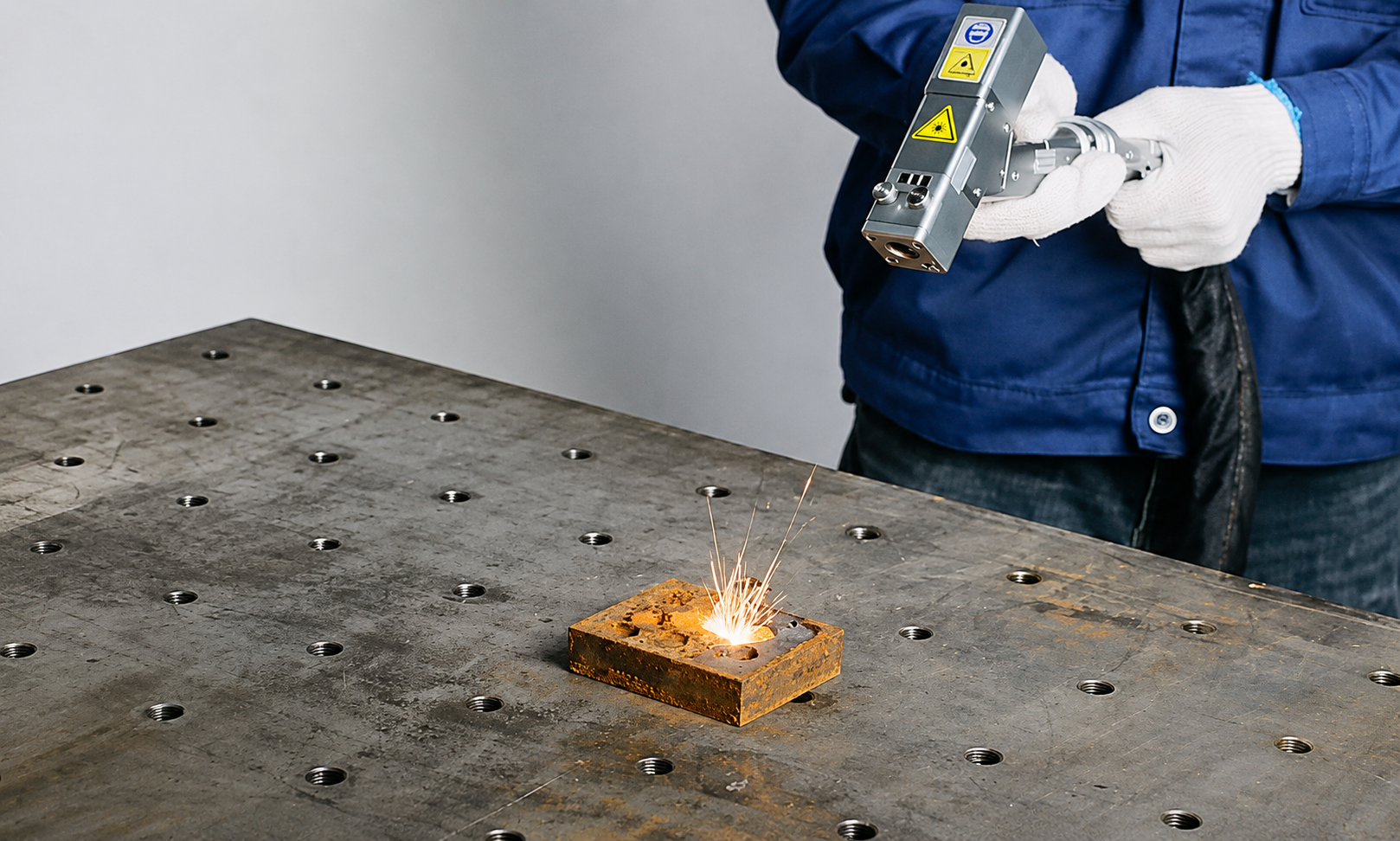
If you are comparing a 100W, 200W, 300W or 1000–3000W laser cleaner, start with one important point:
“Size” does not just mean wattage.
The right laser cleaner depends on two decisions:
First: Do you need a pulsed or continuous-wave laser?
Second: How much power do you need for your contamination, surface area and daily workload?
For most buyers, 100–300W pulsed laser cleaners are used when surface control matters: light rust, oxide, molds, weld cleaning, paint removal on smaller parts and heat-sensitive surfaces.
1000–3000W continuous-wave systems are built for a different job: heavy rust, thick coatings, structural steel, shipyards and large-area industrial cleaning where throughput matters most.
LaserCleanerPro currently offers both pulsed and CW platforms across a 100W–3000W range, with 100–500W pulsed systems aimed at precision work and 1000–3000W CW systems aimed at heavy industrial cleaning.
So the fastest answer is:
Your Typical Job | Best Starting Point |
|---|---|
Small parts, light rust, delicate surfaces | 100W pulsed |
General repair, weld oxide, moderate cleaning volume | 200W pulsed |
Mixed precision work, larger parts, higher daily volume | 300W pulsed |
Need more pulsed-cleaning productivity without moving to CW | Consider 500W pulsed |
Heavy rust on steel, larger equipment | 1000–1500W CW |
Large steel structures, industrial maintenance | 2000W CW |
Shipyards, heavy corrosion, maximum throughput | 3000W CW |
The most common buying mistake is choosing power first and application second.
A 3000W system is not automatically “better” than a 200W machine. If you clean molds or sensitive aluminum parts, the smaller pulsed system may actually be the more suitable tool. If you clean heavily corroded ship steel all day, a 200W pulsed machine may simply be too slow.
1. 100W vs 200W vs 300W: Which Pulsed Laser Cleaner Do You Need?
A pulsed laser cleaner delivers energy in short pulses rather than continuously. This gives the operator better control over how much heat reaches the substrate.
That is why pulsed systems are usually the stronger starting point for molds, precision components, weld zones, automotive parts, thinner metals and applications where you want to remove contamination without unnecessarily changing the original surface.
LaserCleanerPro's current product range positions 100–300W backpack and handheld systems for portable precision cleaning, while its broader pulsed platform extends to 500W for oxide, paint and mold cleaning.
Choose 100W When Precision Matters More Than Speed
A 100W system makes the most sense when your jobs are small, detailed or sensitive.
Typical applications include light surface rust, thin oxide layers, small molds, localized restoration, weld discoloration and selective cleaning where you do not want to put unnecessary heat into the workpiece.
A 100W laser cleaning machine can also be attractive for mobile service businesses because lower-power pulsed systems are often available in compact backpack or trolley-style formats.
Choose 100W when:
Your cleaning areas are relatively small.
Most contamination is light.
You work on thin or high-value parts.
Portability matters strongly.
Cleaning speed is less important than surface control.
Do not choose 100W simply because it is cheaper.
If you spend several hours every day cleaning large surfaces, the slower productivity can cost more than the price difference between 100W and a higher-power system.
Choose 200W for General-Purpose Precision Cleaning
For many small and mid-sized businesses, 200W is the more balanced pulsed option.
It keeps the controllability of a pulsed system while giving you more productivity for larger parts, moderate corrosion, paint, weld preparation and repeated maintenance jobs.
A 200W machine makes sense if you regularly switch between:
Rust removal.
Weld cleaning.
Paint or coating removal.
Mold maintenance.
Automotive parts.
Machine components.
For a contractor or maintenance team that needs one portable laser cleaner for several applications, 200W can be easier to justify than 100W because it provides more headroom without immediately moving into heavy industrial equipment.
Choose 200W when your main concern is:
“I still need precision, but 100W may be too slow for my daily workload.”
Choose 300W When Throughput Starts to Matter
A 300W pulsed system is aimed at buyers who still need the benefits of pulsed cleaning but have more material to process.
This is a strong fit for larger molds, automotive components, medium rust, repeated paint removal, fabrication shops and businesses where cleaning time is starting to become a production bottleneck.
LaserCleanerPro currently describes 300W as a popular configuration within its 100–500W pulsed platform.
Choose 300W when:
You clean larger parts regularly.
Your operators use the machine for several hours per day.
100W or 200W would complete the job, but not fast enough.
You still need good control of the underlying surface.
Your workload is too varied for a high-power CW machine.
The original draft correctly identifies the central issue here: buy 300W because time per part is costing you money—not simply because 300W sounds safer than choosing 100W or 1000W.
What About 500W Pulsed?
This is the useful middle ground that often gets ignored.
If 300W does not give you enough productivity but a 1000W CW system would introduce more continuous heat than your parts require, a 500W pulsed cleaner can be worth evaluating.
LaserCleanerPro currently offers a 100–500W pulsed platform for precision oxide, paint and mold cleaning.
That means the real choice is not always:
300W or 1000W.
Sometimes it is:
300W pulsed → 500W pulsed → 1000W CW, depending on whether your priority is control or raw cleaning rate.
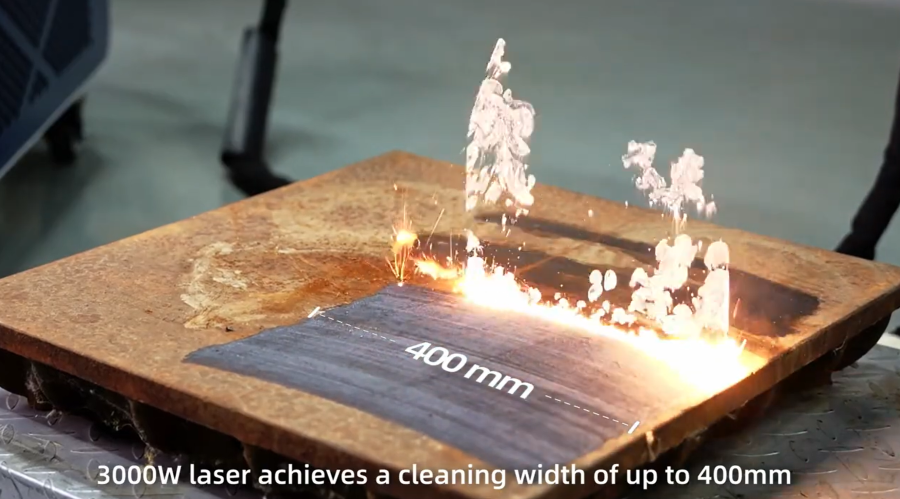
2. When Do You Need a 1000W–3000W Laser Cleaner?
Once your application changes from precision cleaning to large-area heavy removal, the buying logic changes.
High-power continuous-wave systems deliver a steady beam with much higher average power. They are built to remove heavy rust and thick coatings across larger steel surfaces at production speed.
LaserCleanerPro currently positions its 1000–3000W CW platforms for structural steel, shipyards, plant equipment and other high-throughput jobs. These systems are water-cooled and designed for sustained industrial operation.
1000W–1500W: Entry Point for Heavy Industrial Cleaning
Move into this range when your normal work includes heavier rust, large machinery, thick steel components or larger surface-preparation jobs.
A 1000W or 1500W industrial laser cleaner can make sense when a pulsed machine would eventually clean the part but the required number of passes or working time is no longer commercially acceptable.
Think:
Construction machinery.
Large equipment refurbishment.
Steel fabrication.
Larger painted components.
Heavy maintenance work.
The main reason to move from 300–500W pulsed to 1000W+ CW should be productivity, not simply the severity of one occasional job.
2000W: Strong Middle Ground for Industrial Work
For companies regularly cleaning large steel parts, 2000W becomes a much more serious production tool.
This range is suitable for applications where operators need to cover large areas repeatedly and machine utilization is high.
Typical users include:
Steel fabrication plants.
Heavy-equipment maintenance teams.
Ship repair.
Large manufacturing facilities.
Infrastructure maintenance.
A 2000W machine gives you significantly more throughput potential than a precision pulsed platform, but you should also be comfortable with the trade-off: continuous-wave cleaning generally puts more sustained heat into the surface.
For robust steel structures this may be completely acceptable.
For sensitive molds, thin sheet or precision surfaces it may not be the best choice.
3000W: Buy It for Scale
A 3000W CW system makes sense when large-area heavy cleaning is a core production process.
Examples include:
Ship hulls.
Bridge steel.
Large tanks.
Heavy structural components.
Continuous industrial surface preparation.
Production lines where cleaning is limiting output.
LaserCleanerPro's current high-power platform specifically positions 1500–3000W LCW systems and 1000–3000W HW systems for heavy rust, thick coatings, structural steel and shipyard-scale work.
Do not buy 3000W for a workshop that spends most of its time cleaning small automotive components.
You will be paying for capacity that does not solve your actual problem.
The original article gets this buyer mistake right: 300W can be too small for large-area rust, while 1000W+ can be excessive for delicate parts.
3. How Do You Choose the Right Laser Cleaner Power?
The easiest way to choose power is not to start with the machine.
Start with four questions.
What Are You Removing?
Light oxidation and weld discoloration are not the same as thick rust or multiple layers of industrial coating.
For precision contamination, favor pulsed cleaning.
For thick, strongly bonded contamination across robust metal surfaces, higher average power becomes more useful.
What Is the Base Material?
Carbon steel generally tolerates a different cleaning process from thin aluminum, stainless decorative surfaces or precision molds.
If protecting the substrate is critical, a laser cleaner for metal should be selected around surface condition after cleaning—not only how quickly the contamination disappears.
This is one reason sample testing matters.
How Much Area Do You Need to Clean?
A 20 cm weld seam and a ship hull can both have rust.
They are not the same purchasing problem.
If you clean a handful of small parts per day, 100–200W may be completely adequate.
If your shop processes larger parts throughout the shift, 300–500W pulsed can make more sense.
If the job is measured in large structural areas, 1000–3000W CW becomes easier to justify.
How Fast Does the Job Need to Be Finished?
This is often the deciding factor.
A machine can be technically capable of removing the contamination and still be commercially wrong because it takes too long.
Ask:
How many parts per day?
How many square meters per shift?
How many operators?
How many hours does the cleaner run?
What does one hour of downtime or cleaning labor cost?
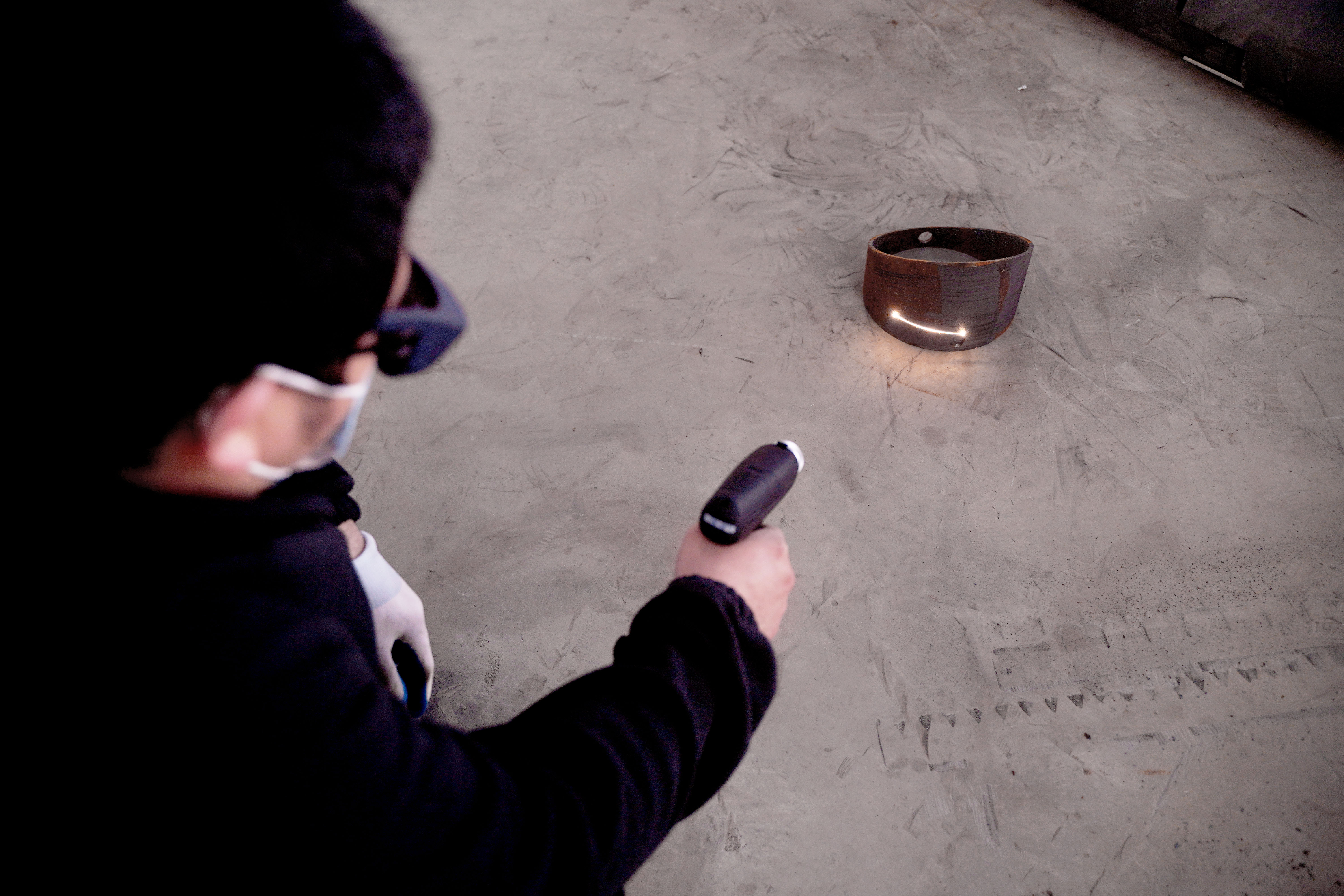
LaserCleanerPro's own buying guidance recommends choosing power from the application and volume first, and confirming the final choice through sample testing rather than relying on a catalog number.
Quick Decision Table
If Your Situation Looks Like This | Start Here |
|---|---|
Light rust, small parts, delicate surfaces | 100W pulsed |
General repair and maintenance | 200W pulsed |
Mixed work and higher daily volume | 300W pulsed |
Need more speed but still need pulsed control | 500W pulsed |
Heavy rust on larger steel equipment | 1000–1500W CW |
High-volume industrial steel cleaning | 2000W CW |
Shipyards, structural-scale heavy cleaning | 3000W CW |
And if your application falls between two rows, do not guess.
Test both power levels on the same sample and compare cleaning time, number of passes and final surface condition.
That will tell you more than another wattage chart.

Conclusion
So, what size laser cleaner do you need?
For most buyers, the decision can be simplified like this:
100W pulsed — small, delicate, light contamination.
200W pulsed — general-purpose precision cleaning.
300W pulsed — more productivity without giving up pulsed control.
500W pulsed — higher-output precision cleaning when 300W is too slow.
1000–1500W CW — heavier rust and larger industrial parts.
2000W CW — high-volume industrial maintenance.
3000W CW — structural steel, shipyards and maximum large-area throughput.
The biggest mistake is choosing by wattage alone.
First decide pulsed vs CW, then match power to your contamination, substrate, surface area and daily output.
A laser rust removal machine that is perfect for a shipyard may be completely wrong for a mold shop. A 100W machine that gives beautiful precision results may be financially inefficient if your operators need to clean hundreds of square meters every week.
The right machine is the one that delivers the required surface result at the cleaning speed your business actually needs.
Before choosing a power level, send LaserCleanerPro your material, contamination type, approximate contamination thickness, cleaning area, daily workload and photos or samples of the actual part. The team can test the application and recommend a pulsed or CW configuration based on measured results rather than simply recommending the biggest machine.