Choosing a laser cleaning machine should start with your application—not with wattage.
A 200W pulsed machine may be perfect for precision molds but painfully slow on heavily rusted structural steel. A 2000W continuous-wave machine can remove thick corrosion quickly, but it may introduce unnecessary heat when cleaning thin or high-value components.
That is why the best laser cleaning machine is not necessarily the most powerful one.
The right system depends mainly on five questions:
What are you removing?
What material is underneath?
How sensitive is the surface?
How much area must be cleaned?
How often will the process be repeated?
A practical buying process is:
Application → Laser Type → Power → Machine Format → Sample Test → Total Cost
Follow that order and it becomes much easier to avoid paying for power you do not need—or buying a machine that is too slow for your real workload.
Laser Cleaning Machine Selection at a Glance
Application | Recommended Starting Point | Main Priority |
|---|---|---|
Light rust / oxide on precision parts | 100–200W Pulsed | Surface protection |
Mold and tooling cleaning | 100–300W Pulsed | Precision |
Paint removal on sensitive metal | 200–500W Pulsed | Controlled removal |
General industrial maintenance | 300–500W Pulsed | Versatility |
Heavy rust on thick steel | 1000–1500W CW | Cleaning speed |
Large steel structures | 1500–3000W CW | High throughput |
Automated production | Pulsed or CW + automation | Cycle time and repeatability |
These are starting points, not fixed rules. Final selection should be confirmed on your actual material.
1. Start With What You Actually Need to Clean
Before looking at machine specifications, define the cleaning problem clearly.
“Rust removal” is not specific enough.
Light oxidation on a stainless-steel component and thick corrosion on a bridge structure may both be called rust, but they require completely different cleaning strategies.
The same is true for paint, carbon deposits, oil and oxide layers.
Start with four factors.
Substrate
Identify whether the base material is carbon steel, stainless steel, aluminum, copper, cast iron, mold steel or another material.
The substrate determines how much laser energy the part can tolerate before discoloration, melting, distortion or other unwanted changes occur.
Contaminant
Determine whether you are removing rust, oxide, paint, carbon, grease, adhesive, coating or production residue.
Different contaminants absorb laser energy differently.
Contamination Severity
A thin oxide film may require only a controlled pulsed process.
Heavy corrosion, mill scale or multilayer industrial paint may require significantly more average power and cleaning speed.
Required Finish
Decide what the surface should look like afterward.
Are you only trying to improve appearance?
Does the part need to be weld-ready?
Will it be painted, bonded or coated afterward?
Does the original surface texture need to remain unchanged?
Choose the machine around your most common application—not the hardest job you might encounter once a year.
2. Decide Between Pulsed and Continuous-Wave Cleaning
Once the application is clear, the next major decision is whether you need pulsed or continuous-wave technology.
This choice is often more important than the wattage itself.
Pulsed Laser Cleaning: Better for Precision
A pulsed laser cleaner delivers energy in short pulses rather than continuously.
This gives the operator greater control over how energy interacts with the contaminant and reduces the amount of sustained heat entering the substrate.
Pulsed systems are particularly useful for:
Precision molds, thin metal, automotive parts, tooling, weld seams, selective coating removal, high-value components and other applications where preserving the original surface matters.
Their biggest advantage is control.
The operator can adjust pulse energy, pulse width, frequency and scanning parameters to gradually remove contamination without aggressively heating the whole part.
The trade-off is productivity.
A lower-power pulsed system can become slow when faced with large areas of heavy rust or thick coatings.
Choose pulsed when protecting the substrate matters more than maximum area coverage.
Continuous-Wave Laser Cleaning: Better for Heavy-Duty Speed
Continuous-wave, or CW, systems deliver a steady laser beam.
They are commonly available at much higher average power, making them more suitable for removing large amounts of rust, paint and scale from thick, heat-tolerant steel.
Typical applications include structural steel, heavy machinery, ship components, storage tanks, pipelines and large fabrication parts.
The advantage is simple:
More square meters can usually be cleaned in less time.
The trade-off is increased thermal input.
That makes process control more important when cleaning thin sheet metal, polished surfaces or components where distortion and discoloration are unacceptable.
Choose CW when the substrate is robust and productivity is the main requirement.
3. Choose the Power Range Around Your Normal Workload
After deciding between pulsed and CW, then look at power.
Higher wattage does not automatically mean better cleaning.
The right power should provide enough productivity without making the machine unnecessarily expensive or difficult to control.
100W–200W Pulsed: Precision and Light Cleaning
This is a practical starting range for lighter, precision-oriented work.
Typical applications include light rust, oxidation, weld discoloration, small molds, automotive restoration and localized cleaning.
These machines can also be relatively compact and may use air cooling, which makes them attractive for workshops and mobile service.
They are not designed for fast removal of heavy corrosion over large areas.
300W–500W Pulsed: Professional All-Round Cleaning
For businesses handling a wider mix of industrial work, 300W–500W pulsed systems are often worth comparing.
They retain the precision advantages of pulsed cleaning while offering better productivity on heavier rust, coatings and repeated maintenance work.
This range can be suitable for:
Mold cleaning, automotive components, machinery maintenance, moderate rust, paint removal and industrial repair shops.
For many professional users who need flexibility rather than maximum bulk-removal speed, this is an important category.
1000W–1500W CW: Heavy Rust and Large Parts
A higher-power rust removal laser becomes more attractive when the main job is cleaning substantial corrosion from thick steel.
This range is commonly suited to machinery, steel structures, large welded components and industrial maintenance.
Cooling requirements, electrical demand and overall machine size increase as power rises.
2000W–3000W CW: High-Volume Industrial Cleaning
These systems are designed around throughput.
They make the most sense when large areas of steel must be processed regularly and labor time becomes a major operating cost.
Typical users include shipyards, heavy fabrication companies, infrastructure contractors and large maintenance operations.
For small molds, delicate components or occasional workshop cleaning, this level of power is usually unnecessary.
Buy enough power to handle your normal workload efficiently—not enough power to handle every possible application.
4. Choose the Right Machine Format
Power determines what the machine can remove.
Machine format determines how practical it is to use.
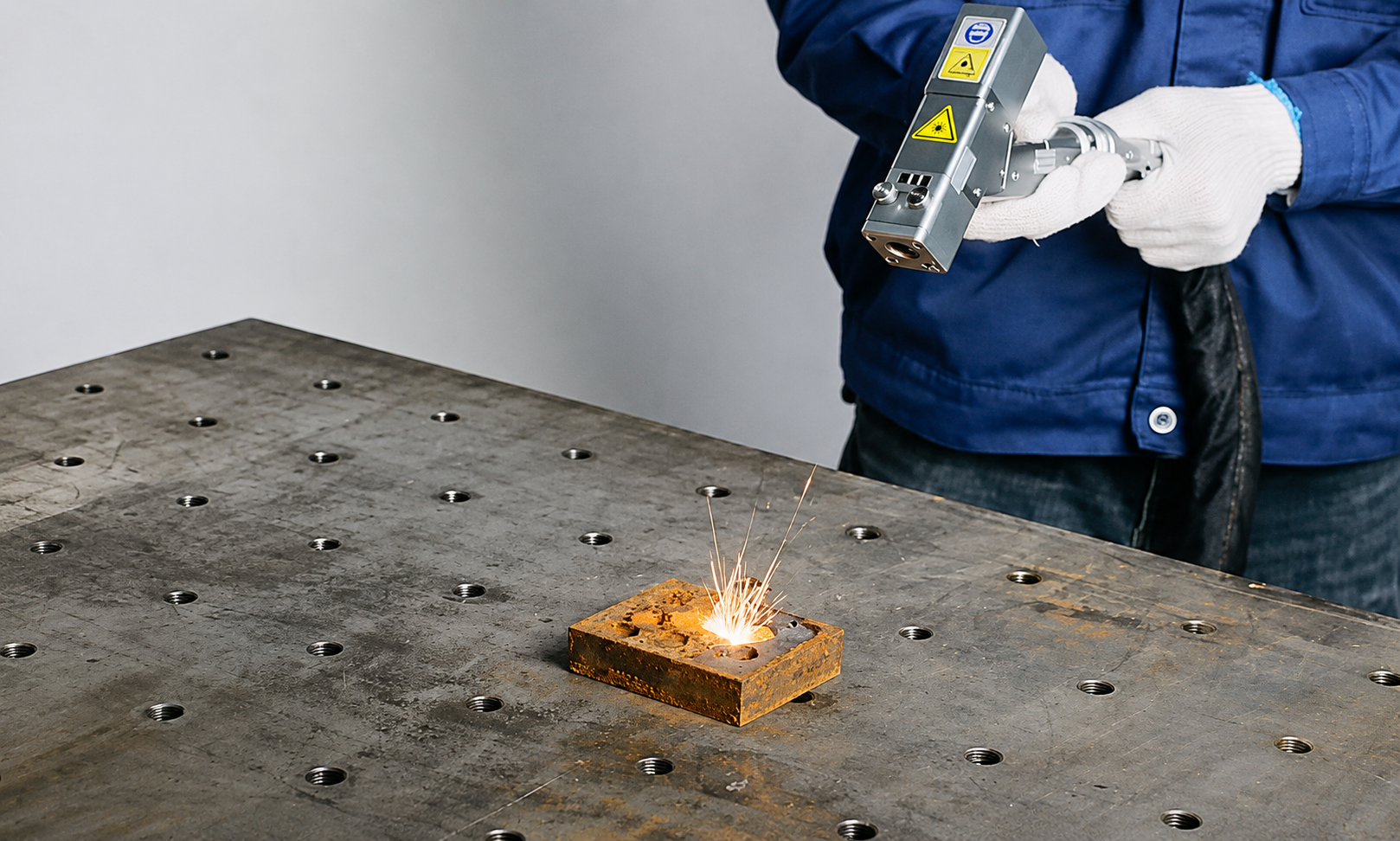
Handheld
Handheld systems are useful when the operator needs to move around large or irregular workpieces.
They suit automotive repair, weld cleaning, molds, machinery and field maintenance.
Pay attention to the weight of the actual cleaning head—not only the total machine weight.
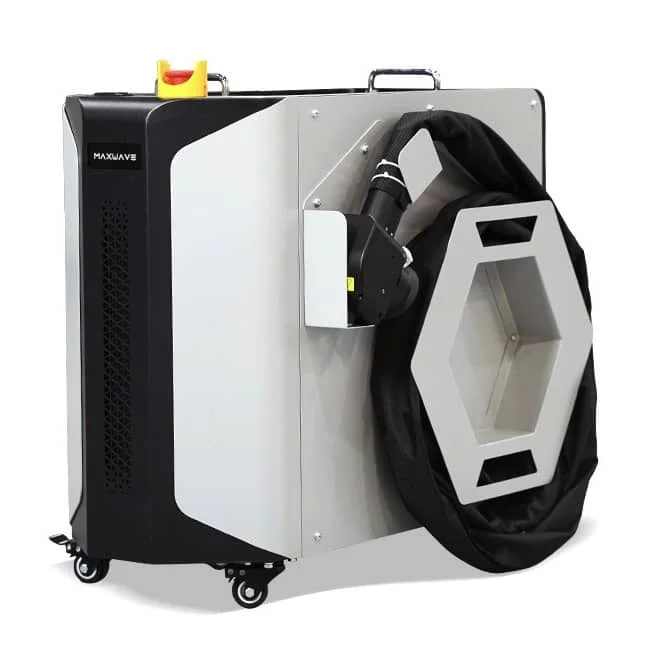
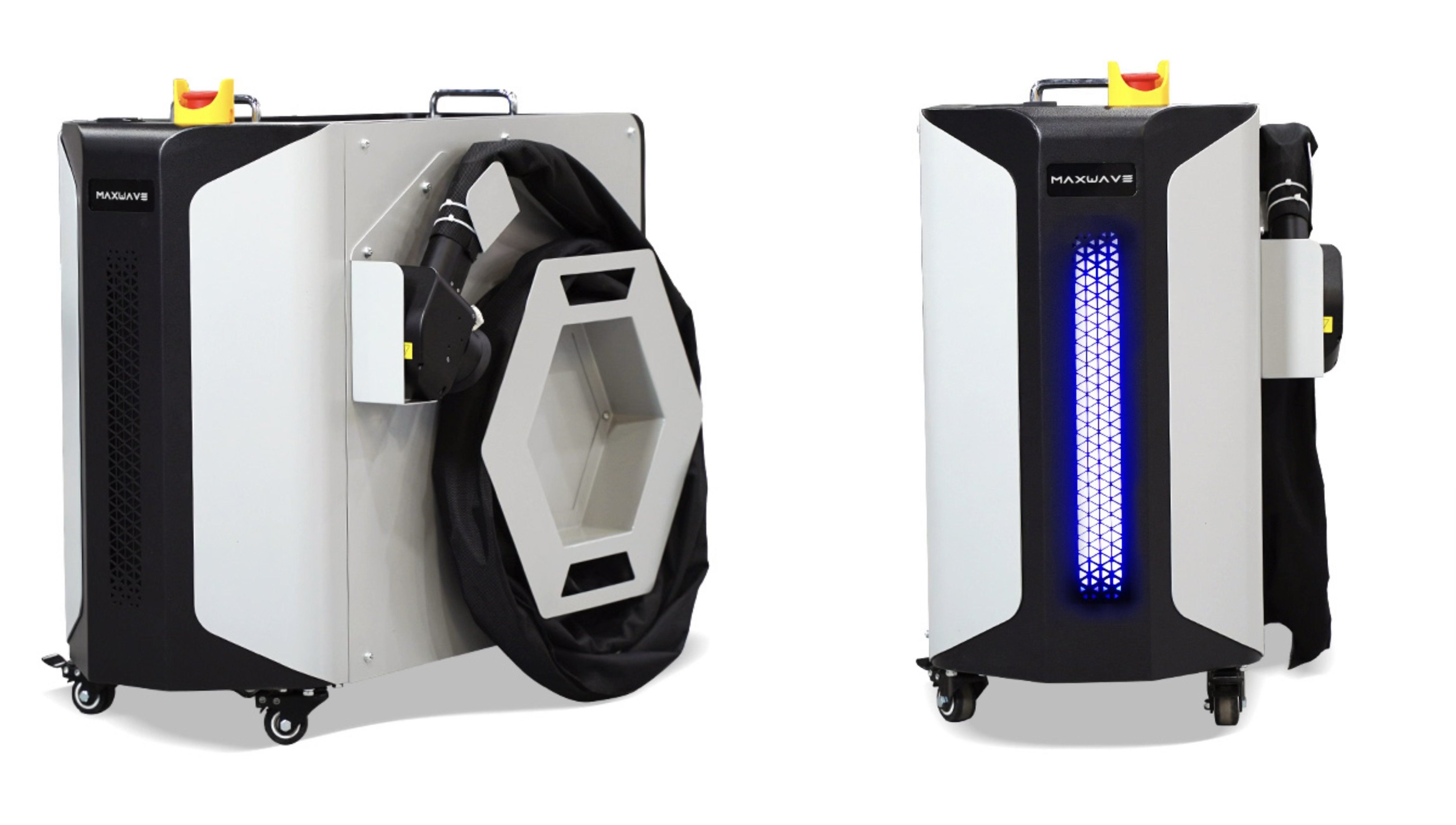
Portable or Wheeled
A mobile cabinet combines greater cooling and power capacity with the ability to move between workstations.
This format works well for factories and repair shops where one machine serves several production areas.
Stationary
Stationary systems are better when all cleaning takes place at one dedicated station.
They make it easier to integrate extraction, fixtures, cooling and safety enclosures.
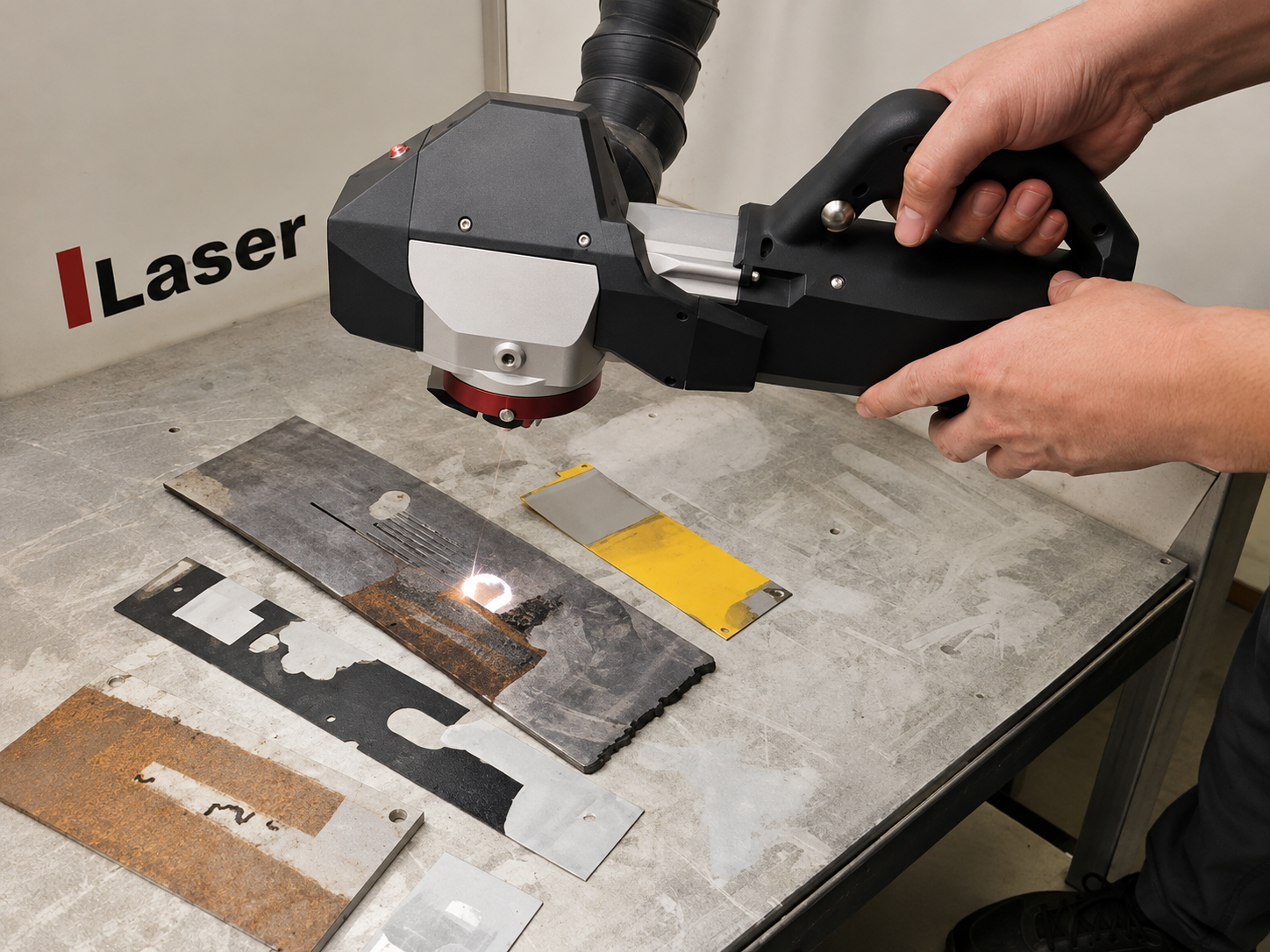
Automated
Automation makes sense when the same part or cleaning path is repeated continuously.
Robots and gantry systems can improve repeatability and cycle time, but automation should normally come after the cleaning process itself has already been proven.
Prove the process manually first. Automate it second.
5. Match Cleaning Speed to Your Actual Production
Cleaning speed matters—but only when you have enough workload to use it.
A mold shop cleaning a few high-value parts each day may prioritize precision and substrate preservation.
A contractor cleaning large steel structures will care far more about square meters per hour.
Estimate your real production requirement before paying for additional power.
Consider:
How many parts are cleaned per shift?
How much area must be processed each day?
How many hours will the machine operate?
Is cleaning currently slowing production?
If a machine operates only several hours per week, maximum speed may provide little financial benefit.
If cleaning is a production bottleneck running every day, additional throughput can significantly reduce labor cost.
The fastest machine is only more valuable when your workload can use the speed.
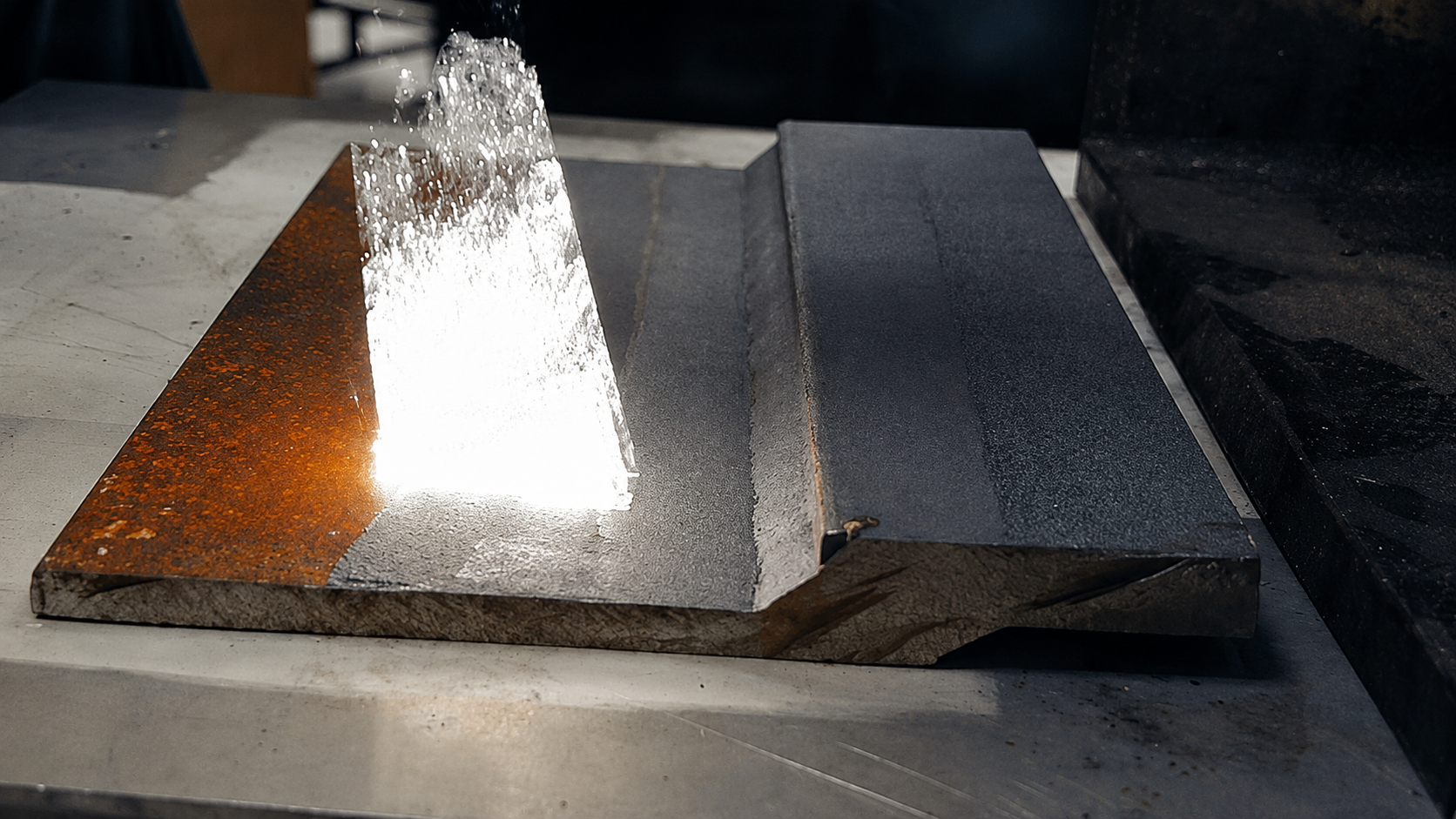
6. Always Run a Sample Cleaning Test
This is the most important part of the buying process.
Do not choose a laser cleaning system only from photographs, specifications or supplier demonstration videos.
Send the supplier material that represents your real application.
Ideally, the test piece should match the actual:
Substrate.
Contaminant.
Contamination thickness.
Surface condition.
Required final result.
Then evaluate the cleaned sample for four things.
Cleaning Quality
Has the contamination actually been removed?
Look for remaining rust, coating or residue rather than judging only whether the part appears brighter.
Cleaning Speed
Measure how long the test takes.
A machine that eventually produces a good result may still be too slow for commercial production.
Surface Condition
Check for discoloration, roughness changes, melting, distortion or damage.
For precision parts, surface preservation may matter more than cleaning speed.
Number of Passes
A machine that needs repeated passes may produce acceptable quality but poor productivity.
Ask the supplier to record the parameters used during the test.
This gives you a realistic starting point once the machine arrives.
A sample test on your own material is more valuable than almost any number on a specification sheet.
7. Compare the Complete Cost, Not Just the Machine Price
The lowest quotation is not always the lowest-cost cleaning solution.
Depending on the system, your total investment may also include:
Fume extraction, cooling equipment, safety barriers, protective equipment, electrical upgrades, shipping, training, spare lenses, filters and replacement parts.
Also consider downtime.
If the machine fails, how quickly can the supplier diagnose the problem?
Are critical parts stocked?
Can your team replace common components themselves?
A cheaper system can become expensive when a small problem stops production for several weeks.
Ask for an itemized quotation that clearly shows what is included and what is optional.
That makes it much easier to compare different suppliers fairly.
8. Evaluate Technical Support and Spare Parts
Two machines with the same wattage and laser source can create very different ownership experiences.
Ask how training is delivered.
For many factory-direct systems, online training is standard and may include live video instruction, manuals and remote software support.
Also confirm:
How warranty claims are handled.
Which components are treated as consumables.
How much replacement optics cost.
Which spare parts should be kept locally.
How quickly technical support normally responds.
A supplier should be able to explain not only how the machine works when everything is correct, but also what happens when something goes wrong.
Support quality becomes part of the machine specification once the equipment enters production.
9. Check Safety Requirements Before Ordering
Laser cleaning equipment should not be treated like an ordinary handheld power tool.
Most professional systems require appropriate laser safety controls, operator training and fume extraction.
The contaminant matters as much as the laser.
Removing clean surface rust from steel is different from removing old industrial paint that may contain hazardous materials.
Before purchasing, confirm what your site needs in terms of:
Laser-controlled working areas.
Protective eyewear.
Barriers or enclosures.
Fume extraction and filtration.
Electrical supply.
Operator procedures.
The supplier should provide relevant safety documentation and installation requirements before shipment.
If your workspace cannot safely accommodate the selected machine, choose a different configuration before purchasing.
10. What Should You Ask a Supplier Before Buying?
Instead of asking only:
“How much is your 500W laser cleaning machine?”
Ask:
“Can this configuration achieve my required result on my material?”
Provide the supplier with photos or samples and explain your production requirements.
A serious supplier should be able to discuss the substrate, contamination, target finish, expected speed and recommended process.
Ask for an itemized quotation, sample results, warranty terms, spare-parts list and training details.
Be cautious when every application is answered with:
“You need more wattage.”
The correct recommendation should explain why a specific power and laser type match the job.

Simple Selection Guide
The decision can usually be reduced to four application groups.
Precision parts, molds and heat-sensitive surfaces:
Start with a 100W–300W pulsed system.
Mixed professional cleaning and moderate contamination:
Compare 300W–500W pulsed systems.
Heavy rust, thick coatings and large steel structures:
Compare 1000W–3000W CW systems.
High-volume repetitive production:
First identify the correct pulsed or CW process, then evaluate automation.
There will always be exceptions.
That is why the final decision should be made after sample testing.
Conclusion
Choosing the right laser cleaner is not about buying the highest wattage available.
It is about matching the machine to the cleaning problem.
Start with the substrate, contamination type, contamination severity, required finish and daily workload.
Then choose pulsed or CW technology based on whether precision or speed matters more.
After that, select enough power to meet your normal production needs and a machine format that fits your workflow.
Finally, confirm the decision through a real cleaning test and compare the complete ownership package—not only the machine price.
The best laser cleaning machine is the one that removes your contamination at the required speed without creating unnecessary damage, cost or complexity.
Send LaserCleanerPro photos or samples of your parts, together with the substrate, contaminant type, approximate layer thickness and expected daily workload. The engineering team can perform an application test and recommend a pulsed or CW configuration based on the job you actually need to complete.