Laser Rust Removal Machine for Steel, Metal and Heavy Corrosion
Strip rust, oxide and mill scale from steel and metal with a fiber laser — no grit, no chemicals, no media to dispose of. Match pulsed or continuous-wave power to your rust condition, and test your own part before you order.
Sandblasting and hand tools make rust removal slow and messy
Traditional de-rusting fights you three ways at once — throughput, substrate damage and waste handling. Each one quietly raises the real cost per part.
Slow, manual labor
Wire wheels, flap discs and blasting tie up operators for hours and struggle to reach welds, edges and pitted areas evenly.
Damage to the base metal
Aggressive abrasives thin sheet metal, round off edges and roughen precision surfaces — turning rust removal into rework.
Grit, dust and disposal
Spent media, dust containment and chemical rust removers all carry storage, handling and disposal costs that keep climbing.
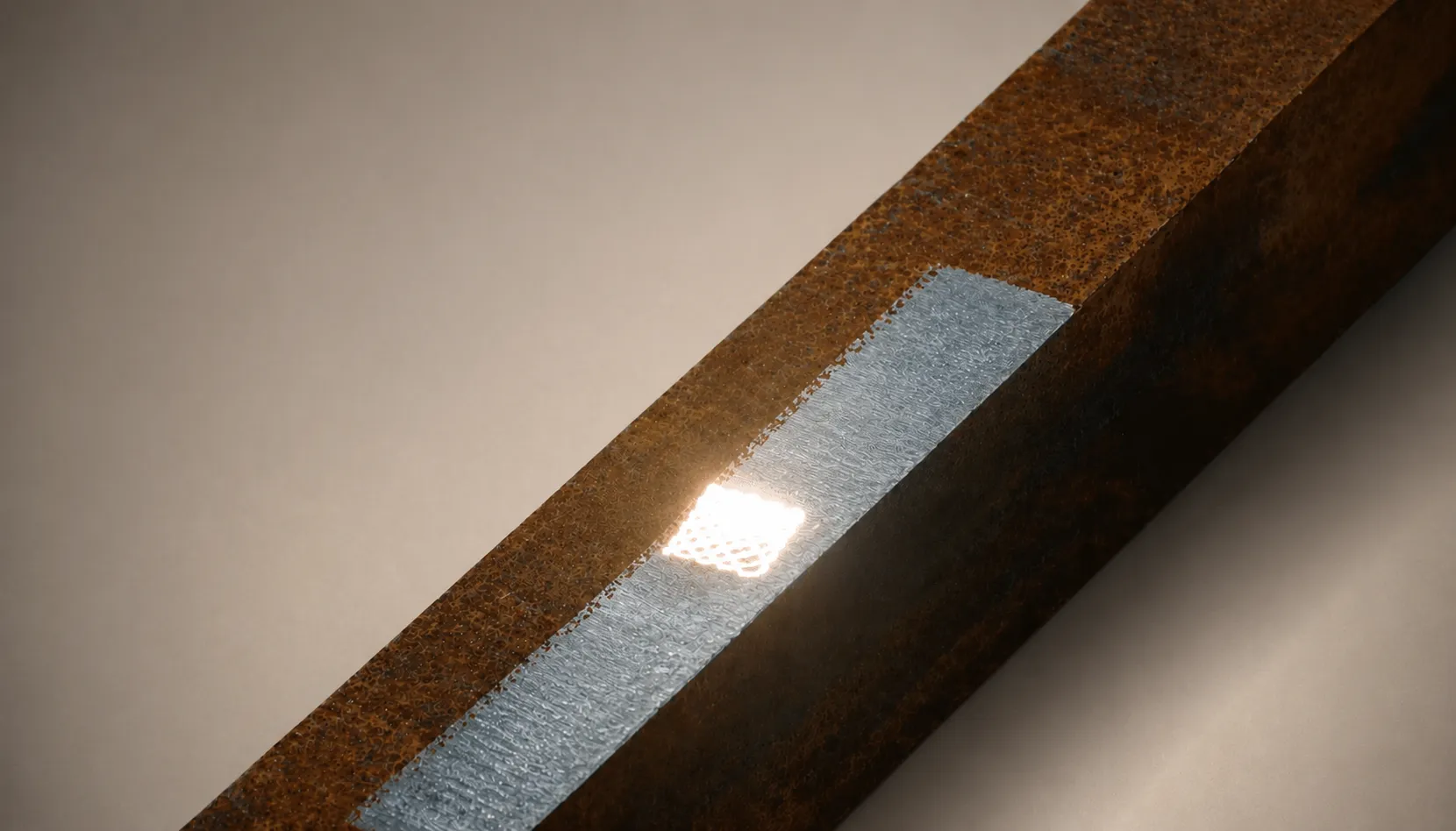
Pulses of light lift the rust, not the steel
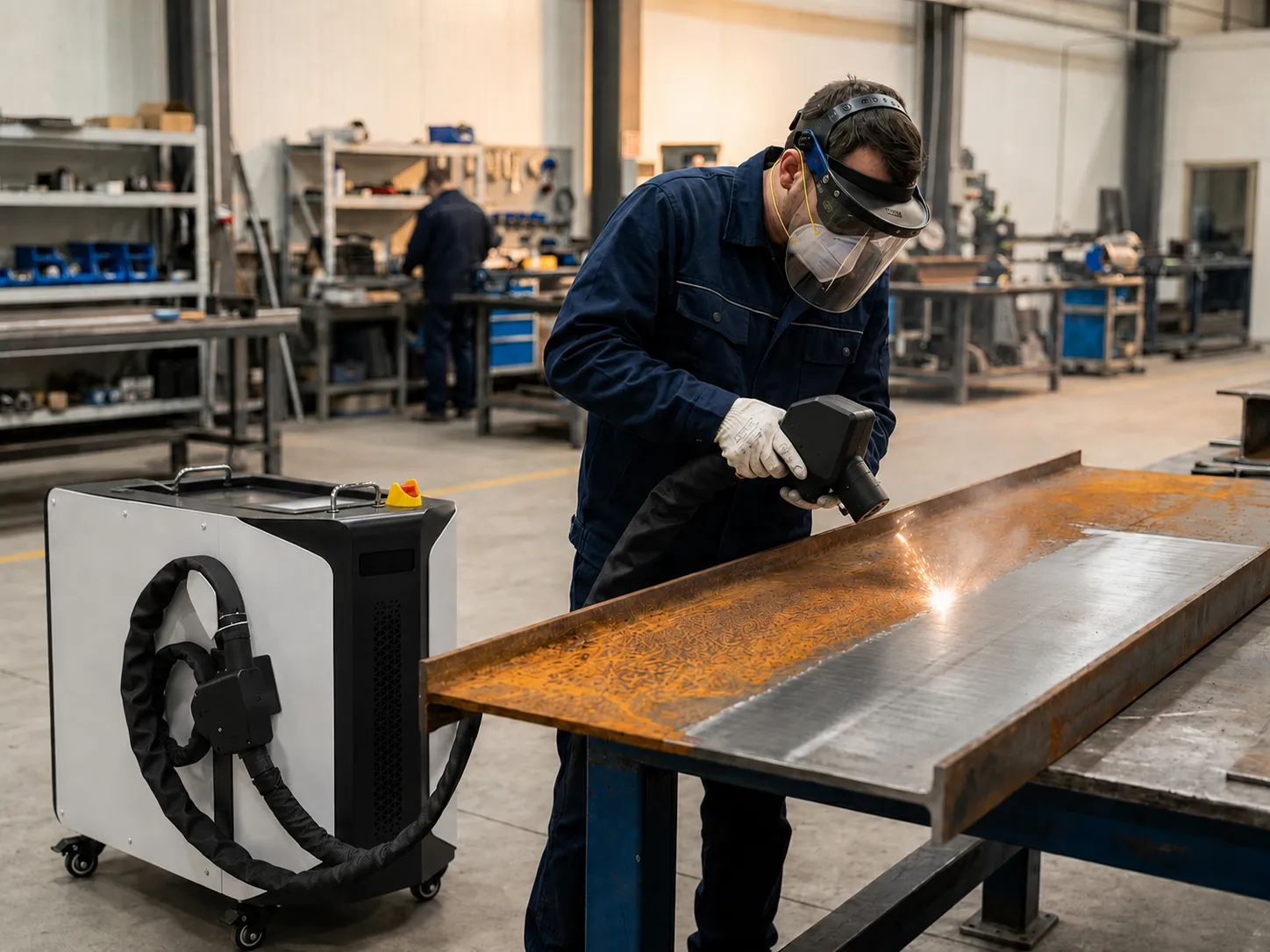
A focused fiber-laser beam is absorbed by the rust and oxide layer. That layer heats and breaks away from the surface, while the reflective base metal absorbs far less energy — so the contaminant leaves and the substrate stays intact.
Absorb
The beam targets the rust, scale or oxide sitting on the surface.
Release
That layer vaporizes or flakes off and is captured by fume extraction.
Stop at the metal
The clean base metal reflects most of the energy, limiting impact on the substrate.
How clean and how fast depends on rust thickness, oxide type, base material, laser power, scanning width and operator settings — which is why we test your sample and report the measured result for your setup rather than quote a fixed speed.
Which laser suits your rust condition?
Light surface rust and fine parts favour pulsed control; heavy rust and mill scale need continuous-wave throughput. Use this as a starting point — we confirm it on your sample.
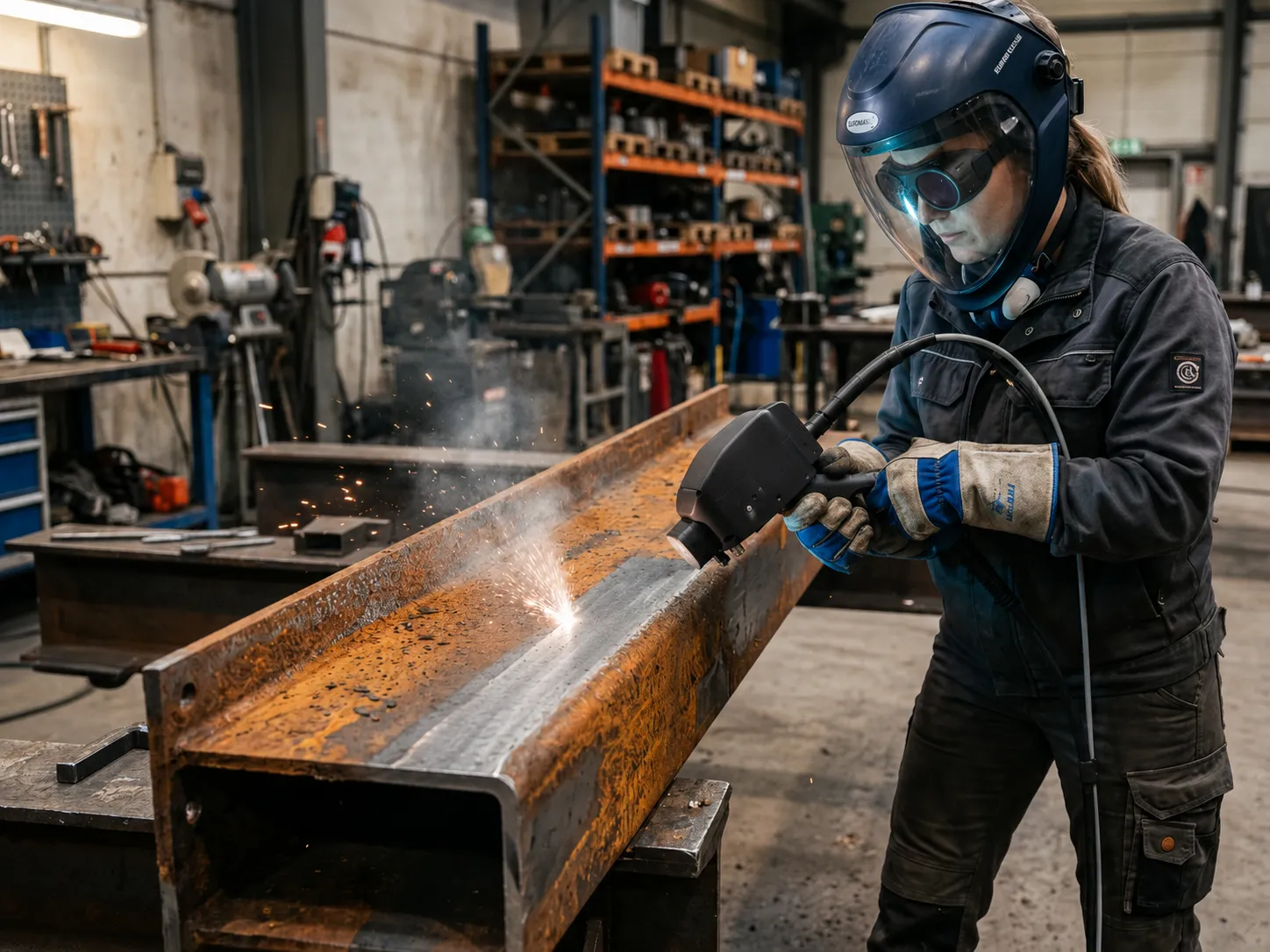
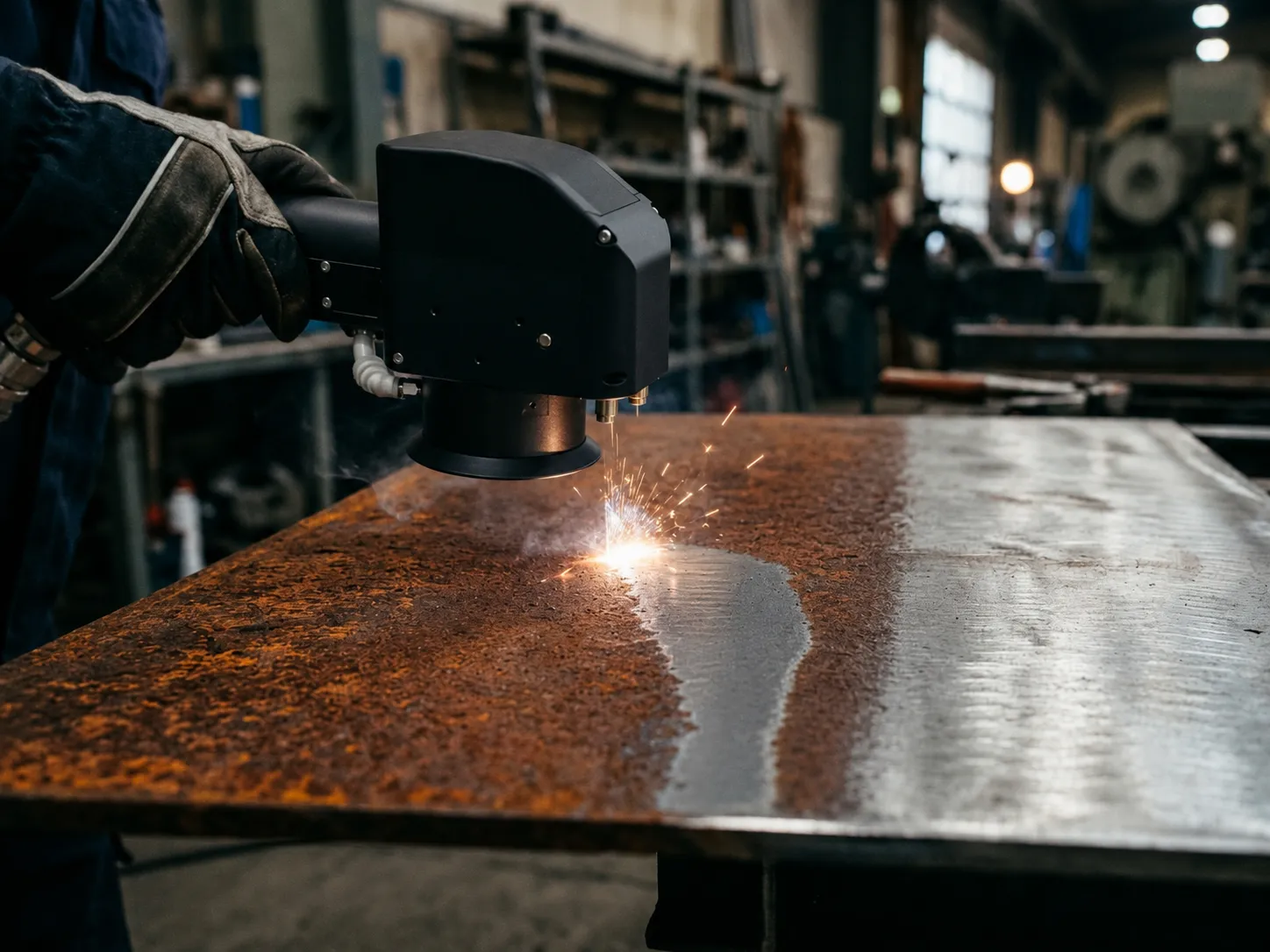
Light surface rust
Flash rust, thin oxide and corrosion on sheet metal or precision parts, where edge and detail control matter.
Heavy rust
Thick, layered rust on structural steel, plant equipment and large surfaces that need high removal throughput.
Oxide & mill scale
Heat tint, weld scale and oxide on fabricated or pre-coated parts ahead of welding, bonding or painting.
Marine corrosion
Salt-driven corrosion on hulls, offshore structures and coastal steelwork that demands sustained high power.
Three series cover most rust removal jobs
From a portable handheld unit for service work to a water-cooled high-power system for heavy industrial de-rusting — open a series for full specs and pricing guidance.
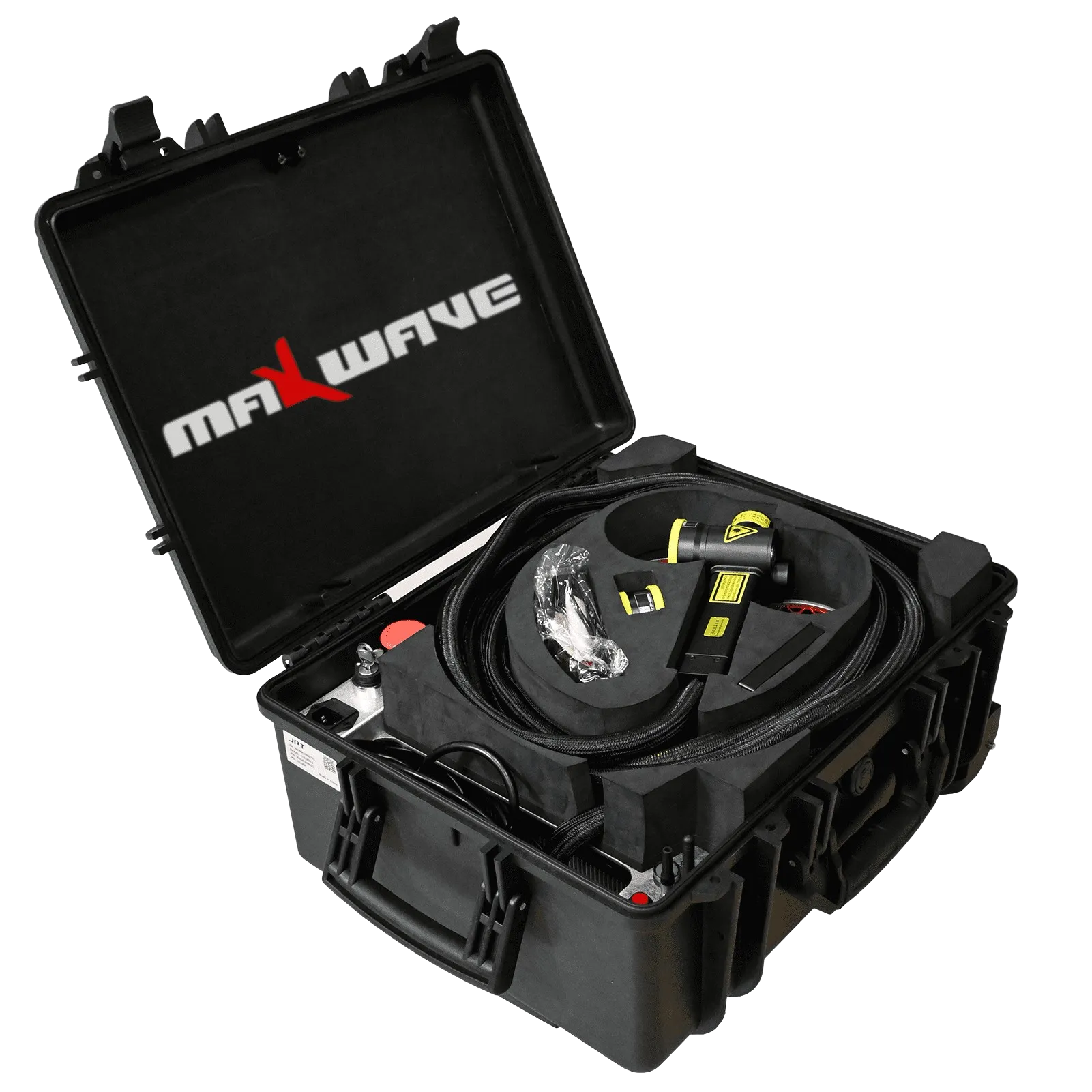
Handheld Laser Cleaner
Portable pulsed units for light rust, precision parts and on-site service de-rusting.
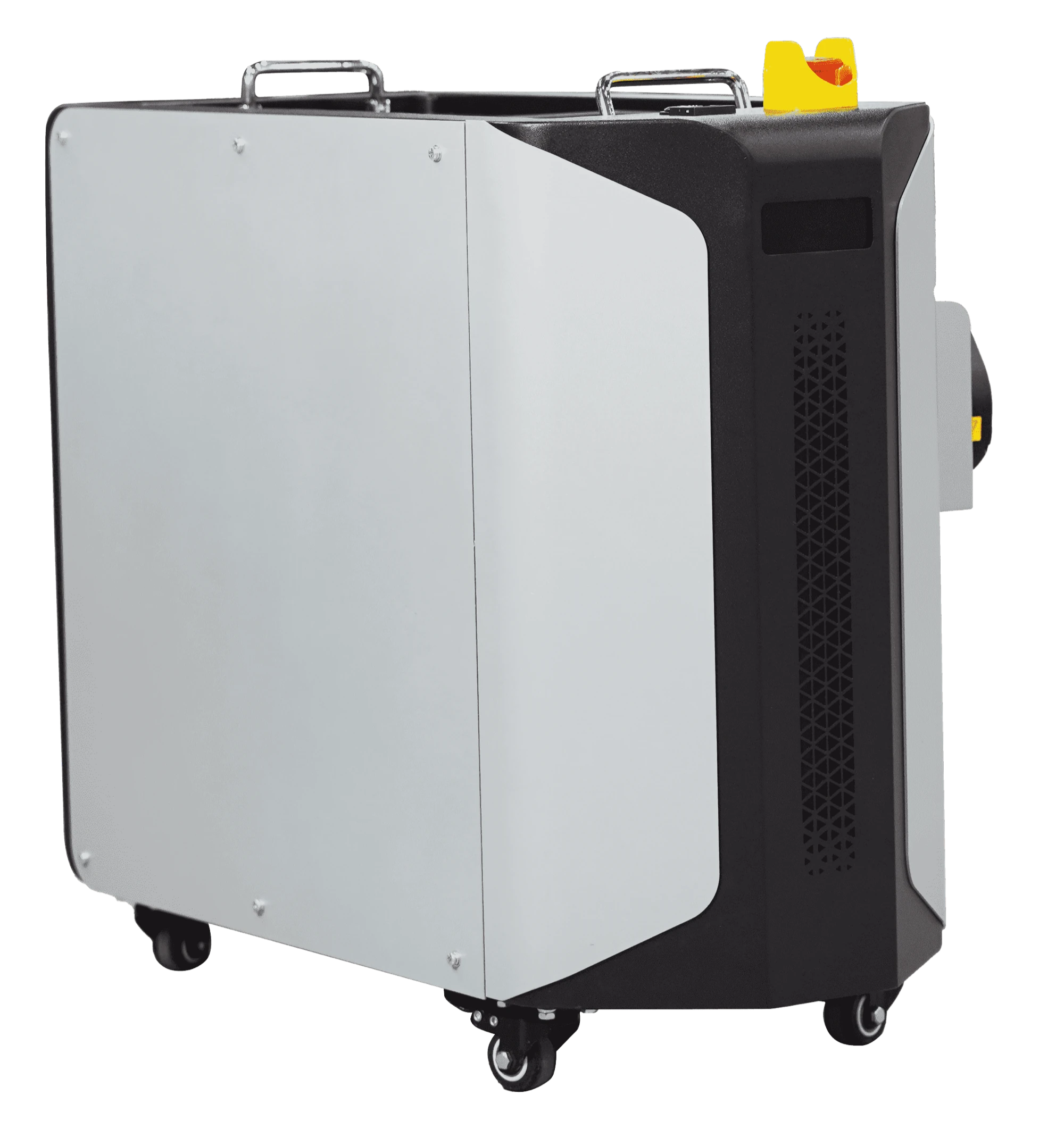
Pulsed Laser Cleaner
Mid-power pulsed platform for oxide, mill scale and controlled rust removal on fabricated parts.
High-Power Laser Cleaner
Water-cooled CW systems for heavy rust, mill scale and large steel surfaces at production volume.
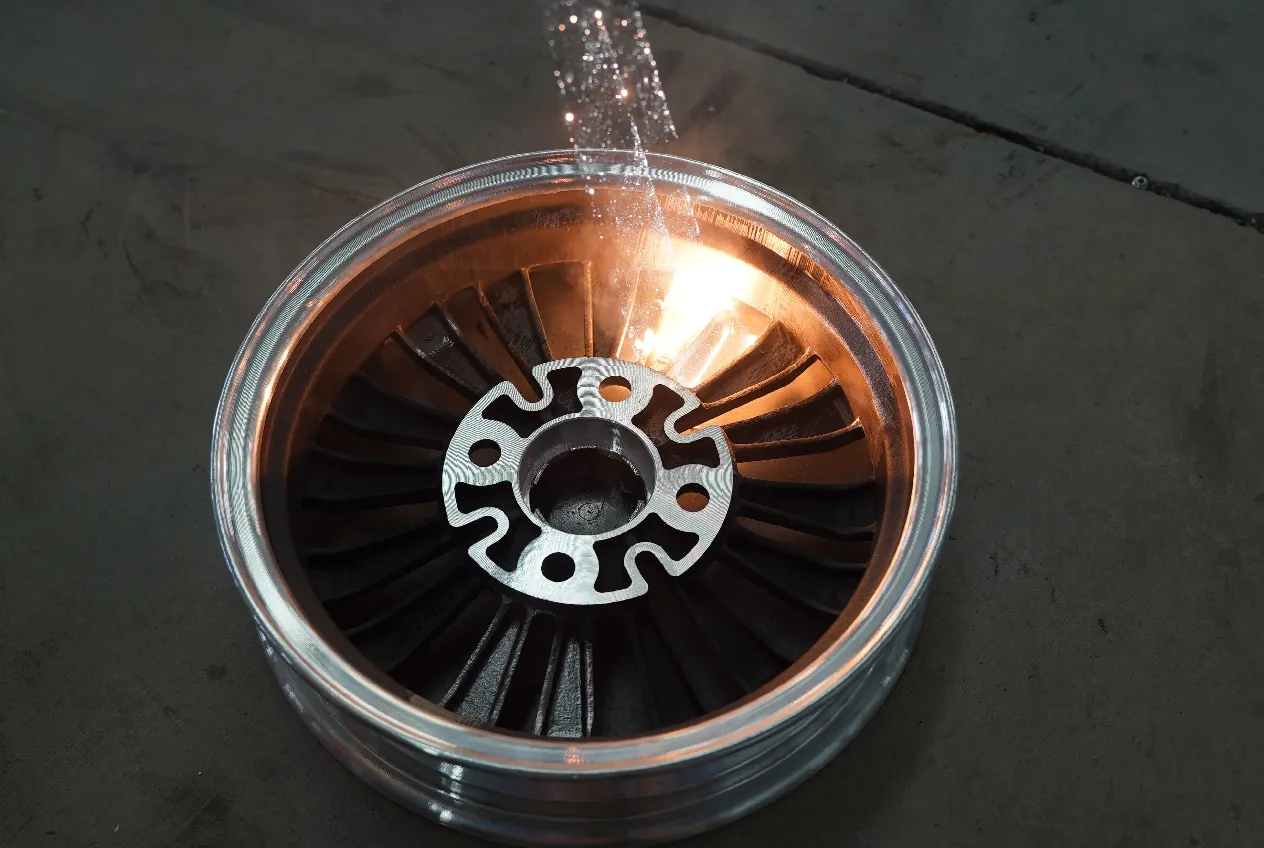
Rust removal, before and after
Representative results on heavily corroded steel. Actual finish depends on rust thickness, base material, laser power and scanning width.
.png)
Laser rust removal machine specs
Cleaning rate is confirmed on your own sample, since it depends on rust thickness, oxide type, power, scanning width and surface condition. The platform parameters below are fixed by series.
| Model | Power | Laser type | Cooling | Best rust condition | Series |
|---|---|---|---|---|---|
| LCB100-300W | 100–300W | Pulsed | Air-cooled | Light rust, on-site service | Handheld |
| LC100-300W | 100–300W | Pulsed | Air-cooled | Light rust, precision parts | Handheld |
| LY100-500W | 100–500W | Pulsed | Air-cooled | Oxide & mill scale | Pulsed |
| LCW1500-3000W | 1500–3000W | Continuous-wave | Water-cooled | Heavy rust, high throughput | High-power |
| HW1000-3000W | 1000–3000W | Continuous-wave | Water-cooled | Marine corrosion, steel structures | High-power |
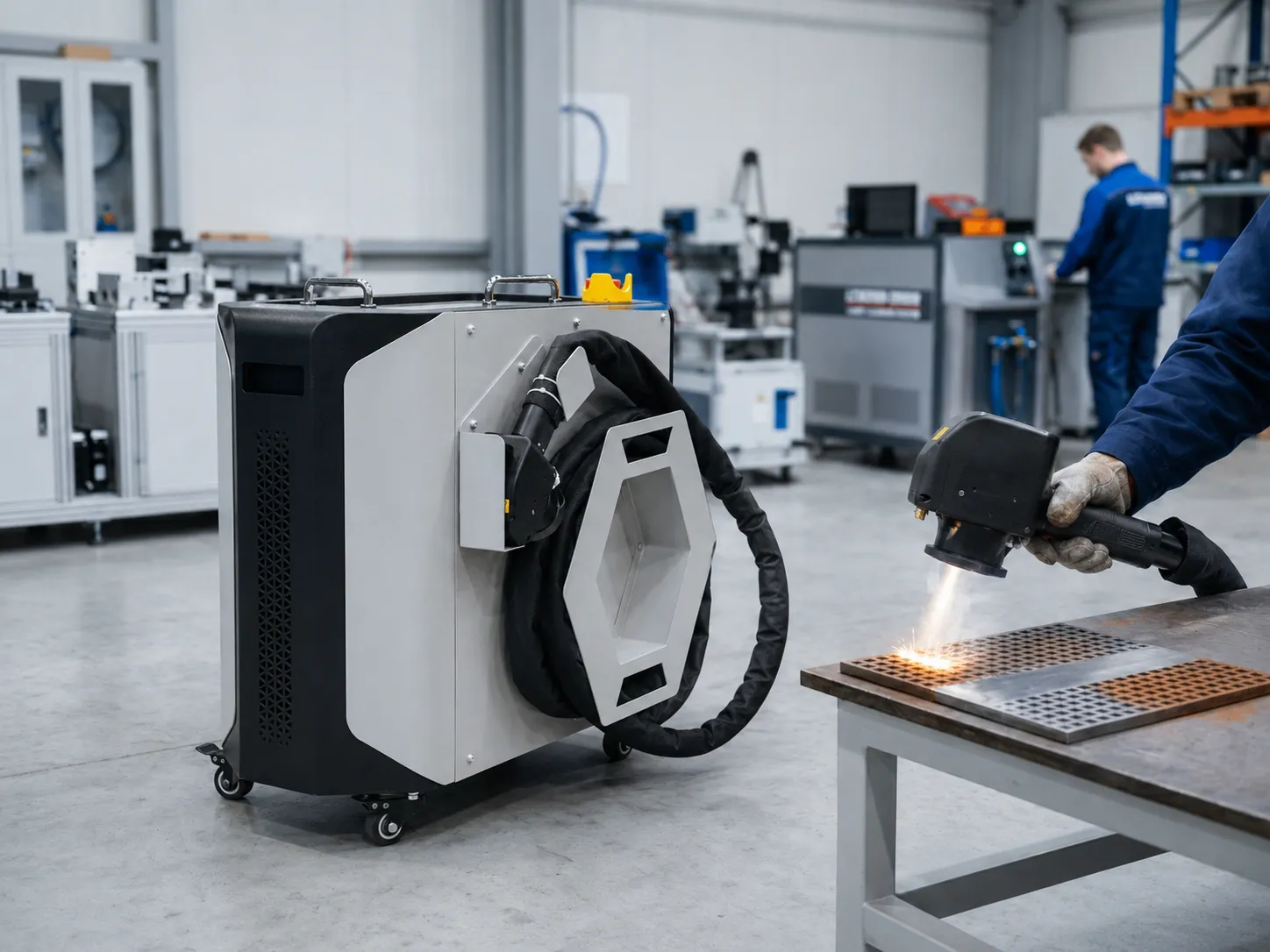
Built for the industries that fight corrosion
Rust removal machine specifications
The platform parameters below are fixed by series; the cleaning result is confirmed on your sample, since rust removal depends on the variables that follow.
| Platform | |
|---|---|
| Laser types | Pulsed fiber (LC / LCB / LY) and continuous-wave (LCW / HW) |
| Power range | 100W to 3000W across the range |
| Cooling | Air-cooled (pulsed) or water-cooled (high-power CW) |
| Process | Dry — no grit, media or chemicals |
| Fume handling | Compatible with fume extraction |
| Configurable to your job | |
|---|---|
| Fiber cable length | configured to your reach |
| Cleaning head & scan width | adjustable to the surface |
| Power supply | configured to your mains |
| Weight class | on request by series |
| Voltage & certification | configured per market |
Items marked in italics are configured per order or confirmed on quote — we do not publish fixed figures that would not match your spec.
What determines your cleaning speed
There is no single rust-removal speed. The rate depends on how much rust there is and how the energy meets it. We report a measured figure for your steel rather than a catalogue number.
- Rust thickness & type — flash rust clears far faster than thick, layered scale
- Base material — steel, stainless and alloy absorb and reflect energy differently
- Laser power — higher power lifts heavy rust faster on large areas
- Scanning width & spot — wider scan covers area; tighter spot reaches detail
- Number of passes — heavy build-up may need more than one pass
- Surface condition — pitting, coatings over rust and contamination change the result
- Operator setup — settings tuned to the job keep the rate consistent
- Material (e.g. carbon steel, stainless)
- Rust condition & rough thickness
- Surface area and weekly volume
- Target cleanliness for the next step
- Indoor or on-site / at height
- A representative rusted sample
Send these with a sample and we report a measured rate for your material — no fixed catalogue figure.
What ships in the Cleaning-Ready package
A rust removal machine on its own is not a result. Every order ships Cleaning-Ready so your team moves from unboxing to de-rusting parts with fewer surprises.
The machine
Pulsed or CW unit matched to your rust condition and volume.
Cleaning head & cable
Head and fiber cable configured to your reach and detail.
Tuned rust parameters
Starting settings for your material from sample testing.
Safety guidance
Laser-safety practice, PPE guidance and enclosure advice.
Training videos
Operator ramp-up material so a new user gets productive.
Spares & ROI tool
Spare-parts list and the ROI calculator to model payback.
Application parameter examples
Indicative starting points only. The right power and mode are confirmed on a sample of your own steel before purchase.
| Material | Contaminant | Suggested series | Mode |
|---|---|---|---|
| Carbon steel | Heavy rust & mill scale | High-power CW — LCW / HW | Continuous |
| Carbon / sheet steel | Light surface rust | Pulsed — LC / LY | Pulsed, fine |
| Stainless | Oxide & light rust | Pulsed — LY | Pulsed, low pass |
| Marine / structural steel | Salt corrosion | High-power CW — HW | Continuous |
Starting points only — tuned per sample test. See the full range or model savings with the ROI calculator.
Safety & compliance
De-rusting with a high-power laser is safe when operated correctly. Here is what responsible operation involves.
Eye protection
Wavelength-rated laser goggles for everyone in the area.
Fume extraction
Capture and filter the fume and particulate the process lifts.
Enclosure / barriers
Screen the beam path; interlocks for fixed-station setups.
Operator training
Trained operators following a safe operating procedure.
Laser cleaning uses a high-power (Class 4) laser. Operators should follow laser-safety practice and local regulations; requirements vary by country, so confirm what applies where you operate.
Laser rust removal questions, answered straight
Send your rust removal requirement and get a factory-direct quote
Tell us your material, rust condition and weekly volume. We will recommend a series, offer sample testing, and send pricing — usually within one business day.
- [email protected]
- +86 153 2715 5363
- Mon–Sat 9:00–18:00 (GMT+8)