Laser Cleaning Machines — Matched to Your Power, Mobility and Material
Five laser cleaner series from a 100W backpack unit for field service to a 3000W water-cooled system for heavy industrial throughput. Compare them side by side below, then send your material for application testing before you order.
Three questions that point you to the right machine
Picking a laser cleaner comes down to where you work, how heavy the contamination is and how much you need to clean per shift. Start with the question that fits you.
Where will you clean?
On-site service calls and fieldwork favour a cordless backpack or a light handheld unit. A fixed workshop or production line can run a cabinet system with a longer duty cycle.
Field service → backpack / handheldHow heavy is the layer?
Thin oxide, paint and delicate parts suit pulsed lasers for finer control. Thick rust, mill scale and large steel surfaces call for high-power continuous-wave output.
Thick rust → continuous-waveHow much per shift?
Occasional detail work runs comfortably at 100–500W. High daily volume on steel structures or shipyards needs 1500–3000W water-cooled systems built for continuous duty.
High volume → 1500–3000WFive laser cleaner series
Each series is built around a different balance of power, mobility and cooling. Open a series page for full specs, application notes and pricing guidance.
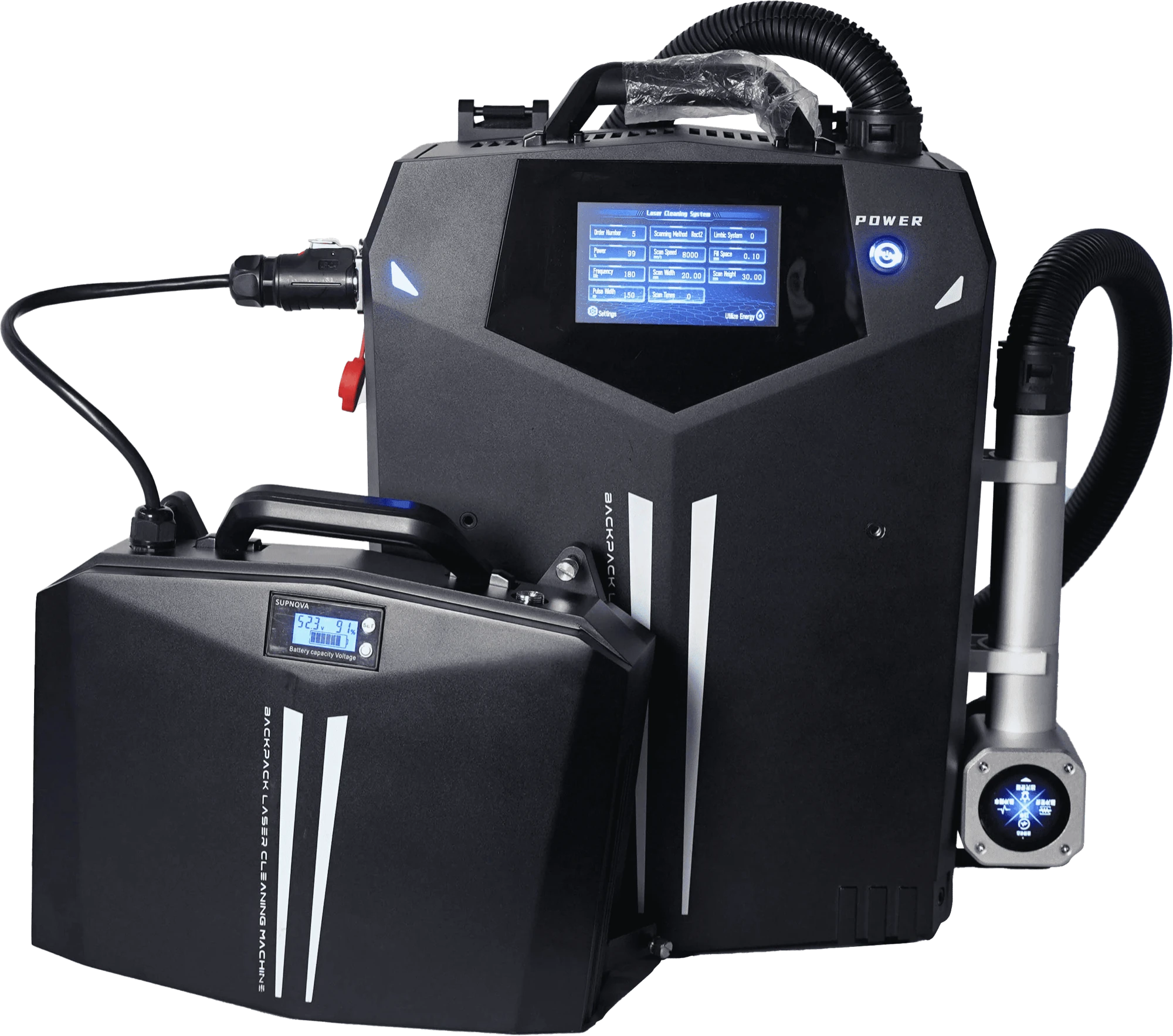
LCB100-300W
Cordless backpack unit for service crews who clean where the work is, away from fixed power.
- 100–300W pulsed fiber laser
- Air-cooled, cordless mobility
- On-site rust, paint & spot cleaning
LC100-300W
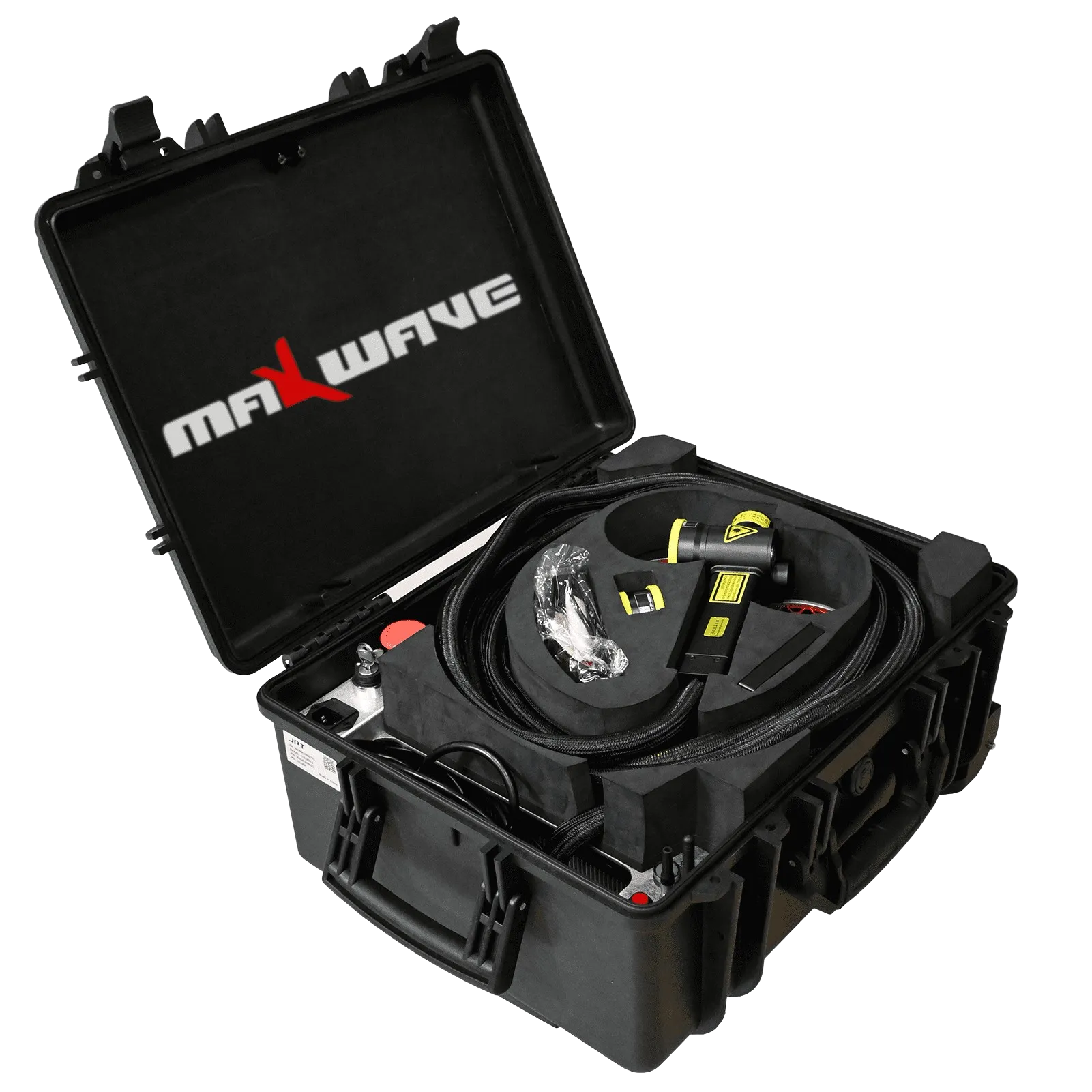
Portable handheld system for precision cleaning of detailed parts, welds and delicate surfaces.
- 100–300W pulsed fiber laser
- Air-cooled, compact cabinet
- Precision parts & detail work
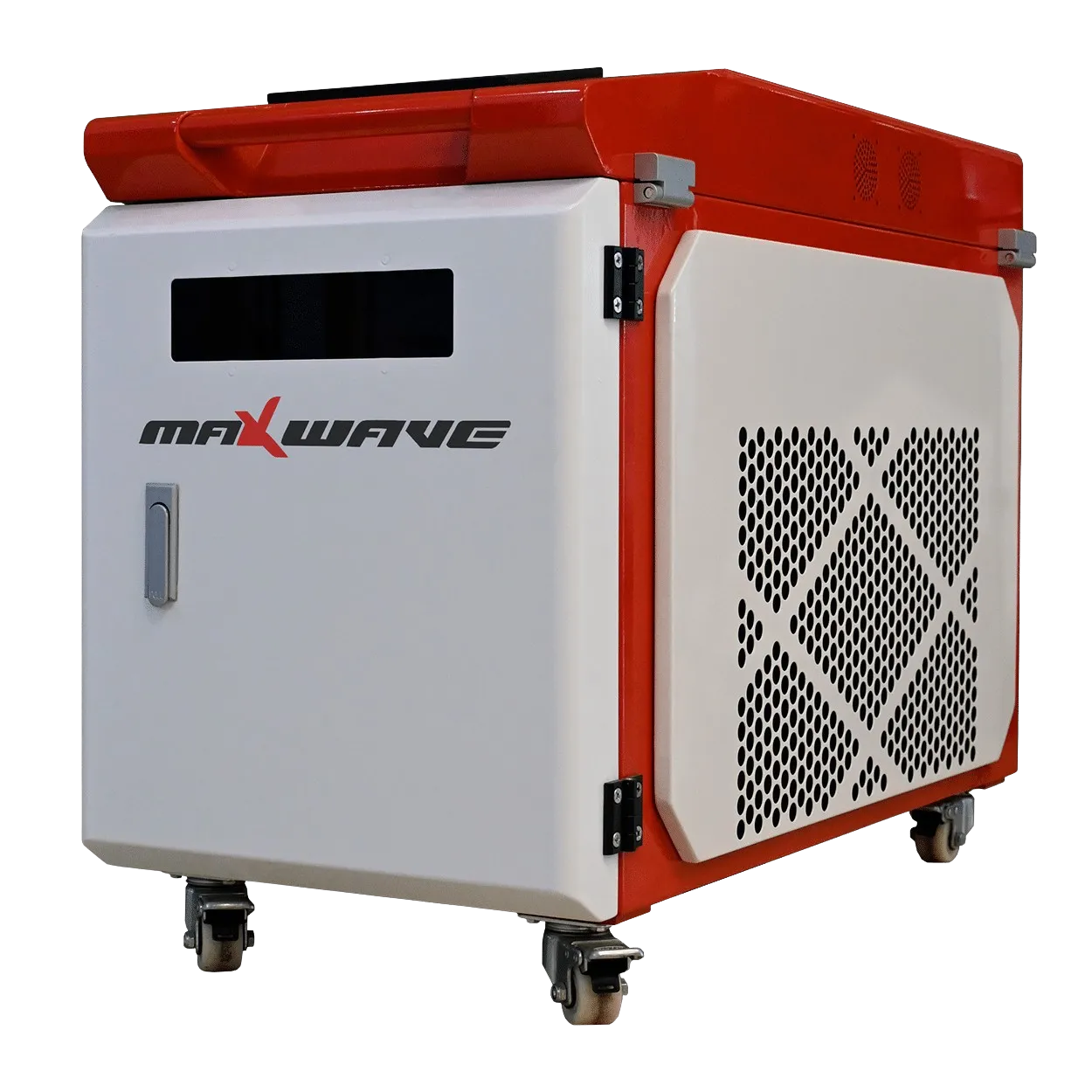
LY100-500W
Higher-power pulsed platform for oxide, paint and mold cleaning where control still matters.
- 100–500W pulsed fiber laser
- Air-cooled cabinet + handheld gun
- Oxide, paint & mold cleaning
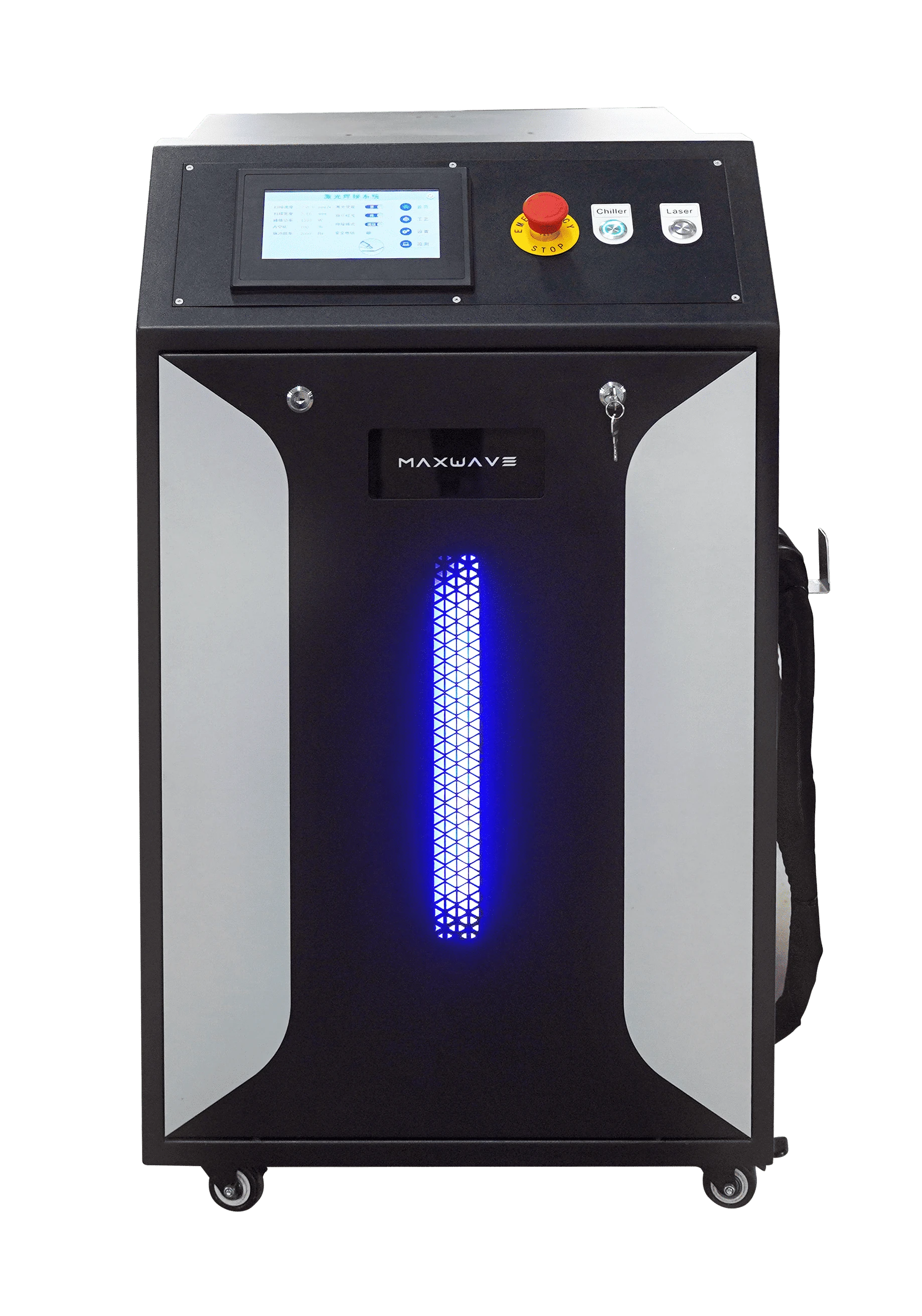
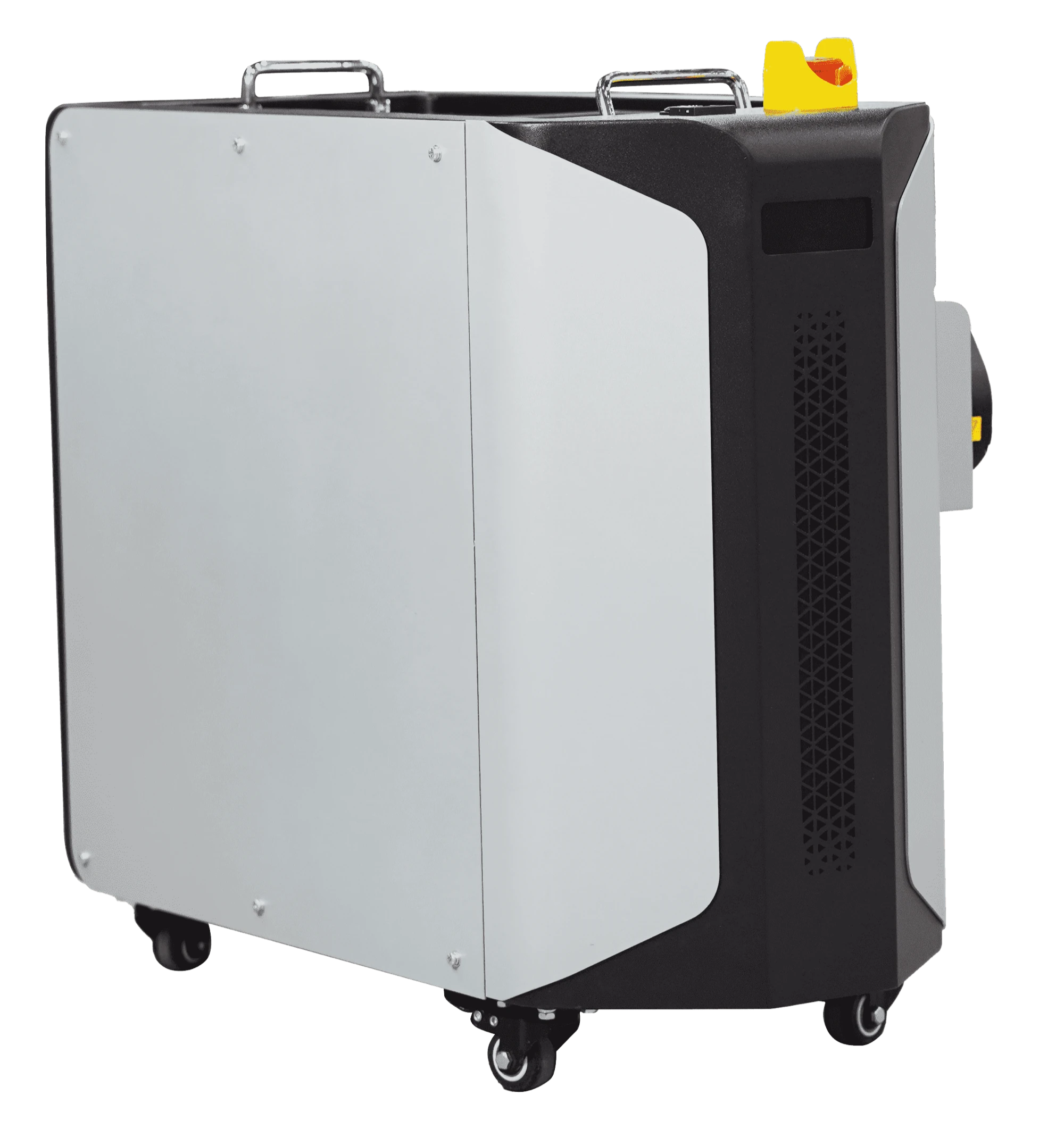
LCW1500-3000W
Water-cooled CW system for heavy rust removal and high-throughput surface prep.
- 1500–3000W continuous-wave
- Water-cooled, continuous duty
- Heavy rust & large surfaces
HW1000-3000W
High-power CW platform for steel structures, shipyards and heavy industrial duty cycles.
- 1000–3000W continuous-wave
- Water-cooled, built for duty cycles
- Steel structure & shipyard scale
Still not sure?
Tell us your material, contaminant and weekly volume — we will recommend the series that fits and test your sample first.
Find the Right Laser CleanerCompare the laser cleaner range
Cleaning speed depends on material, rust thickness, coating type, laser power, scanning width and operator setup, so it is best confirmed on your own sample. The platform differences below hold across the range.
| Model | Power | Laser type | Cooling | Mobility | Best suited for | Series |
|---|---|---|---|---|---|---|
| LCB100-300W | 100–300W | Pulsed | Air-cooled | Backpack, cordless | On-site service & fieldwork | Handheld |
| LC100-300W | 100–300W | Pulsed | Air-cooled | Handheld, portable | Precision parts & detail cleaning | Handheld |
| LY100-500W | 100–500W | Pulsed | Air-cooled | Cabinet + handheld gun | Oxide, paint & mold cleaning | Pulsed |
| LCW1500-3000W | 1500–3000W | Continuous-wave | Water-cooled | Cabinet | Heavy rust & high throughput | High-power |
| HW1000-3000W | 1000–3000W | Continuous-wave | Water-cooled | Cabinet | Steel structure & shipyard scale | High-power |
Already know what you need to clean?
Jump straight to the application page — it covers the right machine, typical settings and what to expect for that surface.
A simple decision tree to your machine
Work through these in order. Each answer narrows the five series to the one that fits your job, budget and material.
How do you want to start?
Lowest entry and a mobile service — a portable backpack or handheld. A precise shop platform — pulsed. A production capital asset — high-power continuous-wave.
Entry → portable · Capital → CWWhere do you clean?
On-site, at height or in the field favours backpack and handheld. A workshop with detailed parts favours pulsed. A line, yard or large structure favours high-power CW.
Field → portable · Line → CWWhat is the material?
Thin, detailed or heat-sensitive parts need pulsed control. Heavy rust on large steel needs continuous-wave throughput. Mixed light work on-site suits a portable unit.
Detail → pulsed · Heavy → CW| If your answer leans… | Start with | See |
|---|---|---|
| Mobile service, on-site, low entry | Backpack & handheld (LCB / LC) | Handheld & backpack |
| Precision, molds, automotive, detail | Pulsed (LY100-500W) | Pulsed series |
| Heavy rust, large steel, production | High-power CW (LCW / HW) | High-power series |
| Not sure yet | Send a sample for testing | Contact us |
The range, and what is configured to you
The series differences are fixed; the items on the right are configured per order or confirmed on quote — we do not publish fixed figures that would not match your spec.
| Across the range | |
|---|---|
| Laser types | Pulsed fiber (LC / LCB / LY) and continuous-wave (LCW / HW) |
| Power range | 100W to 3000W |
| Cooling | Air-cooled (pulsed) or water-cooled (high-power CW) |
| Form factors | Backpack, handheld case, cabinet |
| Process | Dry — no grit, media or chemicals |
| Configured to your job | |
|---|---|
| Fiber cable length | configured to your reach |
| Cleaning head & scan width | adjustable to the surface |
| Power supply | configured to your mains / site |
| Weight class | on request by series |
| Voltage & certification | configured per market |
What determines cleaning speed
Whichever series you choose, there is no single fixed speed. The rate depends on the variables below, so we report a measured figure for your material rather than a catalogue number.
- Material — steel, stainless, aluminium and composites respond differently
- Contaminant & thickness — light oxide clears far faster than heavy rust or thick coating
- Coating type — paint, powder coat and epoxy behave differently
- Laser power — higher power lifts heavy contamination faster on large areas
- Scanning width & spot — wider for coverage, tighter for detail
- Surface condition & passes — pitting and heavy build-up can need more than one pass
- Operator setup — settings tuned to the job keep the rate consistent
- Material and rough contaminant thickness
- Contaminant type (rust / paint / oxide / oil)
- Surface area and weekly volume
- Target cleanliness for the next step
- Indoor, on-site or at height
- A representative sample part
Send these with a sample and we report a measured rate — model the payback with the ROI calculator.
Every series ships Cleaning-Ready
Whichever machine you choose from the range, it arrives as a solution — the hardware plus the know-how, testing and support that turn it into a cleaning result.
The machine
Pulsed or CW, 100W–3000W, matched to your material and volume.
Cleaning head & cable
Head and fiber cable configured to your reach and detail.
Tuned parameters
Starting settings for your material from sample testing.
Safety guidance
Laser-safety practice, PPE guidance and enclosure advice.
Training videos
Operator ramp-up so a new user becomes productive.
Spares & ROI tool
Spare-parts list and the ROI calculator to model payback.
Application parameter examples
A few common combinations and where they point in the range. Indicative only — the right power and mode are confirmed on a sample of your own material.
| Material | Contaminant | Suggested series | Mode |
|---|---|---|---|
| Carbon steel | Heavy rust & scale | High-power CW (LCW / HW) | Continuous |
| Stainless | Weld heat tint | Pulsed (LY) | Pulsed, low pass |
| Aluminium | Oxide / oil | Pulsed (LY / LC) | Pulsed, fine |
| Painted steel | Coating removal | Pulsed (detail) / CW (large area) | per area |
| Metalwork on-site | Surface rust | Backpack / handheld (LCB / LC) | Pulsed |
Starting points only — tuned per sample test.
Safety & compliance
Every series uses a high-power (Class 4) laser. Responsible operation is the same in principle across the range, scaled to the energy.
Eye protection
Wavelength-rated laser goggles for everyone in the area.
Fume extraction
Capture and filter the fume and particulate the process lifts.
Enclosure / interlocks
Beam screening and interlocks for fixed-station setups.
Operator training
Trained operators following a safe operating procedure.
Laser-safety requirements vary by country, so confirm what applies where you operate.
Choosing a laser cleaner, answered straight
Send your cleaning requirement and get a factory-direct quote
Tell us your material, contaminant and weekly volume. We will recommend a series, offer sample testing, and send pricing — usually within one business day.
- [email protected]
- +86 153 2715 5363
- Mon–Sat 9:00–18:00 (GMT+8)