Pulsed Laser Cleaning Machine for Precise, Controlled Cleaning
When the surface underneath matters, pulsed beats brute force. The 100–500W LY series delivers energy in short, controlled pulses — so it strips oxide, thin rust, paint and mold residue from molds, aluminium and precision parts while limiting heat into the substrate.
Short pulses give you control a steady beam can't
A pulsed laser fires energy in brief, repeating bursts instead of a continuous stream. That changes how the surface responds — and it is exactly what delicate and detailed cleaning jobs need.
Tunable energy
Pulse settings target the contaminant layer, so you remove oxide or paint without driving excess energy into the base.
Lower heat build-up
Gaps between pulses let the surface shed heat, limiting warping and discoloration on thin or sensitive parts.
Fine, repeatable detail
Consistent pulses make it well suited to molds, threads, edges and intricate geometry where control matters.
Gentler on the substrate
Energy is matched to the layer, limiting impact on the base metal — the actual result depends on material and settings.
When to choose pulsed over a CW laser
Both remove rust, paint and oxide. Pulsed trades raw throughput for control; continuous-wave trades control for throughput. Match the beam to the job.
| Factor | Pulsed (LY series) | Continuous-wave (LCW / HW) |
|---|---|---|
| Energy delivery | Short, repeating pulses — high control | Steady beam — high average power |
| Heat into substrate | Lower, with cool-down between pulses | Higher continuous heat input |
| Best substrate | Thin, precise, heat-sensitive parts | Thick steel & large robust surfaces |
| Throughput | Moderate, detail-focused | High, for heavy removal |
| Typical work | Oxide, thin rust, molds, aluminium, precision parts | Heavy rust, mill scale, structural steel |
The LY100-500W pulsed platform
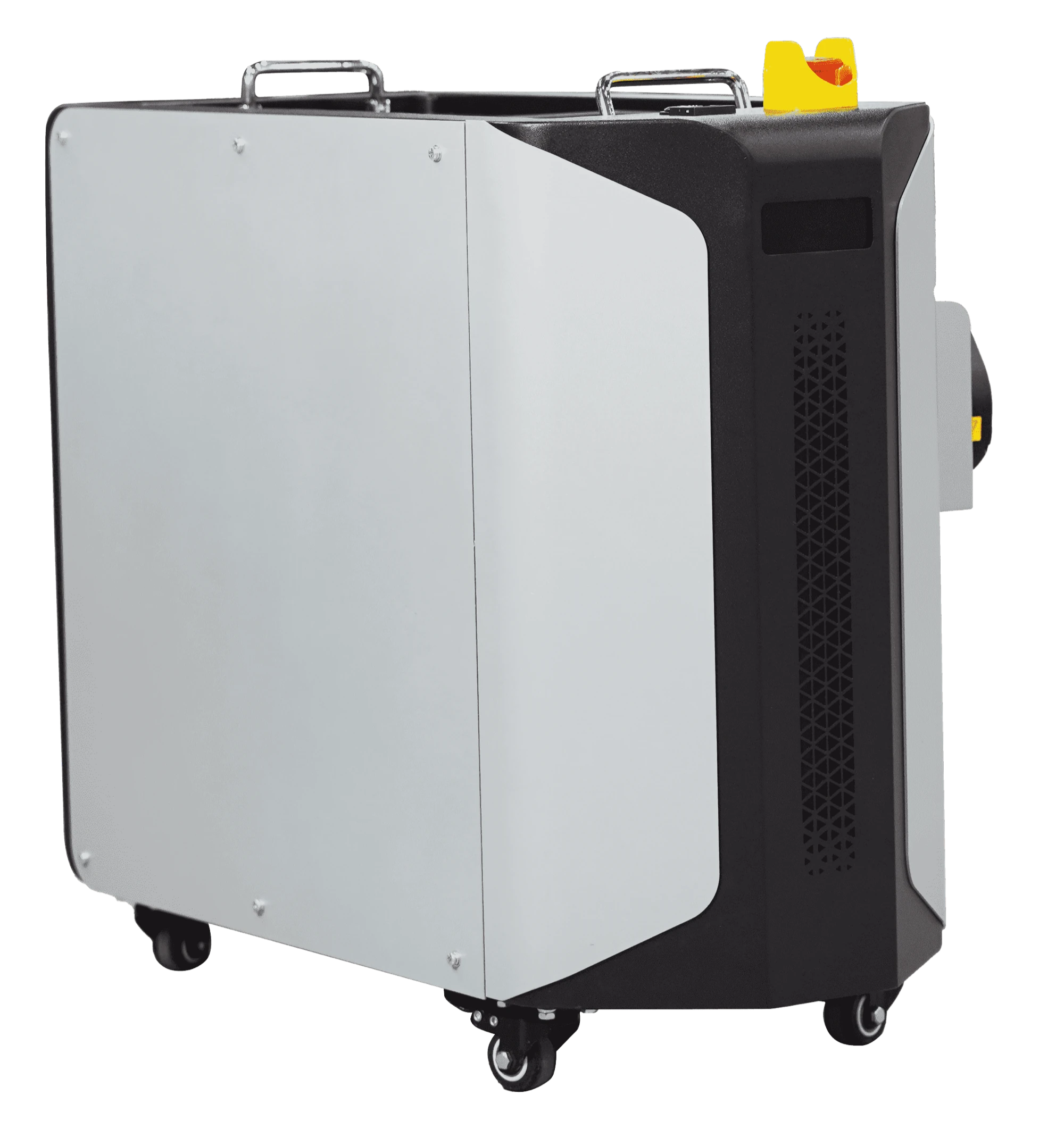
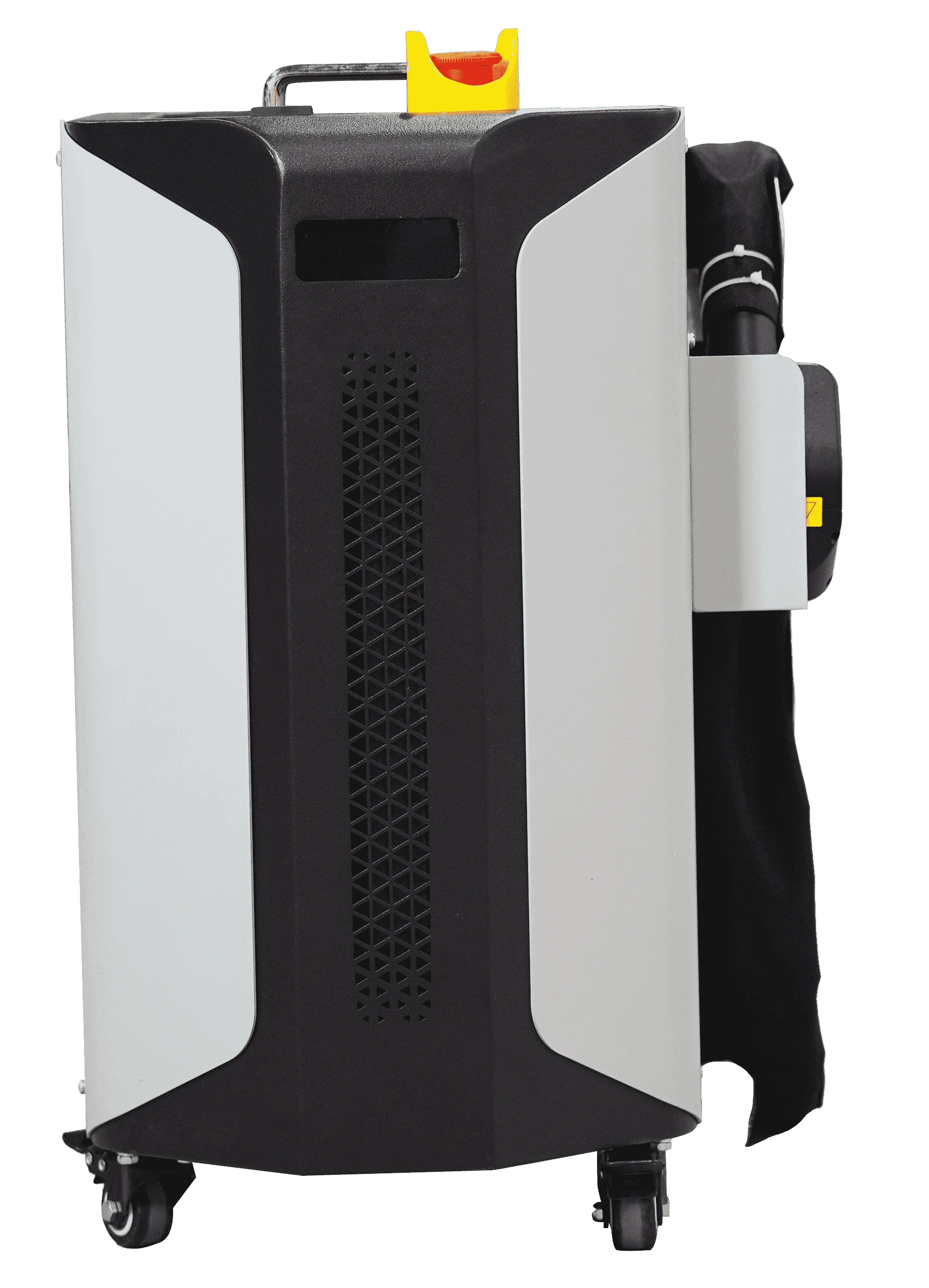
A wheeled cabinet with a handheld pulsed gun, air-cooled and configurable across the 100–500W range. The 300W pulse build is a popular middle ground — enough power for oxide and mold residue, with the control sensitive parts demand.
- 100–500W pulsed fiber laser, configurable
- Air-cooled — no water loop to maintain
- Adjustable pulse, frequency & scan width
- Wheeled cabinet with handheld cleaning gun
Control where it counts — at the gun
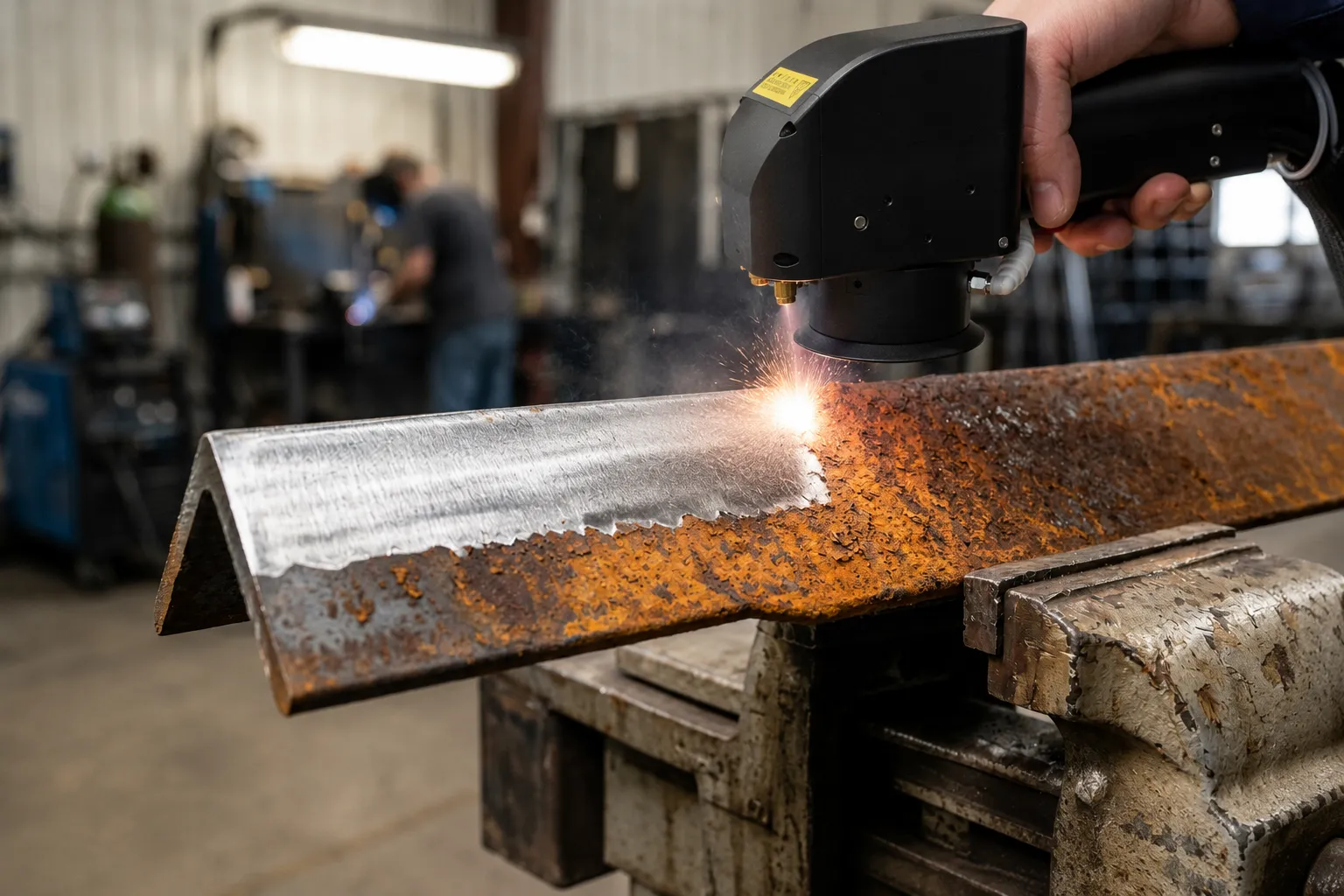
The handheld scanning head sets the working width and pass pattern, so an operator can tighten in on a threaded mold cavity or open up across a flat panel. Settings are dialed to the part, not fixed to the machine.
- Adjustable scan width for detail or coverage
- Lightweight gun for extended handheld work
- Spot-accurate on edges, threads & recesses
Made for the jobs that punish abrasives
These are the surfaces where blasting or grinding does more harm than good — and where pulsed control earns its place. Actual result depends on the material, layer thickness, laser power and scanning setup, so we test your sample first.
Mold cleaning
Clear residue from tire and injection molds without bead blasting.
Oxide & thin rust
Lift oxide, heat tint and light rust from fabricated parts.
Automotive & aluminium
Clean alloy and thin panels for auto restoration and repair.
Selective paint removal
Strip paint and coatings in layers on detailed parts.
LY100-500W pulsed series specs
Cleaning speed is confirmed on your own sample, since it depends on contaminant type, layer thickness, power, scanning width and surface condition. The platform parameters below are fixed by series.
| Parameter | LY100-500W |
|---|---|
| Laser type | Pulsed fiber laser |
| Power configurations | 100W · 200W · 300W · 500W |
| Cooling | Air-cooled |
| Control | Adjustable pulse, frequency & scanning width |
| Form factor | Wheeled cabinet + handheld cleaning gun |
| Best suited for | Oxide, thin rust, molds, aluminium, precision parts |
LY100-500W pulsed specifications
The LY platform is configurable across the 100–500W pulsed range. Pulse, frequency and scan width are adjustable so the energy can be matched to delicate work.
| Platform | |
|---|---|
| Laser type | Pulsed fiber laser |
| Power configurations | 100W · 200W · 300W · 500W |
| Cooling | Air-cooled — no water loop to maintain |
| Control | Adjustable pulse, frequency & scanning width |
| Form factor | Wheeled cabinet with handheld cleaning gun |
| Configurable to your job | |
|---|---|
| Cleaning head | scan width set to detail or coverage |
| Fiber cable length | configured to your reach |
| Power supply | configured to your mains |
| Weight class | on request |
| Voltage & certification | configured per market |
Items marked in italics are configured per order or confirmed on quote — we do not publish fixed figures that would not match your spec.
What determines your cleaning speed
With pulsed cleaning the goal is control as much as speed — protecting the substrate while removing the layer. The rate depends on the variables below and is confirmed on your part.
- Contaminant & thickness — thin oxide and light paint clear quickly; heavy layers take more passes
- Substrate sensitivity — thin metal, aluminium and detail parts are run gently, which paces the work
- Pulse energy & frequency — tuned to lift the layer with low heat into the base
- Spot size & scan width — tighter for detail, wider for coverage
- Number of passes — selective, layer-by-layer work may use several light passes
- Operator setup — consistent settings keep detailed work even and repeatable
- Part type and material (e.g. mold, aluminium)
- Contaminant (oxide / paint / residue)
- How heat- or detail-sensitive it is
- Target finish for the next operation
- Batch size and frequency
- A representative sample part
Send these with a sample and we report a measured rate for your material — no fixed catalogue figure.
What ships in the Cleaning-Ready package
Precision work depends on the right settings as much as the machine — so every LY ships Cleaning-Ready, dialled toward your parts.
The pulsed platform
LY100-500W configured to your power band.
Cleaning head & cable
Handheld head with adjustable scan width and reach.
Tuned pulse settings
Starting pulse, frequency and scan settings from testing.
Safety guidance
Laser-safety practice and PPE guidance.
Training videos
Operator ramp-up for precision and selective work.
Spares & ROI tool
Spare-parts list and the ROI calculator.
Application parameter examples
Indicative starting points for pulsed work. Final settings are confirmed on a sample, particularly on heat-sensitive or detailed parts.
| Material | Contaminant | Suggested series | Mode |
|---|---|---|---|
| Tool steel / molds | Residue & release agent | Pulsed — LY (300W common) | Pulsed, fine |
| Aluminium / alloy | Oxide & oil | Pulsed — LY | Pulsed, low heat |
| Stainless | Weld heat tint | Pulsed — LY | Pulsed, low pass |
| Coated parts | Selective paint | Pulsed — LY | Pulsed, layered |
Starting points only — tuned per sample test. See mold cleaning or weld cleaning for application detail.
Safety & compliance
Pulsed systems are still high-power (Class 4) lasers. Controlled energy does not change the safety basics.
Eye protection
Wavelength-rated laser goggles in the work area.
Fume extraction
Capture fume and fine particulate from the process.
Enclosure / interlocks
Beam screening and interlocks for fixed stations.
Operator training
Trained operators and a safe operating procedure.
Laser cleaning uses a high-power (Class 4) laser. Operators should follow laser-safety practice and local regulations; requirements vary by country, so confirm what applies where you operate.
Pulsed laser cleaning questions, answered straight
Send your part and get a factory-direct pulsed quote
Tell us your material, contaminant and how sensitive the substrate is. We will recommend a power configuration, offer sample testing, and send pricing — usually within one business day.
- [email protected]
- +86 153 2715 5363
- Mon–Sat 9:00–18:00 (GMT+8)