Laser Cleaning for Manufacturing & Metal Fabrication
Take surface prep off the critical path. Laser cleaning replaces sandblasting, grinding and chemical cleaning on the production line — with throughput you can match to takt time, continuous-duty running, and no media or chemical waste stream to manage.
Sandblasting and chemicals are slowing the line and the audit
For plant and operations teams, surface prep is rarely the headline cost — it is the labour, the waste handling and the compliance overhead stacked behind it.
Low cleaning efficiency
Manual blasting and grinding tie up labour and rarely keep pace with line takt time.
High labour cost
Skilled operators spend hours on prep, masking and cleanup instead of value-adding work.
Blasting dust & media
Grit, dust and containment add housekeeping, PPE and spent-media disposal cost.
Chemical compliance
Solvent cleaning carries storage, handling and hazardous-waste reporting obligations.
The five questions a production buyer actually asks
We would rather answer these straight than bury them. Here is how laser cleaning measures up on each.
Throughput & takt match
Cleaning rate depends on contamination, power and scan width, so we report a measured rate for your material rather than a catalogue figure — so you can match it to takt time before you buy.
24/7 stability & maintenance
High-power CW systems are water-cooled for continuous duty, with a low-consumable design. We share the maintenance schedule and expected service intervals up front.
After-sales response
Spare parts, technical support and remote troubleshooting keep the line moving. We agree response expectations as part of your supply terms.
ROI & depreciation
Laser shifts cost from recurring consumables to a capital asset. We help you model payback and depreciation over your planned service life — honestly, including where it does not fit.
Environmental compliance
No grit, media or solvent waste stream simplifies your environmental footprint. Units are compliance-ready and can be configured to support your certification and safety requirements.
Want the numbers?
Send us your material and weekly volume — we will run a sample, report the measured rate, and model the ROI with you.
Request a Quote
From a manual cell to an automated station
Run it handheld in a fabrication cell, or integrate a fixed head into a station — high-power continuous-wave for throughput on heavy work, pulsed where precision parts demand control. The same platform covers more of your prep in one place.
- Handheld units for flexible fabrication cells
- Fixed-head integration for automated stations (optional)
- CW throughput for heavy work, pulsed for precision
- One platform across rust, weld prep and coating removal
.png)
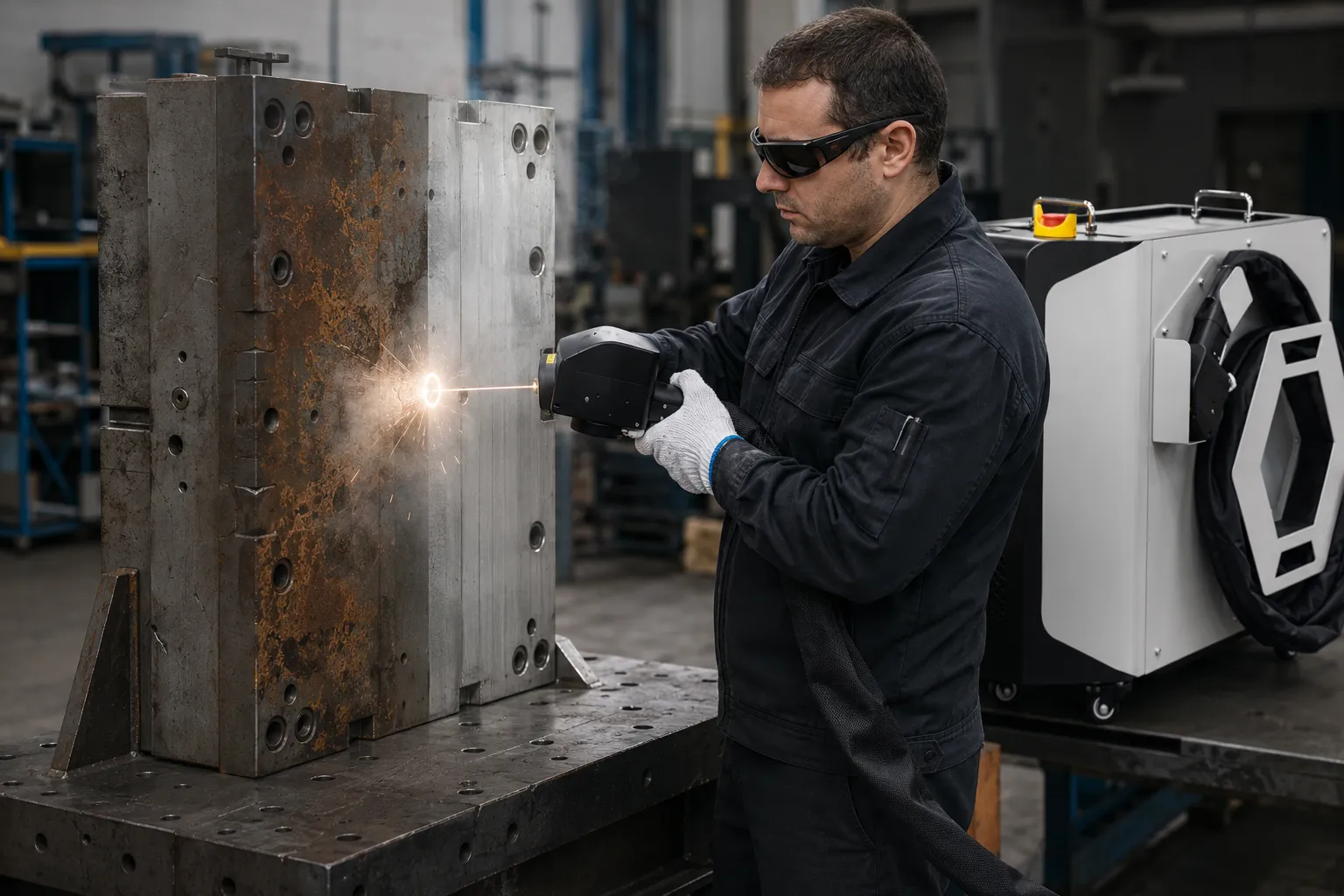
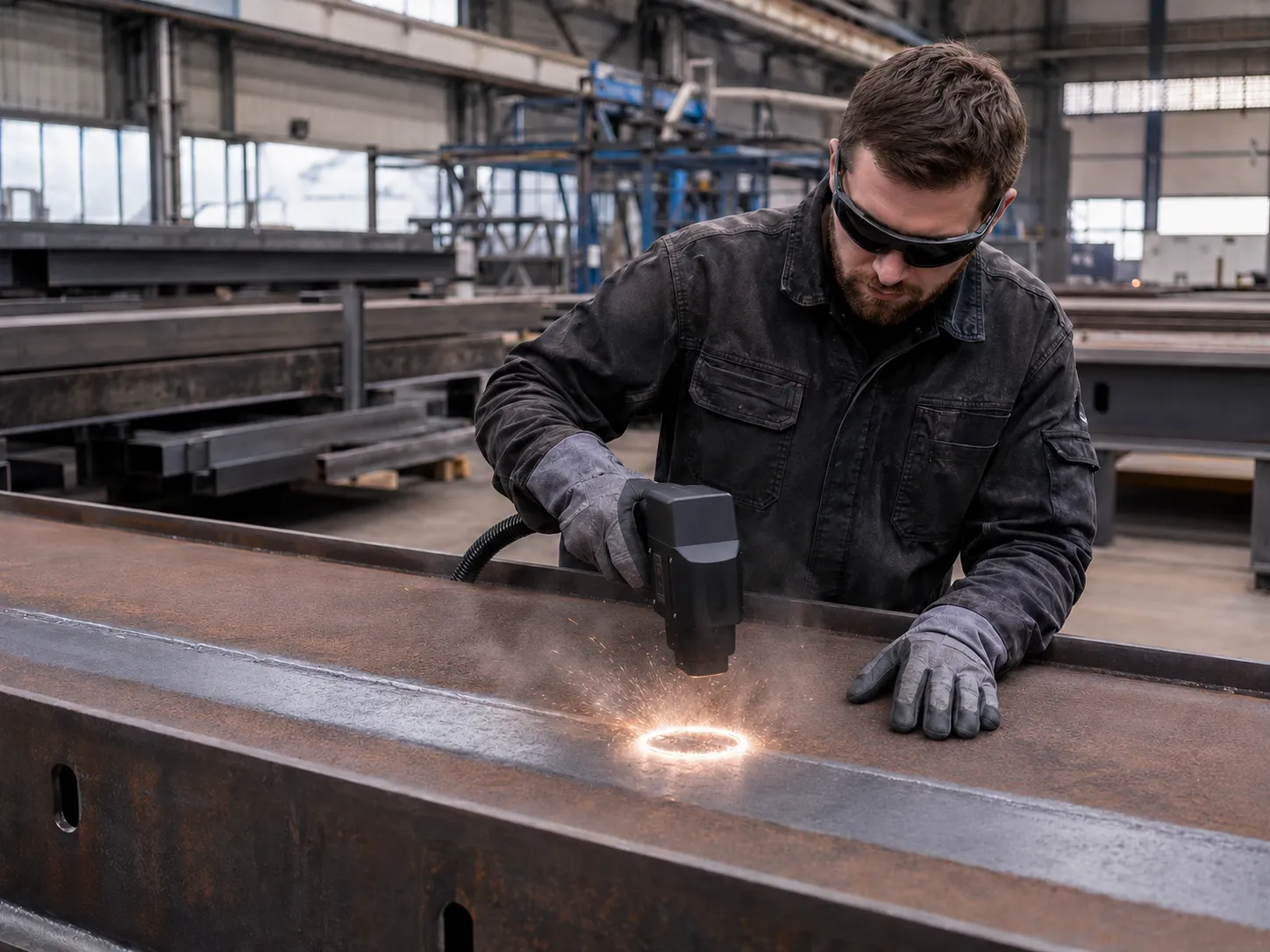

CW for throughput, pulsed for precision
Match the platform to the work on your line — high-power continuous-wave for volume, pulsed for sensitive parts.
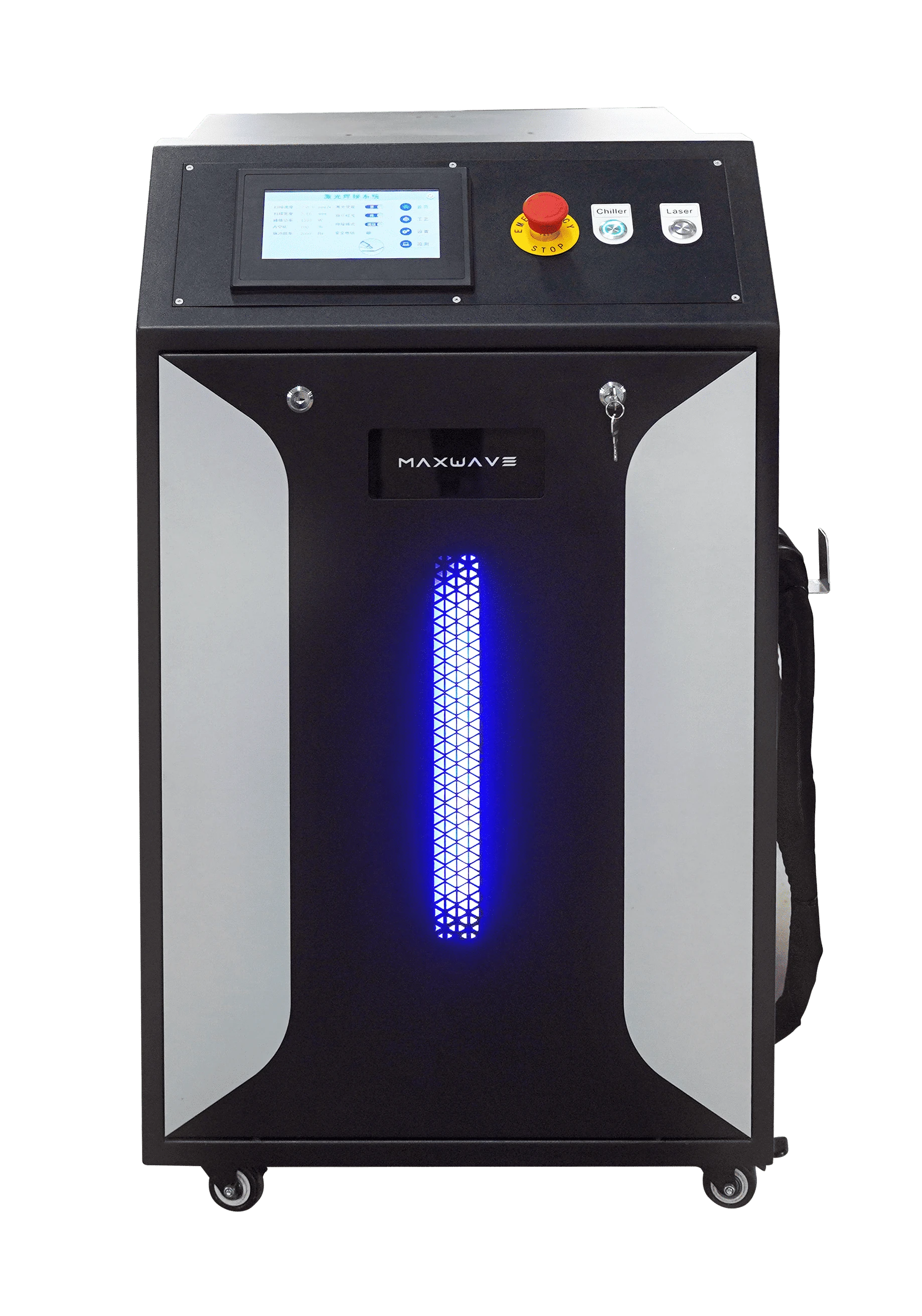
High-power CW — LCW / HW
1000–3000W water-cooled systems for heavy rust and large-surface prep at production volume and continuous duty.
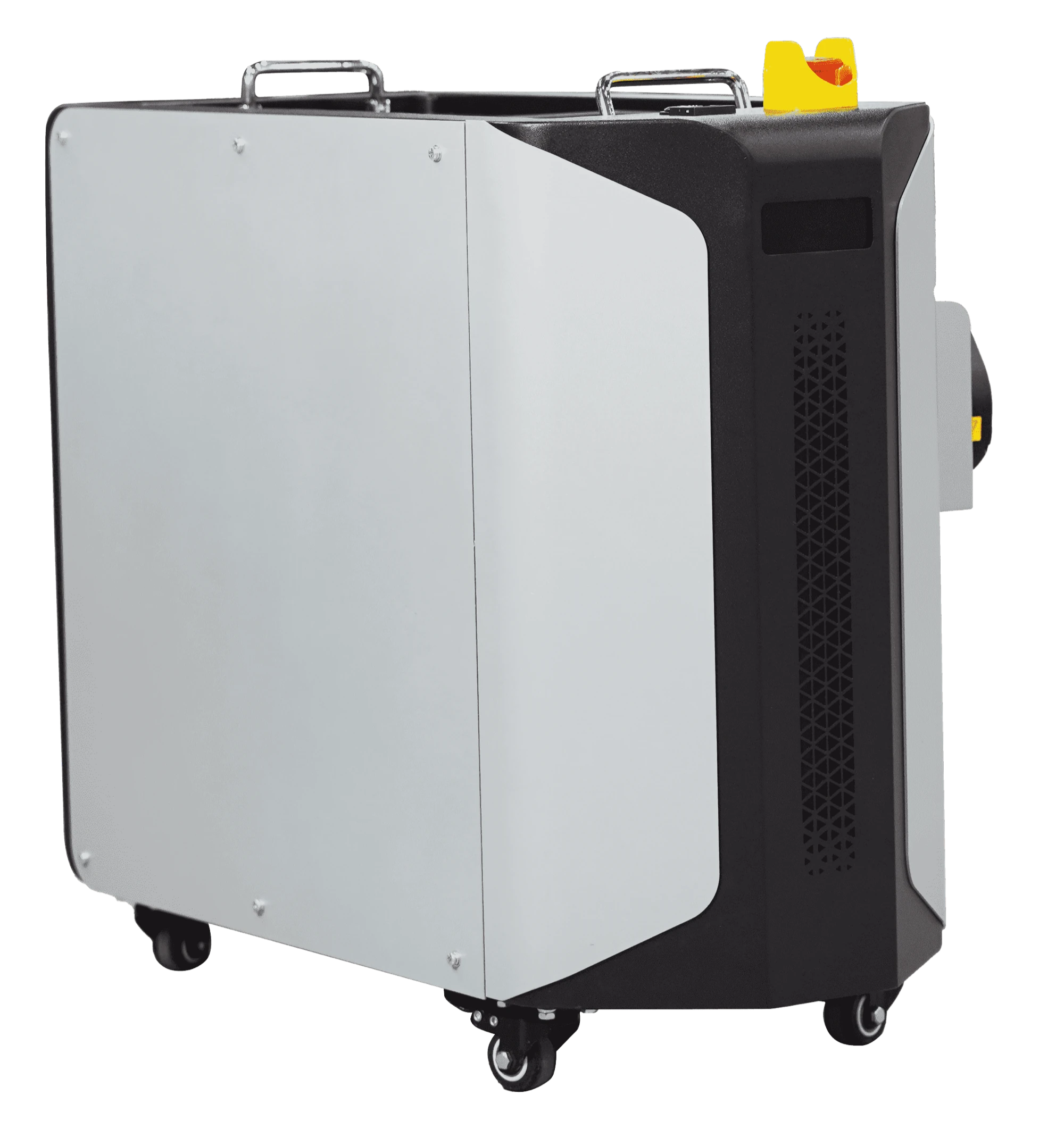
Pulsed — LY100-500W
Controlled cleaning for oxide, thin parts and detailed components where the substrate is sensitive.
How laser cleaning compares for production
Structural differences across cost, efficiency, environment and substrate impact.
| Factor | Laser cleaning | Sandblasting | Chemical cleaning |
|---|---|---|---|
| Ongoing cost | Electricity + maintenance | Media + labour + cleanup | Chemicals + disposal |
| Line efficiency | Continuous, low-handling | Booth, masking, cleanup | Dwell, rinse, dry |
| Environment | No media or solvent waste | Dust + spent grit | Hazardous liquid waste |
| Substrate impact | Low, energy-controlled | Can erode & warp | Can etch / soften |
| Labour | Lower per part, automatable | Labour-heavy | Handling + PPE |
Model the payback before you commit
Laser cleaning shifts spend from recurring consumables to a depreciating capital asset. For high-volume prep, that shift is where the payback lives. Tell us your weekly cleaning hours and current method, and we will model it honestly with you.
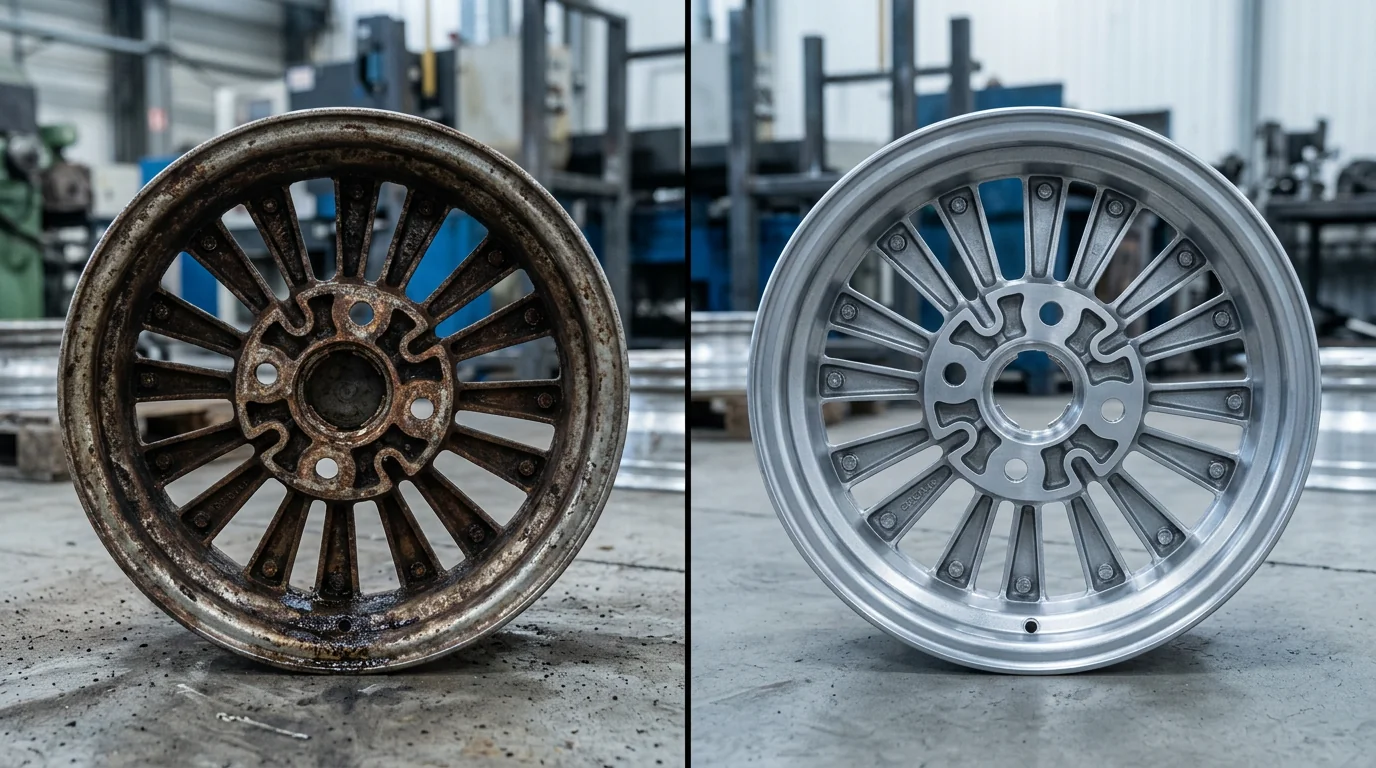
Production-line cleaning results
Representative before/after results from manufacturing surface prep.
Materials & conditions matrix
What laser cleaning replaces across the production line, and on which materials.
| Line task | Material | Suggested series |
|---|---|---|
| Rust & oxide removal | Steel | High-power CW / pulsed |
| Weld cleaning & prep | Stainless & steel | Pulsed |
| Coating removal | Steel, aluminium | Pulsed / CW |
| Degreasing | Parts | Pulsed / CW |
The result on any combination depends on the material, contaminant, laser power and scanning setup — confirmed on a representative sample.
The workflow, step by step
From line assessment to a running cell or station — the integration workflow.
Assess the line & takt
Identify the prep task, the material and the cycle time to match.
Sample test for a measured rate
We run your material and report the rate so you can match it to takt.
Select platform & integration
Pulsed or CW, handheld cell or fixed-head/robot station.
Operate in cell or on station
Continuous-duty cleaning with minimal masking or media.
QC & coating prep
Confirm the surface meets the standard for the next operation.
Related machines & solutions
Manufacturing laser cleaning questions, answered straight
Send your line requirement and get a factory-direct quote
Tell us your material, contamination and weekly volume. We will run a sample, report the measured rate, recommend a platform, and model ROI — usually with a reply within one business day.
- [email protected]
- +86 153 2715 5363
- Mon–Sat 9:00–18:00 (GMT+8)