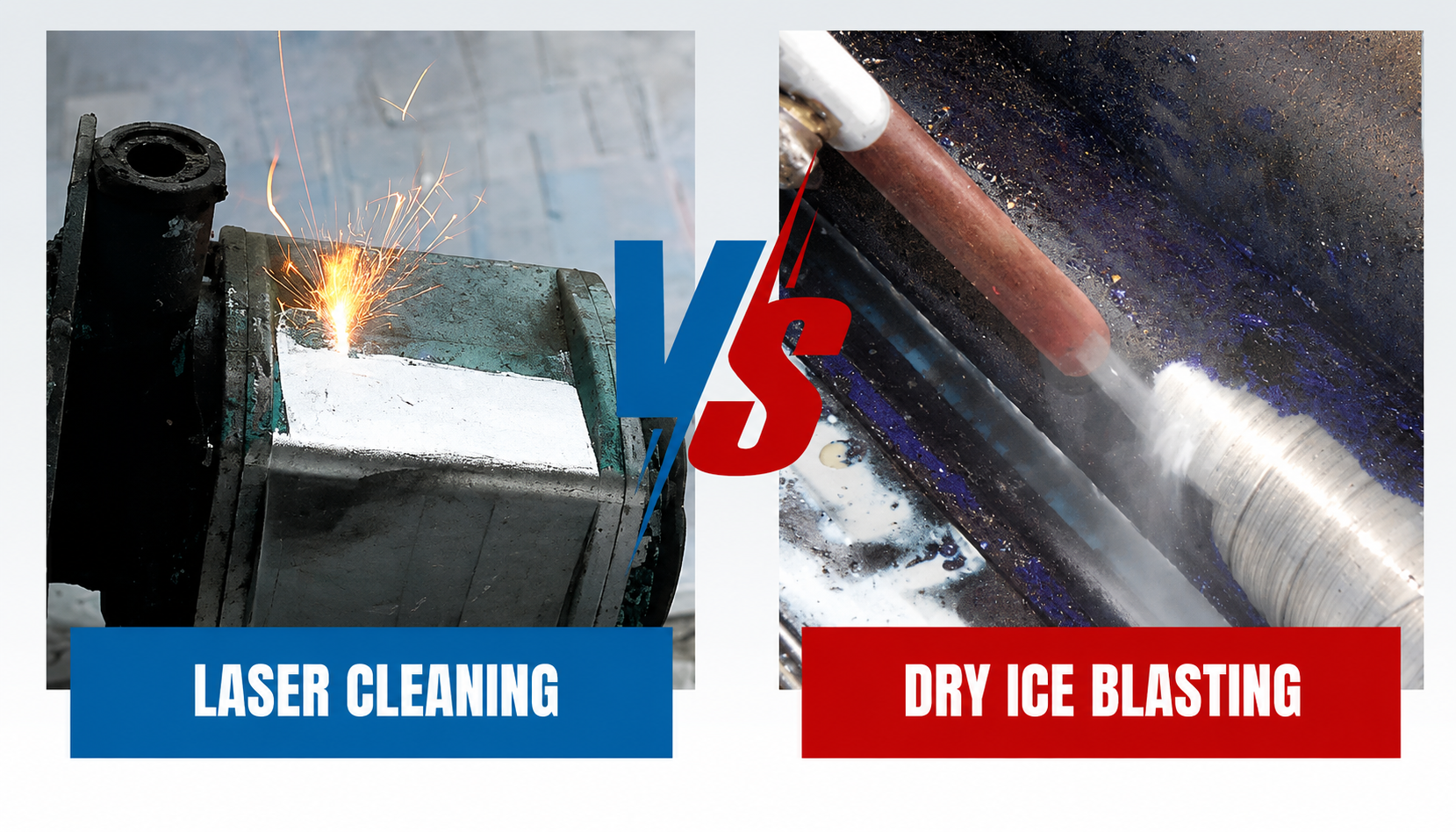
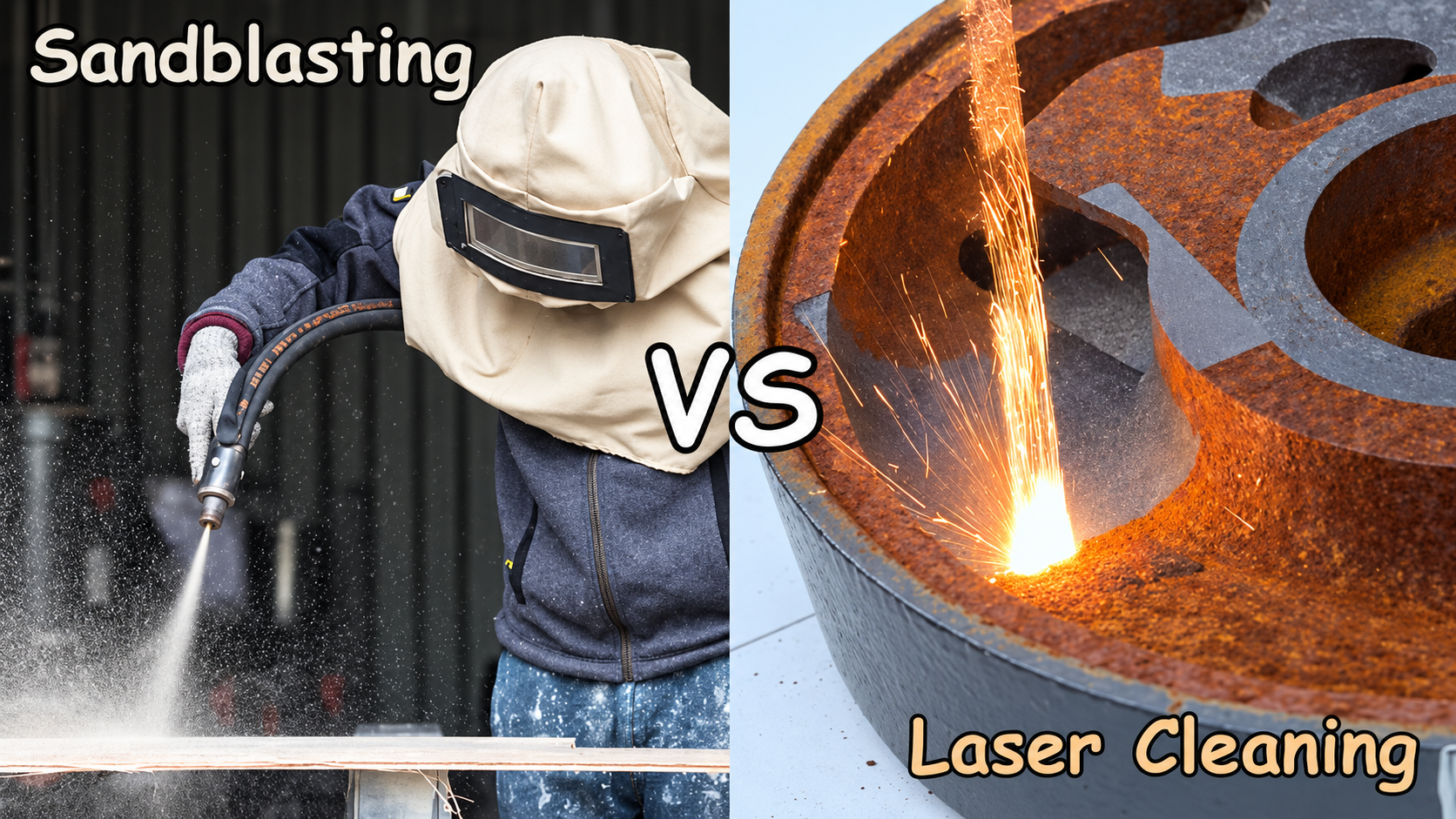
Laser cleaning is generally better for removing bonded rust and selectively stripping coatings from metal, while soda blasting is often a practical choice for removing paint from sensitive surfaces. However, neither method is the best solution for every project.
Soda blasting uses compressed air to propel sodium bicarbonate particles against a surface. Laser cleaning uses concentrated light energy to remove paint, rust, and other contamination without abrasive media.
For industrial maintenance, automotive restoration, and metal fabrication businesses, the choice affects cleaning results, surface condition, labor, and operating costs. If you are sourcing equipment, start with a laser cleaning supplier for manufacturing that can share measured cleaning rates for your material.
The most important question is not simply which technology removes material faster. It is which method can produce the required finish on your actual parts at a reasonable total cost.
1. Which Is Better for Paint Removal?
Both methods can remove paint, but their advantages become clearer when you consider the underlying material and the area being cleaned.
Soda blasting is widely used for removing paint, grease, and surface contamination from automotive components, fiberglass, aluminum, and other suitable materials.
Because sodium bicarbonate is a relatively soft blasting medium, it can remove coatings with less mechanical impact than many harder abrasives.
However, results still depend on pressure, media formulation, coating adhesion, and substrate condition.
Laser cleaning is particularly useful when paint must be removed from a specific area of a metal component.
For example, a fabrication workshop may need to strip a narrow section of coating before welding or remove old paint around a repair area without blasting the entire part, and a laser paint stripping machine supplier can match equipment to that job.
A laser paint removal process can be adjusted to target these areas, although excessive energy may overheat or damage the underlying surface.
Paint Removal Comparison
Factor | Laser Cleaning | Soda Blasting |
|---|---|---|
Paint Removal | Selective or full removal on suitable materials | Effective coating removal on suitable surfaces |
Main Advantage | Precise, non-contact treatment | Gentle mechanical stripping |
Sensitive Substrates | Requires careful laser parameter control | Often suitable after testing |
Large Painted Areas | Depends heavily on laser power and coating thickness | Can be practical with suitable blasting equipment |
Surface Residue | No added abrasive media | Soda residue must be removed before recoating |
Main Limitation | Higher equipment investment and laser safety requirements | Media consumption, dust, and cleanup |
Consider two different projects.
Automotive restoration: A workshop removing old paint from a fiberglass panel may prefer soda blasting because it can provide relatively gentle coating removal without relying on laser heating.
Industrial machinery repair: A workshop removing paint from a small area around a welded steel bracket may prefer laser cleaning because it can target the required section without spreading blasting media throughout the work area.
Neither example establishes a universal winner. The coating and substrate should be tested before full-scale work.

2. Which Is Better for Rust Removal?
Rust removal is where the difference becomes more significant.
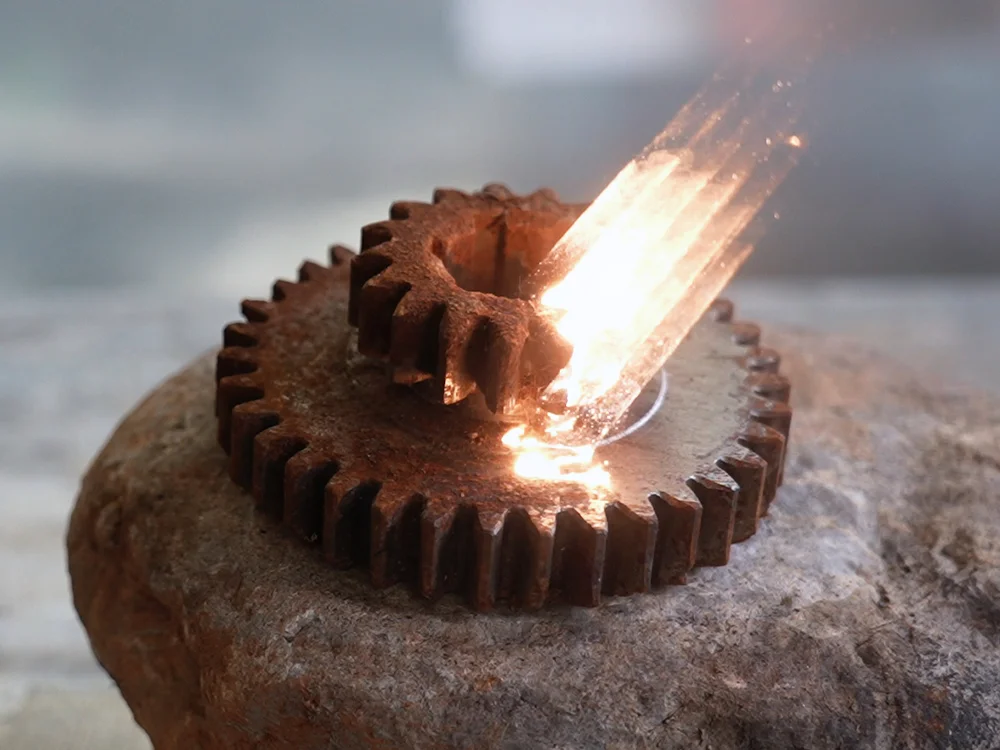
Laser cleaning is usually the stronger option for bonded surface rust, localized corrosion, and oxide removal on metal components.
Ordinary sodium bicarbonate media is soft and friable. Although soda blasting may remove loose contamination and some very light flash rust, it generally struggles with firmly bonded rust, heavy corrosion, and mill scale.
Certain specialty soda-based formulations contain harder abrasives that improve rust removal. These should be evaluated separately from standard pure soda blasting.
Light Rust vs Heavy Corrosion
For light rust on a precision steel component, a pulsed laser cleaner can provide controlled removal.
The laser parameters can be adjusted to reduce unwanted changes to the underlying surface.
This can be useful for tooling, machined parts, and localized maintenance where abrasive residue is undesirable.
For heavier corrosion on thick structural steel, higher-power laser cleaning may offer better productivity.
However, severe rust spread across a very large structure can also favor conventional abrasive blasting with harder media.
Soda blasting should not automatically be selected for such work simply because it is gentler.
Practical Example: Rusted Steel Equipment
Imagine a metal fabrication shop preparing a rusted steel component for repair. A fiber laser rust remover supplier can help such a shop test its own sample part before buying.
The surface contains bonded oxidation around weld seams, corners, and bolt locations.
Ordinary soda blasting may remove surface dirt and loose deposits but leave much of the rust behind.
A suitable laser rust removal machine can target the oxidation more directly.
However, the operator must still verify that the rust is removed to the required standard.
Laser cleaning cannot restore metal already lost to deep corrosion or pitting.
For repainting, the final surface must also meet the coating manufacturer's cleanliness and surface-profile requirements.
Removing rust does not automatically mean the surface is ready for a new protective coating.
3. How Do Surface Damage, Cleanup, and Costs Compare?
The most important business difference between these methods is not just the purchase price of a factory-direct laser cleaning machine.
It is the combination of equipment, consumables, labor, cleanup, and the final surface condition.
Surface Damage and Finish
Soda blasting generally creates less mechanical profiling than harder abrasive blasting media.
This is useful when the objective is coating removal while preserving the original surface texture.
However, its limited ability to create an anchor profile can be a disadvantage when a new industrial coating requires a specified surface roughness.
Laser cleaning does not physically strike the metal with abrasive particles.
A suitable process can preserve fine details and reduce unnecessary material removal.
But laser cleaning is not automatically damage-free.
Excessive energy, slow scanning, or repeated passes can cause discoloration, surface melting, or changes in roughness.
For precision components, a controlled sample test is essential.
Operating Costs and Cleanup
Cost Factor | Laser Cleaning | Soda Blasting |
|---|---|---|
Initial Investment | Generally higher | Generally lower |
Consumables | Electricity, filters, protective optics | Soda media, compressed air, equipment wear |
Waste Handling | Removed coating and captured fumes or particles | Spent media mixed with removed coating |
Post-Cleaning Work | Inspection and any required coating preparation | Residue removal, possible washing and drying |
Labor | Cleaning, positioning, extraction and safety setup | Blasting, media handling, containment and cleanup |
A laser cleaner does not require a continuous supply of abrasive media, but this does not make the process waste-free.
Paint, rust, and other removed contaminants still require suitable extraction and disposal.
Soda blasting produces spent media that may contain paint particles, rust, or other hazardous substances.
In addition, remaining sodium bicarbonate residue can interfere with subsequent coating adhesion.
A suitable rinse or other approved residue-removal process may therefore be necessary before repainting.
Which Method Costs Less per Job?
There is no reliable universal answer.
A soda blasting system may be less expensive for occasional paint stripping, particularly when a workshop already owns a suitable compressor and blasting equipment.
Laser cleaning may become attractive for recurring work involving localized rust removal, precision metal parts, or operations where media containment and cleanup are costly.
However, laser cleaning can also be slower on certain thick coatings or very large surfaces.
For a fair comparison, calculate:
Total Job Cost = Equipment Allocation + Labor + Consumables + Setup + Cleanup + Waste Disposal
Also compare the time required to deliver an accepted finished part, not merely the advertised cleaning speed.
Laser cleaning requires appropriate Class 4 laser controls, including protection from reflected radiation and effective fume extraction. Soda blasting also requires dust control, appropriate respiratory protection, and safe management of removed coatings.

4. Which Method Should Your Workshop Choose?
The right choice depends on whether your normal work involves paint, rust, precision components, or large industrial surfaces.
Choose Soda Blasting When:
You mainly remove paint or grease from suitable automotive, fiberglass, or other sensitive surfaces.
You already have blasting equipment and proper containment.
You want to minimize mechanical surface profiling.
You can manage spent media and any required residue removal.
Choose Laser Cleaning When:
You regularly remove bonded rust or oxide from metal components.
You need localized paint removal before welding or repair.
Abrasive media would create unwanted contamination or cleanup work.
You need a controllable process for suitable precision parts or repeated industrial cleaning.
Not all laser cleaners are designed for the same workload.
A pulsed laser cleaner is worth evaluating for precision work, lighter rust, and selective coating removal.
For heavy corrosion on large steel components, a higher-power continuous-wave system may offer better throughput, provided the substrate can tolerate the process.
For example, LaserCleanerPro, a pulsed laser cleaning machine supplier, offers 100–500W pulsed configurations and 1000–3000W continuous-wave systems for different industrial applications.
These are equipment categories, not guarantees of performance on every coating or rust condition.
Can You Use Both Methods?
Yes. Some workshops may benefit from using both.
For example, a restoration business could use soda blasting for paint removal on suitable panels and laser cleaning for bonded rust on selected steel components, and an automotive laser rust removal supplier can test those parts first.
However, the processes should not be combined automatically.
If soda residue remains, it must be removed appropriately before further treatment or coating.
For large structures requiring a specified abrasive-blast profile, conventional harder-media blasting may still be necessary.
Before investing in an industrial laser cleaning machine, test the actual coating or rust condition, record the cleaning time, and inspect the resulting surface.

Conclusion
For paint removal, soda blasting is often a practical choice for suitable sensitive surfaces, while laser cleaning offers greater control for localized stripping on metal. For bonded rust removal, laser cleaning generally has a stronger application advantage than ordinary soda blasting.
However, the most economical method depends on the size of the job, coating thickness, substrate, equipment already available, and required final finish.
For workshops mainly stripping paint from large panels, soda blasting may remain the sensible investment.
For businesses handling recurring rust removal, selective coating removal, and industrial metal maintenance, laser cleaning deserves closer evaluation.
Before purchasing equipment, compare both methods using representative samples and the complete cost of delivering an acceptable result.
You can explore laser cleaning machines Compare models from a laser cleaning machine manufacturer for different paint and rust removal applications and request a sample test based on your actual workpieces.