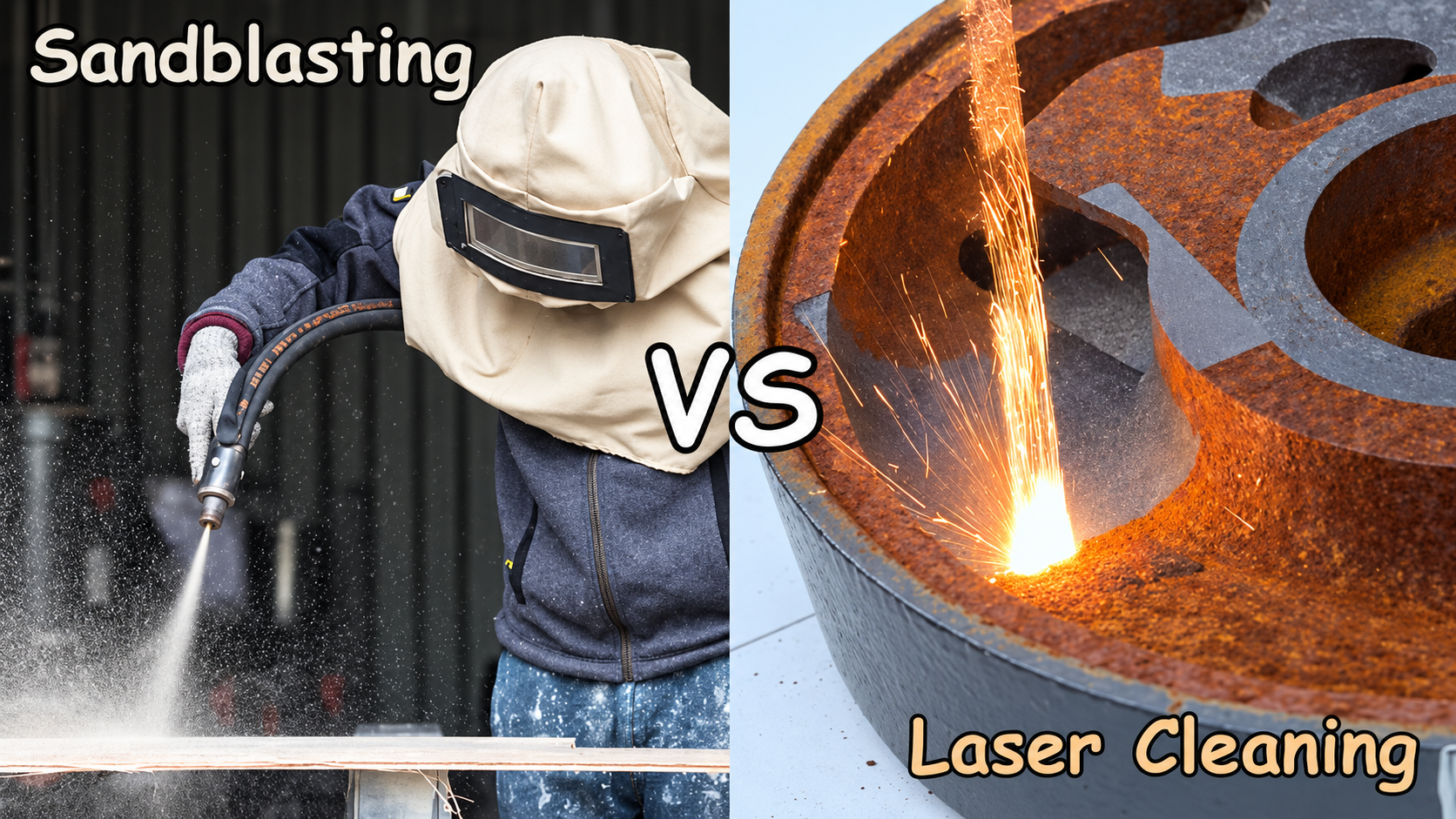
Pressure washing can remove dirt and loose coatings quickly, but what happens when a metal part cannot get wet, rust remains around tight corners, or contaminated wastewater becomes expensive to manage?
For metal fabrication shops, equipment maintenance teams, and industrial cleaning contractors, these problems can turn a simple cleaning job into a time-consuming process.
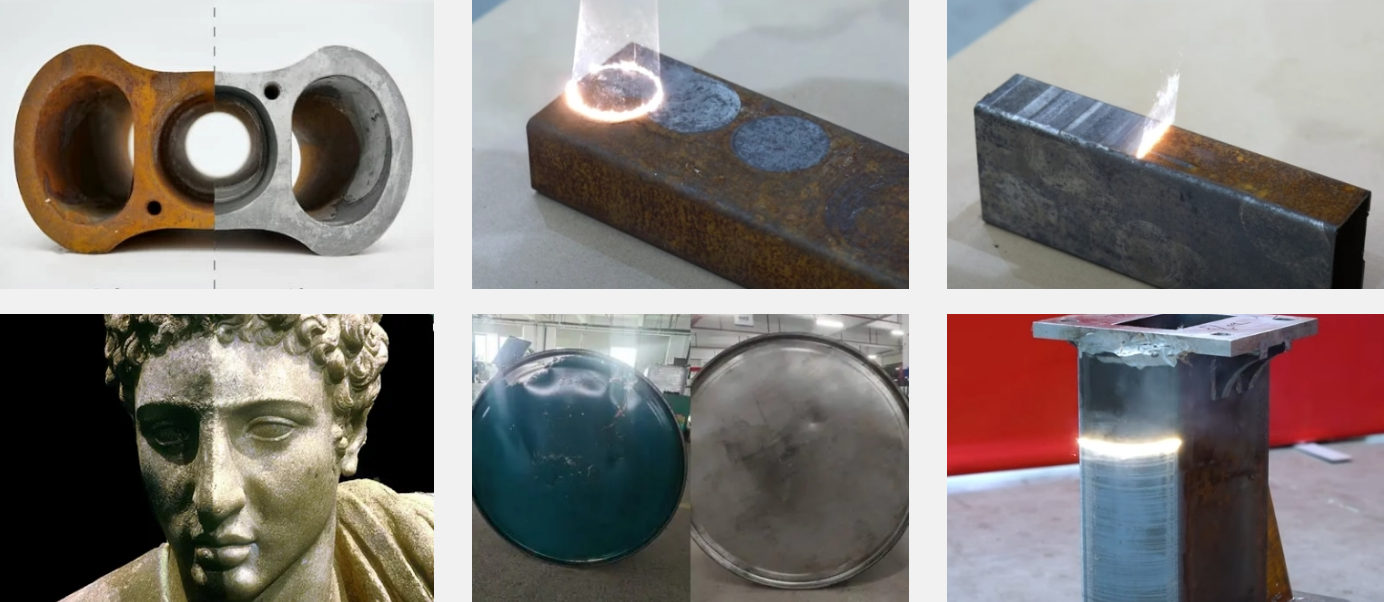
Laser cleaning offers a different solution. It can remove suitable rust, paint, and surface contamination without using process water, abrasive blasting media, or direct mechanical contact with the workpiece.
However, laser cleaning is not always the better choice. Pressure washing remains practical for large building exteriors, durable concrete surfaces, and general cleaning tasks.
So, which method should your business use?
If you're considering a laser cleaning machine for industrial maintenance or surface restoration, this guide compares laser cleaning and pressure washing for paint, rust, and graffiti removal. It also explains where laser cleaning can improve your workflow, what limitations to consider, and how to choose suitable equipment.
1. Laser Cleaning vs Pressure Washing: What Is the Difference?
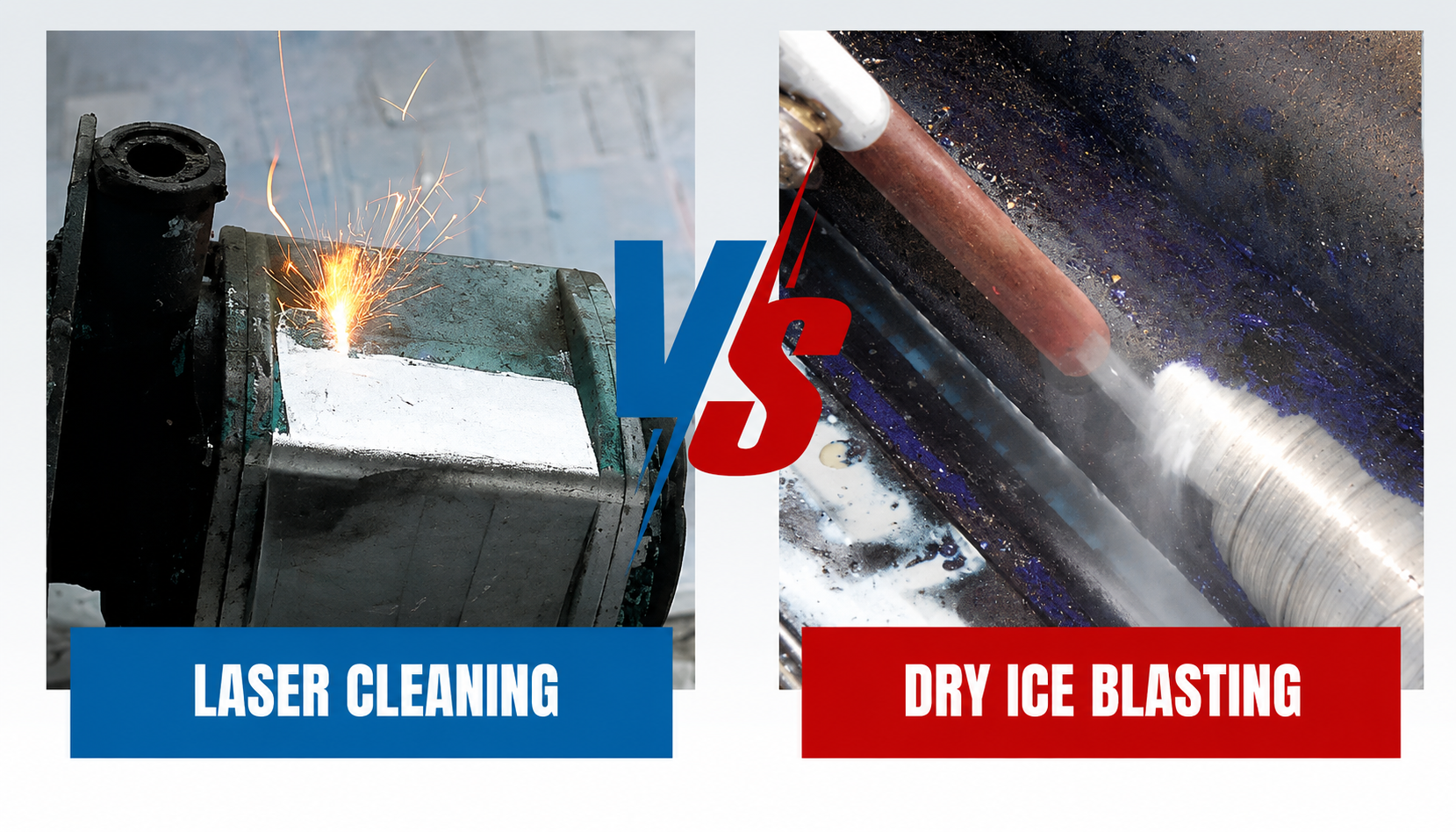
Laser cleaning and pressure washing both remove surface contamination, but they use completely different methods.
Laser cleaning directs concentrated laser energy onto unwanted material. Depending on the coating, substrate, and laser parameters, the contamination can be removed through controlled ablation and other laser-material interactions.
Pressure washing uses a high-pressure water stream to loosen and wash away dirt, paint, and surface deposits.
The difference becomes important when the workpiece is sensitive to water, mechanical force, or excessive surface removal.
Laser Cleaning vs Pressure Washing Comparison
Feature | Laser Cleaning | Pressure Washing |
|---|---|---|
Cleaning Method | Focused laser energy | High-pressure water |
Best Applications | Localized rust, paint, oxide, precision cleaning | Dirt, loose coatings, large exterior surfaces |
Surface Contact | Non-contact | Water jet impacts the surface |
Precision | Suitable for controlled, localized cleaning | Better suited to broader-area washing |
Water Requirement | No process water required | Requires water supply |
Waste Generated | Fumes, particles, removed contamination | Wastewater and removed contamination |
Surface Damage Risk | Heat or surface alteration | Erosion, coating removal, water intrusion |
Initial Investment | Generally higher | Generally lower |
Main Advantage | Dry, localized cleaning with no abrasive contact | Economical cleaning of large suitable areas |
Why Does This Difference Matter?
Consider a metal fabrication company cleaning rust from machinery or welded components.
Pressure washing introduces water, which may need to be removed before the equipment can return to service. On exposed carbon steel, moisture can also contribute to flash rust if the surface is not properly dried and protected.
Laser cleaning avoids introducing process water and can concentrate the treatment on selected areas.
This is valuable when the workpiece contains recessed features, requires localized cleaning, or cannot be exposed to wet processes.
However, conventional pressure washing should not be confused with industrial ultra-high-pressure waterjetting.
Specialized waterjetting equipment can remove heavy coatings and rust from large steel structures, while ordinary pressure washers are more commonly used for dirt, loose deposits, and exterior maintenance.
The right choice depends on whether your priority is precision, large-area cleaning speed, surface preservation, or controlling the cleaning waste.

2. Paint Removal: When Is a Laser Cleaner Better?
Paint removal is one of the clearest applications where laser cleaning can offer practical advantages over conventional pressure washing.
For industrial businesses, the challenge is often not simply removing paint. It is removing the unwanted coating without damaging the component underneath or affecting nearby areas.
Laser Paint Removal for Metal Components
Imagine a workshop that needs to remove paint from machinery parts, metal fixtures, or selected areas of a steel assembly.
Using water may be inconvenient if the component must remain dry or contains areas that are difficult to dry afterward.
Grinding and abrasive blasting may also be unsuitable when the part has delicate features or requires controlled surface removal.
A laser paint removal machine can provide a more localized approach.
Instead of treating the entire surface, the operator can target selected coated areas using machine settings validated for the material.
This can be particularly useful for:
Removing selected paint layers from metal parts.
Cleaning coating residue around welds and fittings.
Preparing localized areas before repair or reworking.
Removing coatings from complex shapes and recessed surfaces.
Cleaning equipment where wet processing is undesirable.
For manufacturers working with high-value components or small batches, precise cleaning may be more important than maximum area coverage.
However, laser paint removal has limitations.
Thick coatings may require several passes, and unsuitable laser settings can discolor or alter the substrate. Certain coatings also release hazardous fumes or particles during removal, so effective extraction and filtration are essential.
When Pressure Washing Makes More Sense
Pressure washing can be a practical option for removing loose or weathered paint from durable concrete, masonry, and appropriate exterior surfaces.
It is particularly useful when the cleaning area is large and the surface can safely tolerate water exposure.
However, excessive water pressure can damage mortar joints, weathered stone, and deteriorating surfaces.
For heavily bonded industrial coatings on steel, conventional pressure washing may be insufficient. Specialized waterjetting or abrasive blasting may be more efficient.
Which Should You Choose for Paint Removal?
Paint Removal Task | Better Starting Option |
|---|---|
Localized paint on metal components | Pulsed laser cleaning |
Paint around complex metal features | Pulsed laser cleaning |
Equipment that cannot get wet | Laser cleaning |
Loose paint on suitable concrete | Controlled pressure washing |
Large areas of heavily coated structural steel | Evaluate industrial waterjetting, blasting, or high-power laser |
Delicate or coated substrates | Test before selecting either method |
For businesses repeatedly cleaning painted metal parts, laser cleaning may reduce dependence on wet processes and abrasive media.
The commercial benefit is strongest when the method can meet the required cleaning quality while reducing unnecessary preparation, handling, or finishing work.

3. Rust Removal: Where Laser Cleaning Has an Advantage
Rust removal is one of the most important applications for industrial laser cleaners.
Unlike ordinary dirt, rust is a corrosion product that may be strongly attached to the metal surface.
Removing it effectively requires a cleaning method matched to the rust thickness, metal condition, and required surface finish.
Why Consider a Laser Rust Remover?
A laser rust remover can remove suitable corrosion deposits from metal surfaces using a controlled, non-contact process.
This is useful for maintenance teams that need to clean machinery, metal fittings, fabricated components, or selected areas before further processing.
Consider a workshop restoring steel fixtures or preparing metal parts for welding.
Traditional cleaning methods may involve manual abrasion, blasting, or wet washing, depending on the condition of the part.
Laser cleaning offers another approach when the job requires localized treatment and water-free operation.
Potential advantages include controlled removal around detailed features, reduced reliance on abrasive media, and easier integration into selected dry-maintenance workflows.
Where Pulsed Laser Cleaning Works Best
Pulsed laser systems are often worth evaluating when the workpiece requires greater control over localized energy delivery.
Typical applications include rust removal from tools, molds, machinery parts, metal fittings, and weld-adjacent areas.
For example, a maintenance contractor cleaning small corroded areas on industrial equipment may benefit from a portable pulsed laser cleaner.
The operator can target affected sections without washing down the entire machine.
This approach may be particularly useful when disassembly, water exposure, or abrasive contact would create additional work.
However, no laser cleaner should be assumed damage-free.
Excessive energy can affect surface roughness, color, or material condition. The cleaning process must be tested on the actual substrate.
What About Heavy Rust on Large Structures?
For ship hulls, bridges, large tanks, and heavily corroded steel structures, cleaning speed becomes an important consideration.
Industrial waterjetting and abrasive blasting may be more productive than a small pulsed laser cleaner on large areas with thick corrosion.
Higher-power laser systems are also worth evaluating, but their effectiveness and thermal impact depend on the material and rust condition.
There is another important limitation: laser cleaning cannot restore metal that has already been lost through corrosion.
If the surface has developed deep pits, removing the corrosion products does not repair the underlying damage.
Likewise, cleaning steel before recoating does not automatically create the surface profile required for coating adhesion.
The cleaned material must still meet the applicable surface-preparation and coating requirements.
Which Rust Removal Jobs Suit Laser Cleaning?
Application | Laser Cleaning Potential |
|---|---|
Machinery maintenance | Useful for localized corrosion |
Precision metal parts | Useful when surface control matters |
Weld preparation | Suitable for selected rust and oxide removal |
Mold and tooling restoration | Worth evaluating where abrasion is undesirable |
Heavy industrial steel | Evaluate higher-power systems and competing methods |
Deeply pitted metal | Cleaning only; damaged metal remains |
For businesses handling repetitive precision-cleaning tasks, a suitable laser cleaner may become a useful addition to their maintenance equipment.
For contractors primarily cleaning extremely large, heavily corroded structures, industrial waterjetting or blasting may remain more practical.

4. Graffiti Removal: Which Method Protects the Surface?
Graffiti removal presents a different challenge because the unwanted paint is often attached to a building surface rather than an industrial metal component.
The best cleaning method depends heavily on whether the substrate is metal, concrete, brick, natural stone, or an existing painted finish.
When Laser Graffiti Removal Is Worth Considering
Laser cleaning can be useful for selected graffiti removal applications where localized treatment is important.
For example, removing unwanted paint from certain metal surfaces or approved architectural materials may benefit from controlled laser cleaning.
The laser can target the affected area without introducing process water.
However, this does not mean lasers are safe for every building material.
Some brick and stone surfaces may develop changes in color or texture when exposed to laser energy.
Similarly, if graffiti covers an existing decorative coating, removing the unwanted paint may also affect the underlying finish.
For laser graffiti removal, representative sample testing is essential before treating a larger area.

When Pressure Washing Is More Practical
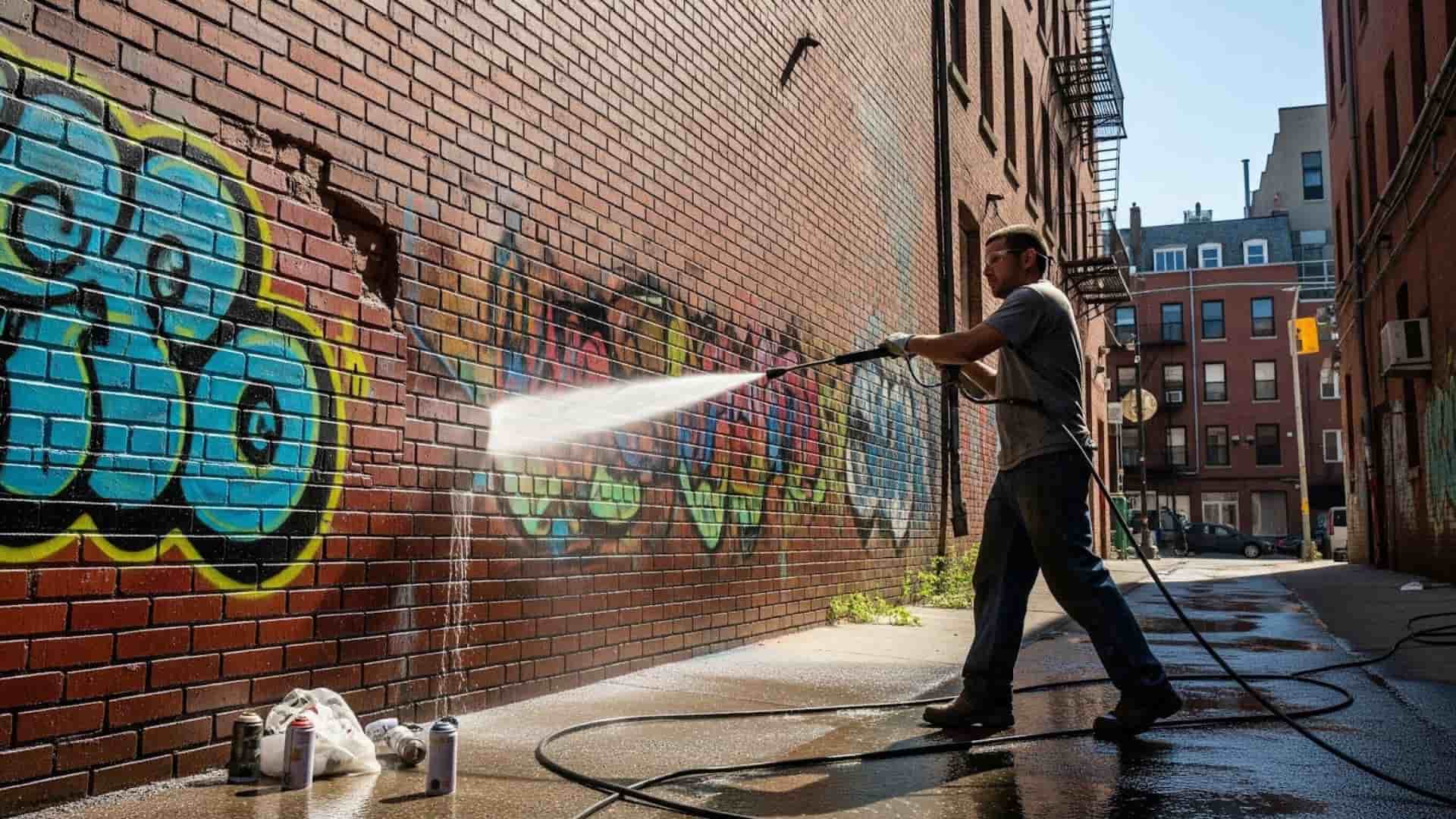
Pressure washing is often used to clean graffiti and surface contamination from suitable concrete and masonry.
For large exterior areas, controlled water-based cleaning may be more economical than laser cleaning.
However, porous brick, soft stone, and older masonry can be damaged by excessive water pressure.
Some graffiti pigments can also penetrate deeply into porous materials, leaving visible stains after cleaning.
A compatible graffiti-removal product followed by gentle rinsing may be preferable in certain cases.
For historic or sensitive building materials, cleaning methods should be selected with appropriate professional conservation guidance.
Choosing by Surface Material
Surface | Cleaning Method Worth Evaluating |
|---|---|
Uncoated metal | Controlled laser cleaning |
Painted metal | Test carefully to protect the original finish |
Durable concrete | Suitable cleaner and controlled water washing |
Porous brick | Compatible graffiti remover and gentle rinsing |
Natural stone | Specialist-approved cleaning trials |
Historic masonry | Professional conservation assessment |
For Laser Cleaner buyers, graffiti removal can be an additional service opportunity, but it should not be assumed that the same machine will work equally well on all building materials.
The most reliable approach is to demonstrate cleaning on representative samples before offering the service commercially.
5. Is a Laser Cleaner Worth Buying for Your Business?
After comparing laser cleaning and pressure washing, the next question is whether investing in a laser cleaner makes financial sense for your operation.
A laser cleaner generally requires a higher initial investment than a conventional pressure washer.
However, purchase price alone does not determine which method is more economical.
For industrial businesses, labor, consumables, surface quality, wastewater handling, downtime, and repeat work can have a greater impact on overall operating costs.
When Does a Laser Cleaner Make Financial Sense?
Laser cleaning is worth evaluating when your business regularly handles work that benefits from localized, dry, or non-abrasive cleaning.
For example, a manufacturing workshop may need to remove rust from components before assembly.
An equipment maintenance contractor may clean selected corroded sections without washing down the surrounding machinery.
A metal restoration business may need to remove coatings from complex parts where aggressive mechanical cleaning would create additional finishing work.
In these situations, a laser cleaner may offer a workflow advantage.
However, the actual benefit must be measured.
Compare the time needed for setup, cleaning, inspection, waste handling, and any rework using both methods.
Do not calculate laser cleaning payback from advertised cleaning speed alone.
A more useful comparison is:
Cleaning Cost per m² = Total Cleaning Cost ÷ Accepted Cleaned Area
Total cleaning cost should include labor, equipment operation, consumables, maintenance, safety controls, waste handling, and rework.
Which Laser Cleaner Should You Consider?
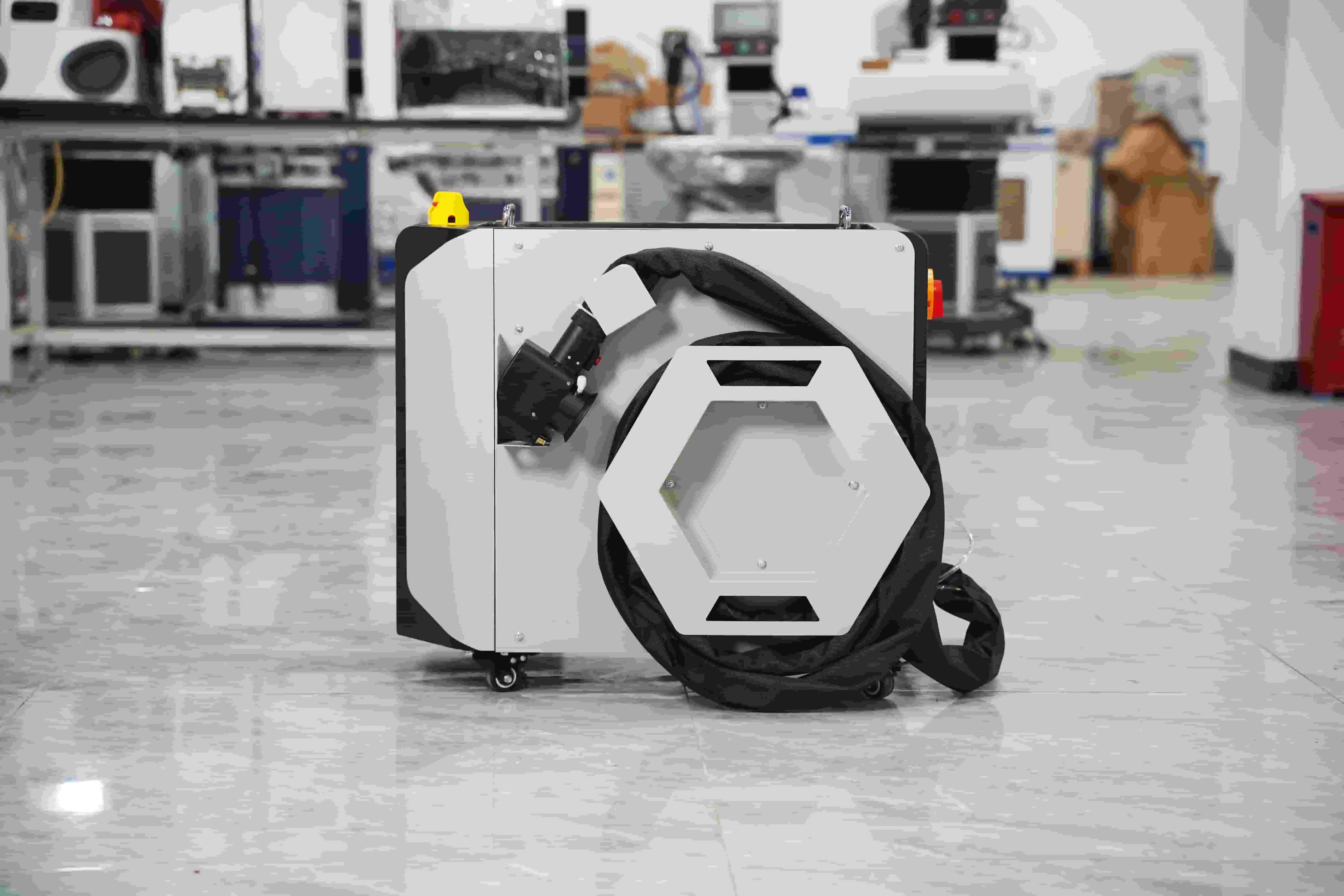
LaserCleanerPro offers portable pulsed systems and higher-power continuous-wave configurations for different industrial cleaning requirements.
The following table provides a practical starting point for equipment selection.
Laser Cleaner Configuration | Applications Worth Evaluating |
|---|---|
100–200W Pulsed | Localized rust, small metal parts, detailed cleaning |
200–300W Pulsed | Regular industrial maintenance, rust and selected paint removal |
300–500W Pulsed | Repeated cleaning tasks and greater production requirements |
1000–3000W CW | Heavy rust, large robust steel surfaces, higher-throughput cleaning |
These are equipment-selection categories, not guaranteed cleaning thicknesses, speeds, or surface results.
A small precision-cleaning business may benefit more from a well-matched pulsed system than from a higher-power CW unit.
A contractor handling large steel structures may need greater cleaning capacity, provided the workpieces can tolerate the validated process.
If your business requires on-site mobility, a portable laser cleaning machine may also be worth considering.
What Should You Verify Before Buying?
Before purchasing equipment, compare more than rated power.
Material compatibility: Can the machine clean your actual steel, aluminum, or other workpiece without unacceptable surface changes?
Contamination type: Is the equipment suitable for the rust, paint, oxide, or coating you need to remove?
Cleaning performance: How much acceptable surface area can be cleaned within a realistic operating period?
Safety and extraction: Does the proposed setup include appropriate beam containment, access controls, fume extraction, and operator protection?
Operating costs: What are the ongoing costs of maintenance, consumables, electricity, filtration, and replacement components?
Laser cleaning often involves Class 4 laser hazards, including dangerous direct and reflected radiation. Suitable engineering controls, operator training, protective equipment, and ventilation must be included in the equipment plan.
Pressure washing also requires appropriate safety controls and may produce wastewater containing hazardous paint or corrosion residues.
For industrial customers, the most useful evidence is a cleaning demonstration performed on the same type of material and contamination encountered in production.
When comparing industrial laser cleaners, ask for representative cleaning results, the test conditions, surface-quality observations, and actual processing time.
A properly evaluated sample can help determine whether laser cleaning provides the quality and productivity your business needs.
Conclusion
Laser cleaning and pressure washing serve different purposes, but laser cleaning offers important advantages when precision, water-free operation, and controlled metal surface treatment matter most.
For industrial businesses regularly removing rust, paint, or surface contamination from machinery and fabricated metal components, a suitable laser cleaner may reduce dependence on wet cleaning and abrasive processes.
Pressure washing remains practical for large exterior surfaces, general building maintenance, and suitable masonry cleaning. Industrial waterjetting can also be effective for heavy corrosion and coatings on extensive steel structures.
The best cleaning method depends on the substrate, contamination type, working area, required surface finish, and total operating cost.
Before investing, test representative materials and compare actual cleaning quality, production time, safety requirements, and waste management.
Could laser cleaning improve your current cleaning process? Contact LaserCleanerPro to discuss your materials, cleaning challenges, and production requirements. Our team can help you compare pulsed and CW laser cleaning systems, evaluate suitable cleaning applications, and identify a machine configuration that fits your business needs.