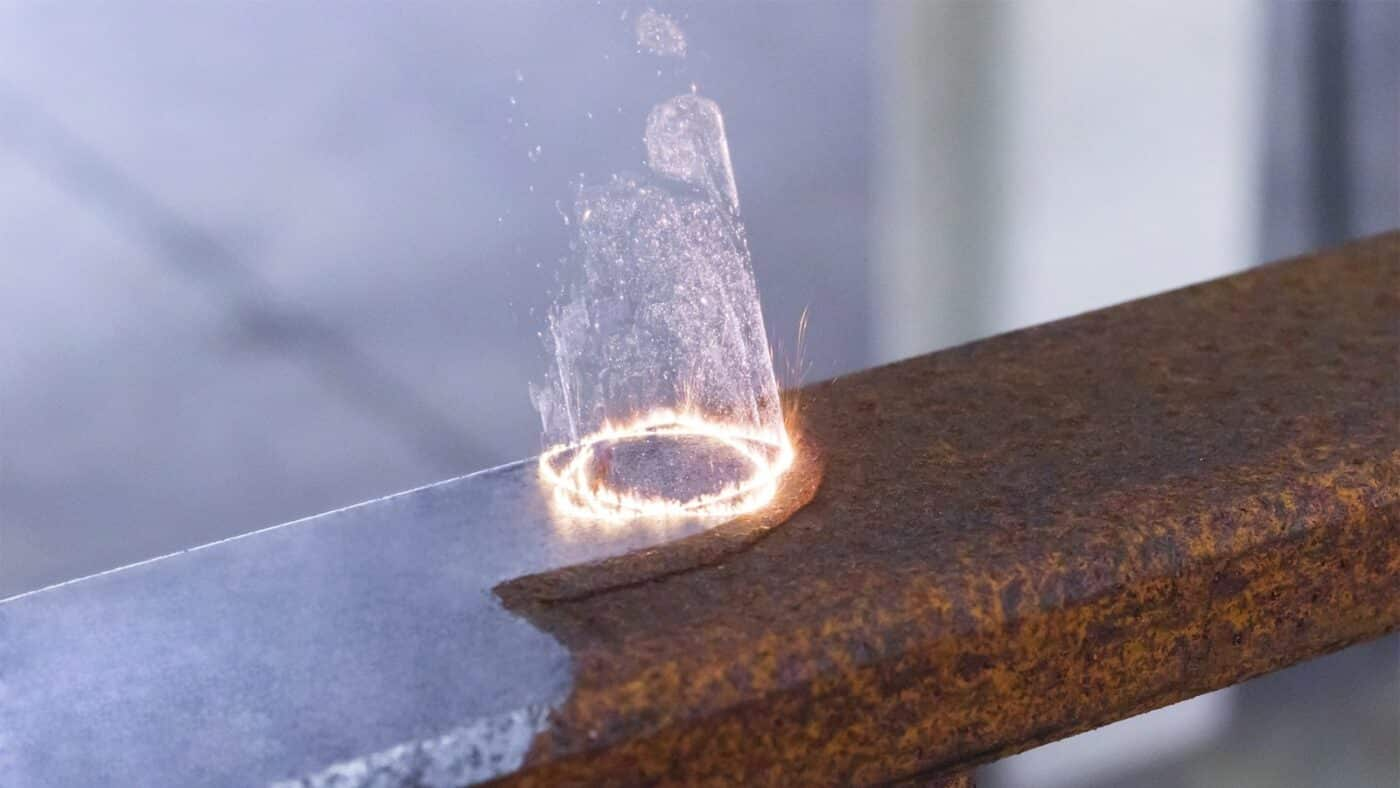
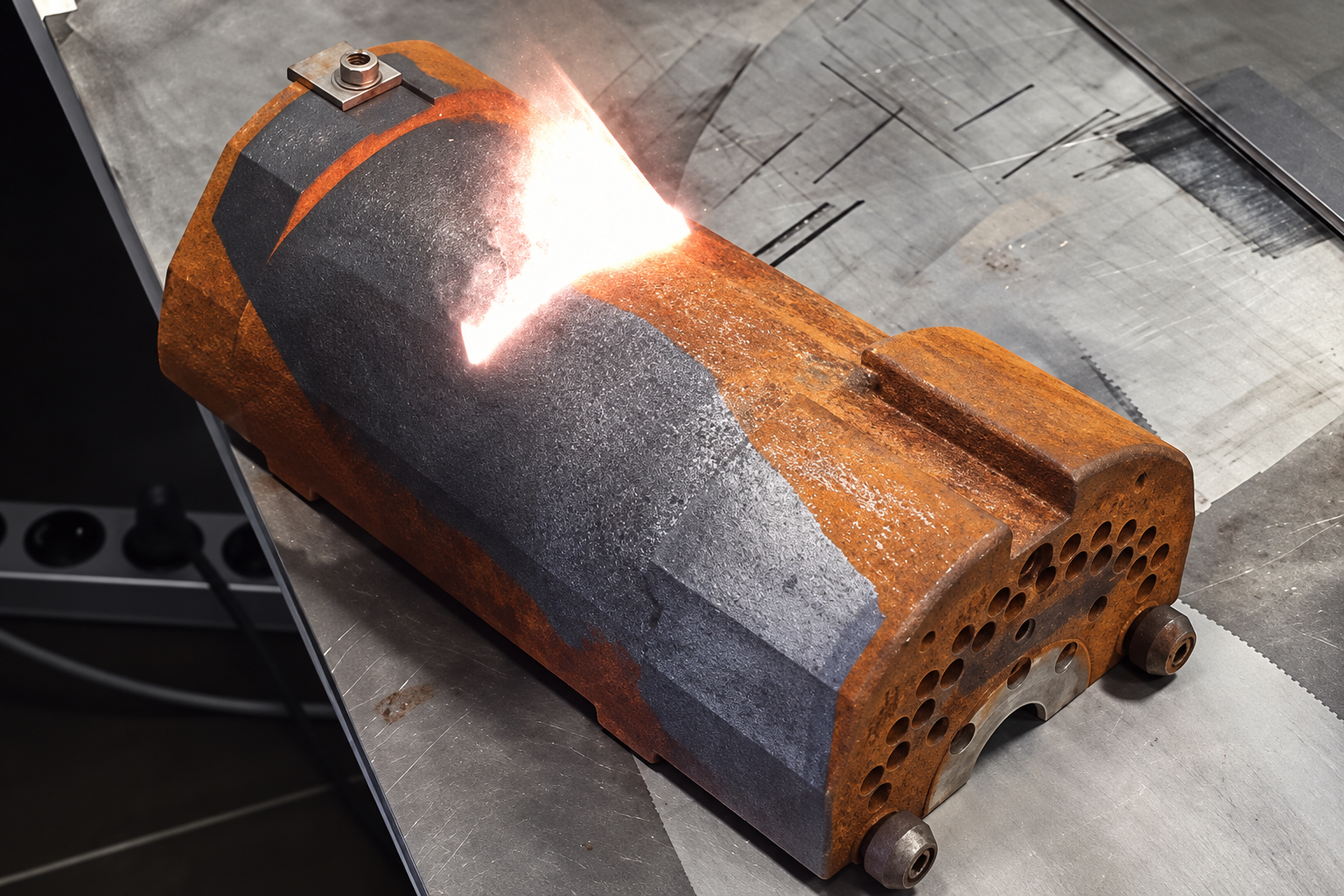
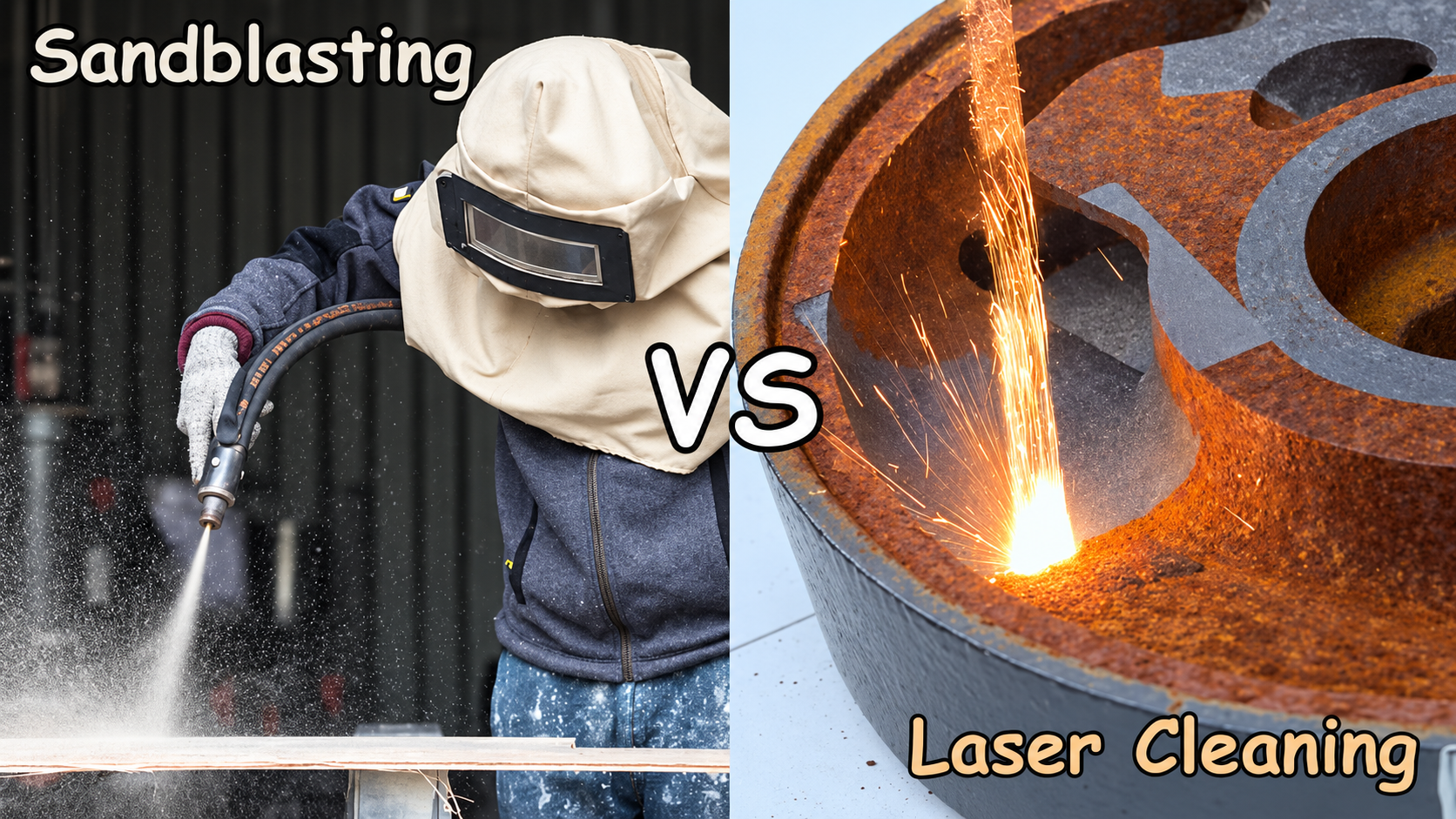
Yes. Laser cleaning can remove powder coating, epoxy paint and primer from metal.
But these coatings do not behave the same way.
A thin primer on steel may come off relatively easily, while a thick, fully cured epoxy or multi-layer powder coating may require slower scanning, multiple passes or a higher-output system.
The result also depends on what is underneath the coating.
Steel, stainless steel and aluminum can all be laser cleaned, but they do not tolerate the same heat input or process settings.
That means the better question is not simply:
“Can a laser remove this coating?”
It is:
“Can it remove this coating at the speed and surface quality my job requires?”
For most buyers, the starting point looks like this:
Coating | Can Laser Remove It? | Main Challenge | Typical Direction |
|---|---|---|---|
Powder coating | Yes | Cured thickness and adhesion | Pulsed for control |
Epoxy paint | Yes | Dense or multi-layer coating | Pulsed or higher-output system |
Primer | Yes | Protecting the substrate | Pulsed works well |
Multiple coating layers | Yes | More passes and lower throughput | Test before selecting power |
LaserCleanerPro currently lists paint, cured powder coating, epoxy and primer among the coatings that can be removed, while also emphasizing that coating thickness, substrate, power and scanning setup determine the actual result.
1. Can Laser Cleaning Remove Each Coating?
All three coatings can be removed, but each creates a different cleaning problem.
Powder Coating
Powder coating is cured into a hard polymer layer, so it is usually more demanding than removing loose rust or a thin oxide.
The difficulty changes with:
Coating thickness.
Powder chemistry.
Degree of cure.
Number of layers.
Metal underneath.
A laser cleaning machine removes the coating by delivering controlled energy to the surface. The coating absorbs that energy and is broken down or lifted away while the operator controls the number of passes.
For a relatively thin powder coat on a small part, a pulsed laser may provide good control.
For thicker industrial coatings or larger surfaces, removal becomes slower and may require more passes or higher average power.
The important point is:
Powder coating removal is possible, but thickness strongly affects productivity.
Do not choose a machine from coating name alone.
Epoxy Paint
Epoxy can also be removed with laser cleaning.
The challenge is that cured epoxy is often dense, chemically resistant and used in thicker protective systems.
That means there is a major difference between:
A thin epoxy primer.
A normal epoxy topcoat.
A heavy multi-layer industrial coating.
A thick marine protection system.
The thicker and more highly built-up the system becomes, the more important throughput becomes.
For localized or selective removal, a pulsed laser cleaner can provide controlled removal with relatively low heat input.
For large steel areas covered with heavy coatings, higher-output equipment may be more practical because a low-power precision machine could eventually remove the coating but do it too slowly to make commercial sense.
That distinction matters for buyers.
Technically possible does not always mean economically practical.
Primer
Primer is often easier to remove because it is usually thinner than a complete topcoat system.
Laser cleaning can be useful when the goal is to:
Remove primer to bare metal.
Clean a repair area.
Prepare a weld zone.
Strip selected coating layers.
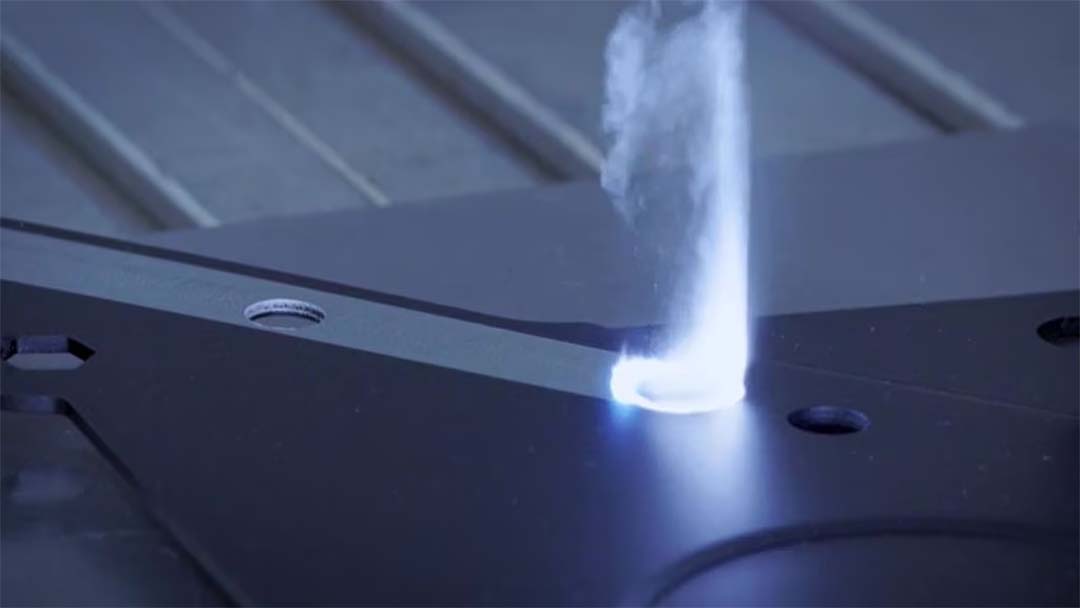
Pulsed laser cleaning is especially useful when layer control matters.
For example, an operator may remove the upper coating while leaving an underlying primer, or continue through the primer to the metal.
LaserCleanerPro specifically positions selective layer-by-layer stripping as a pulsed-laser strength. Laser Cleaner Pro
That is useful for repair, maintenance and localized coating removal where stripping the entire component would be unnecessary.
2. What Determines Whether Coating Removal Works Well?
Coating type matters, but it is only one variable.
Four factors usually matter more when selecting a machine.
Coating Thickness
Thickness affects both cleaning speed and number of passes.
A thin primer and a heavily built epoxy system should not be quoted using the same m²/h figure.
As coating thickness increases, you may need:
More passes.
Lower scanning speed.
Higher average power.
Longer cleaning time.
This is why advertised cleaning speed should always be tied to a specific coating and thickness.
A supplier telling you:
“This machine cleans 20 m²/h.”
without identifying the coating is not giving you enough information.
Metal Substrate
The substrate determines how aggressively you can clean.
Thick structural steel gives the operator a different process window from thin aluminum sheet or a precision component.
Aluminum and other heat-sensitive parts usually benefit from more controlled pulsed cleaning because excessive thermal input can affect the surface.
For heavy structural steel, productivity may be more important than extremely low heat input.
This is why an industrial laser cleaner should be selected around both the coating and the metal underneath it.
Required Surface Finish
Not every customer wants the same endpoint.
One job may require:
Bare metal.
Primer left intact.
Paint removed before welding.
A surface ready for recoating.
Those are different cleaning targets.
If the part is going to be painted again, the important question is not simply whether the coating disappeared visually.
You also need to confirm that the resulting surface meets the requirements of the next coating process.
For critical applications, test adhesion or surface condition rather than assuming that every laser-cleaned surface is automatically ready for any coating system.
Cleaning Area
A 10 × 10 cm repair area and a 30 m² steel structure may have the same epoxy coating but require completely different equipment.
Small detailed parts favor control.
Large surfaces favor throughput.
This is one of the most important factors when deciding whether you need a compact pulsed system or a higher-power industrial machine.
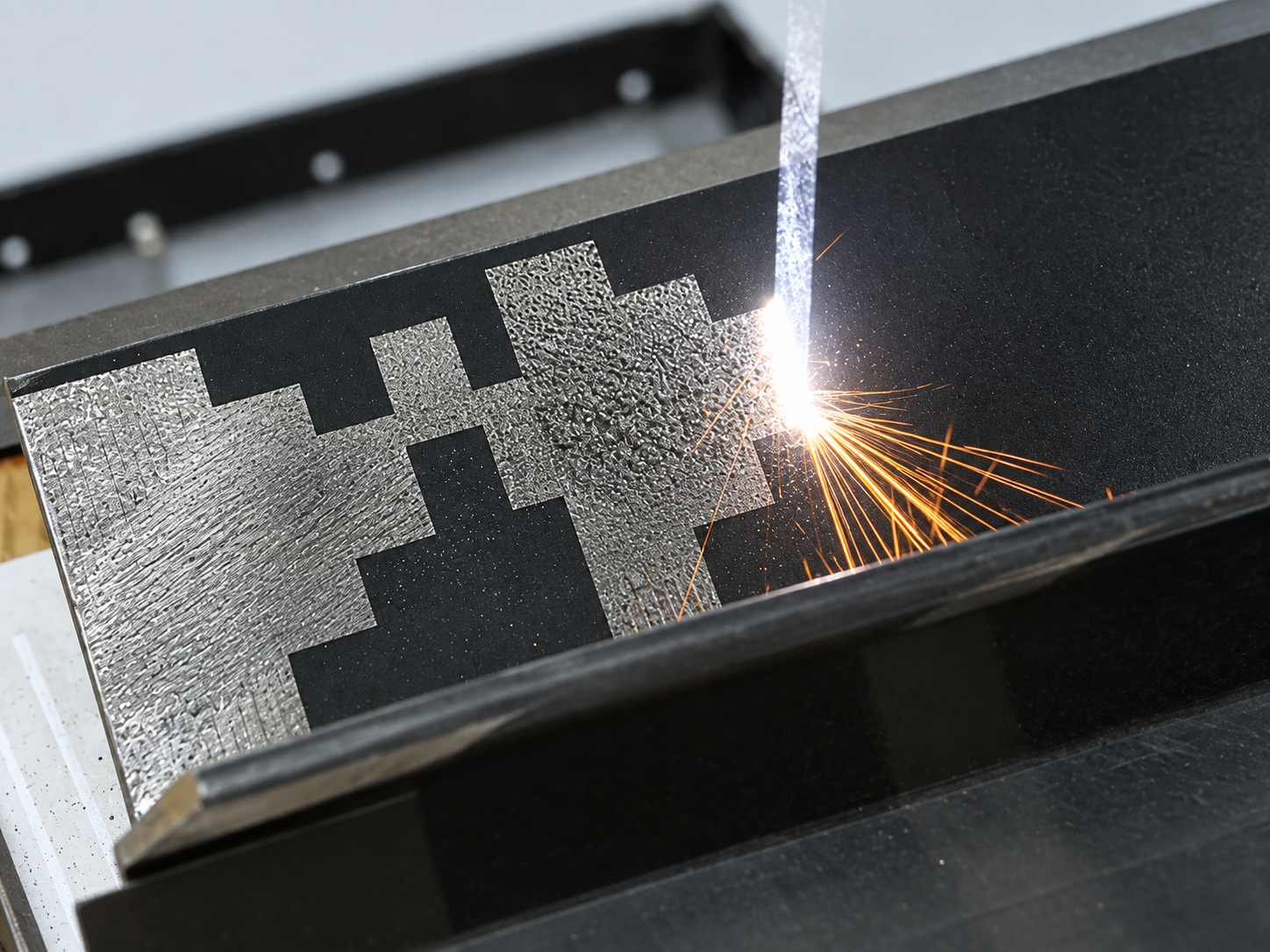
3. Should You Use Pulsed or CW Laser Cleaning?
For coating removal, machine type can matter as much as nominal wattage.
Pulsed Laser Cleaning
Pulsed systems deliver energy in short pulses rather than continuously.
Their strongest advantage is control.
They are generally the better starting point when you need:
Selective coating removal.
Sensitive metal protection.
Detailed parts.
White-space or edge control.
Layer-by-layer stripping.
LaserCleanerPro currently positions its pulsed systems for detailed and selective coating removal, including powder coat, primer and clear coat.
For aluminum parts, precision components, automotive restoration and localized paint removal, this control can be more valuable than maximum speed.
CW Laser Cleaning
Continuous-wave systems deliver energy continuously and are generally more attractive when large-area throughput becomes the priority.
Typical applications include:
Structural steel.
Heavy machinery.
Large tanks.
Ship and marine surfaces.
Large industrial coating-removal jobs.
LaserCleanerPro's current product range distinguishes lower-power pulsed equipment for controlled cleaning from higher-power CW systems used when heavier contamination and larger areas make productivity more important.
CW is therefore not automatically “better” for epoxy or powder coating.
It becomes more attractive when:
Area + coating thickness + required production speed justify the additional heat and output.
Do Not Choose by Wattage Alone
A common buying mistake is:
“Thicker paint means I just need more watts.”
More average power can increase productivity, but it is not the only factor.
Cleaning performance also depends on scan width, spot characteristics, pulse behavior, coating absorption and operator settings.
A correctly matched 300W pulsed system and a 1500W CW machine are designed for very different jobs.
They should not be compared only by the watt number.
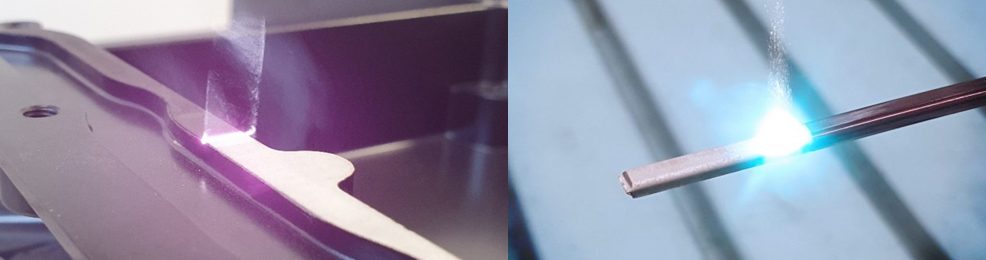
4. When Is Laser Coating Removal the Right Choice?
Laser cleaning is especially attractive when control and reduced secondary waste matter.
When Laser Makes Sense
Consider laser cleaning when you need to remove coatings from valuable metal parts without introducing abrasive media or chemical stripper residue.
It is particularly useful for:
Selective repair areas.
Weld preparation.
Mold and tooling maintenance.
Automotive or precision components.
Industrial surface preparation.
The dry process also avoids abrasive grit and liquid chemical stripping waste.
When Laser May Be Too Slow
Laser cleaning is not automatically the best solution for every coating.
Very thick elastomeric coatings, heavily layered protection systems or extremely large low-value steel surfaces may require so many passes that another removal method is economically faster.
A laser may still remove the coating.
The issue becomes production time.
This is why coating thickness and total area should be provided before asking for a machine recommendation.
Can It Damage the Metal?
Yes, if the machine is set incorrectly.
Laser cleaning should not be marketed as:
“Impossible to damage the substrate.”
Too much energy, excessive overlap or an inappropriate cleaning mode can heat or alter the underlying material.
The benefit of laser cleaning is that energy can be controlled carefully.
For sensitive substrates, pulsed cleaning usually provides a wider control window.
But the correct process should still be proven on a representative part.
Test Before You Choose a Machine
For coating removal, a sample test is far more useful than a generic speed claim.
Send the supplier:
Your metal type.
Coating type.
Approximate coating thickness.
Cleaning area.
Required final surface.
The supplier can then determine whether a precision pulsed machine or higher-throughput laser cleaner for metal makes more sense.
This also gives you a real cleaning rate on your material instead of an advertised number taken from a different coating.
Conclusion
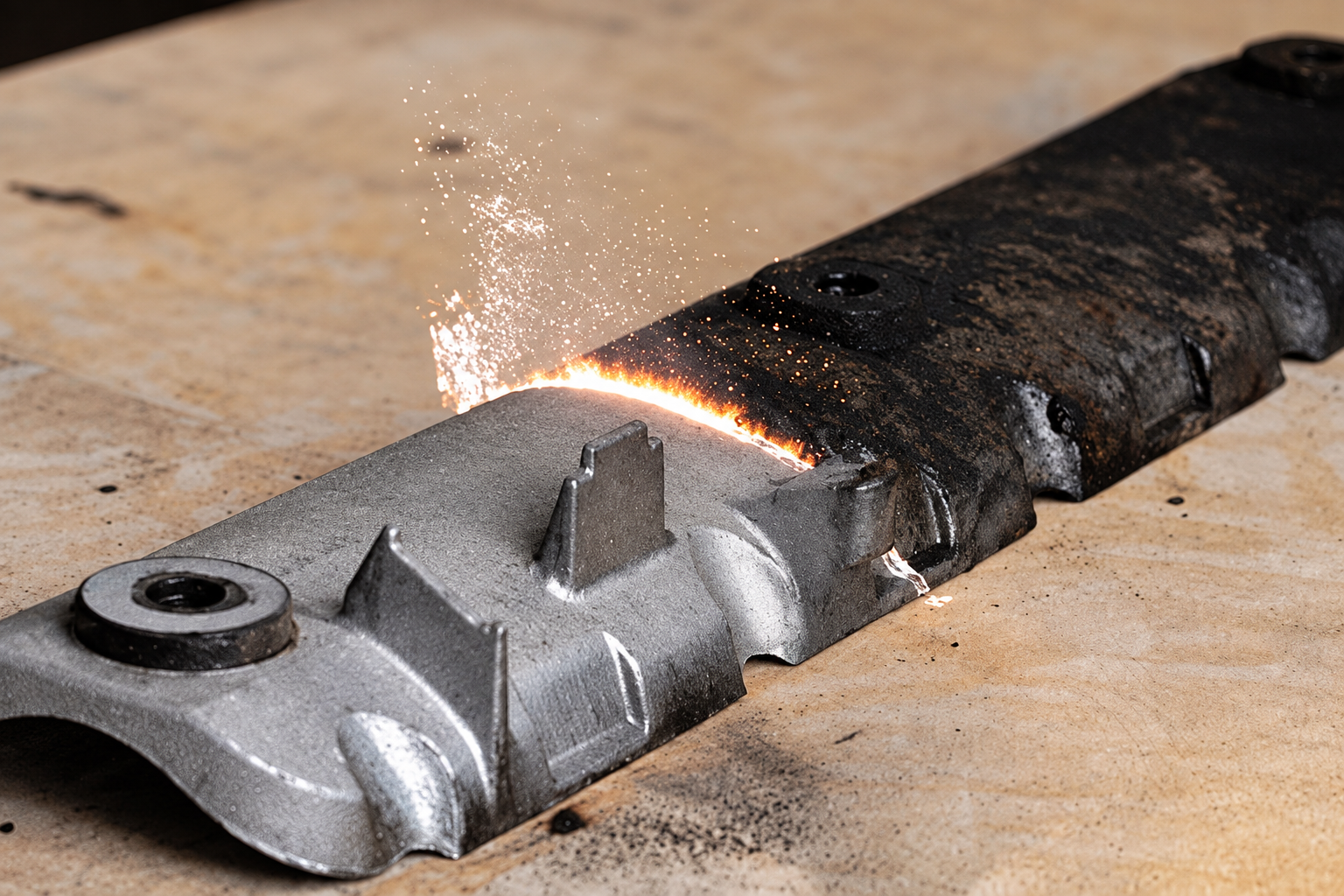
Can laser cleaning remove powder coating, epoxy paint and primer from metal?
Yes.
Powder coating can be removed, but harder or thicker cured layers may require multiple passes.
Epoxy paint can also be removed, although heavy multi-layer epoxy systems can reduce cleaning speed significantly.
Primer is usually thinner and is particularly suitable for controlled or selective removal.
The main decision is not whether laser cleaning works.
It is choosing the right process for:
Coating thickness, substrate, cleaning area and required finish.
For small parts, aluminum, selective stripping and heat-sensitive work, pulsed laser cleaning is usually the better starting point.
For large steel structures and high-volume coating removal, higher-power pulsed or CW equipment may make more sense.
Before purchasing a laser rust removal machine for paint or coating removal, do not rely only on wattage or a catalog cleaning-speed figure.
Send LaserCleanerPro a representative coated sample together with the coating type, metal, thickness and surface area. The team can test the part, determine whether pulsed or CW cleaning fits the job and give you a measured cleaning rate before you choose the machine.