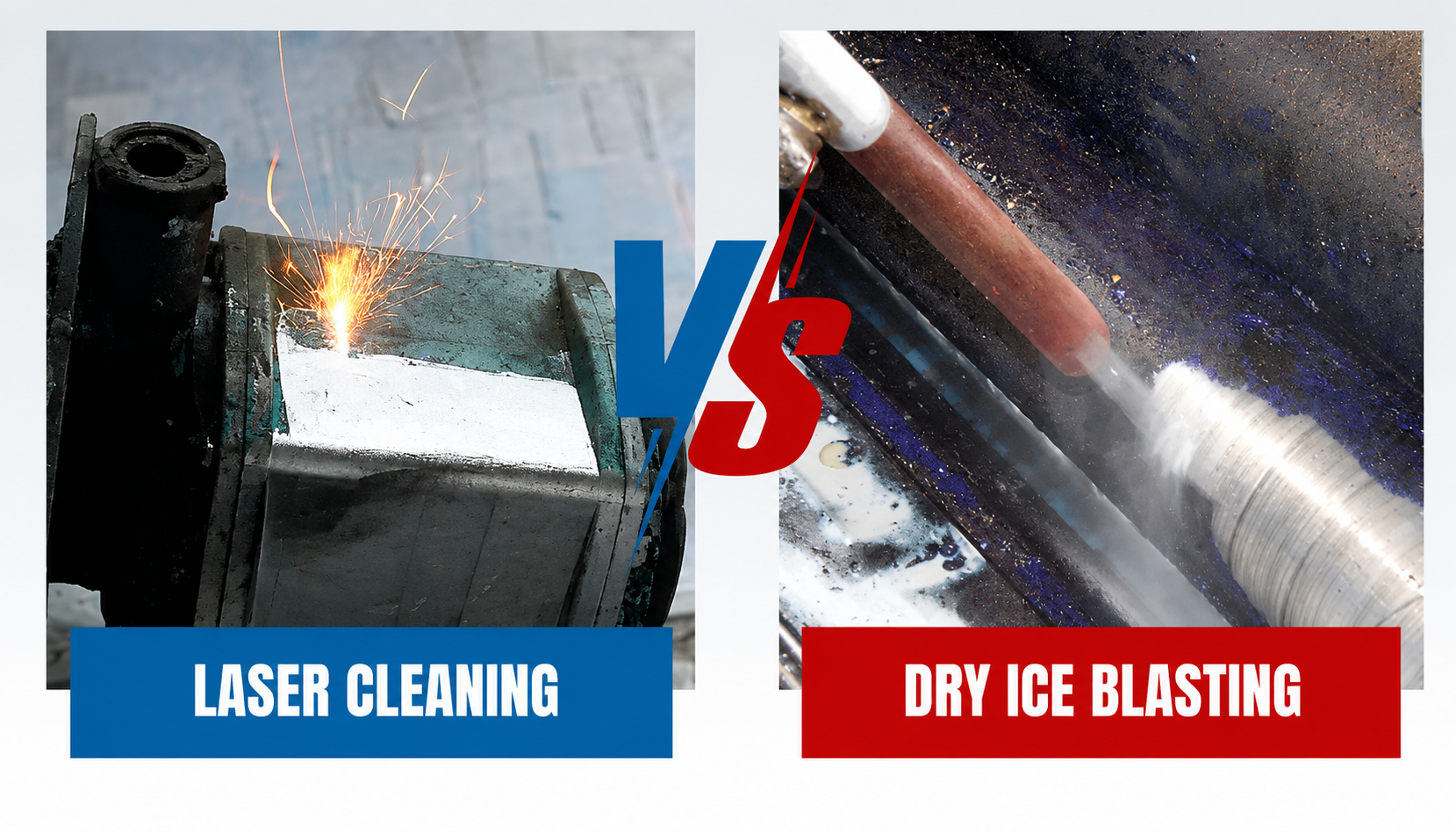
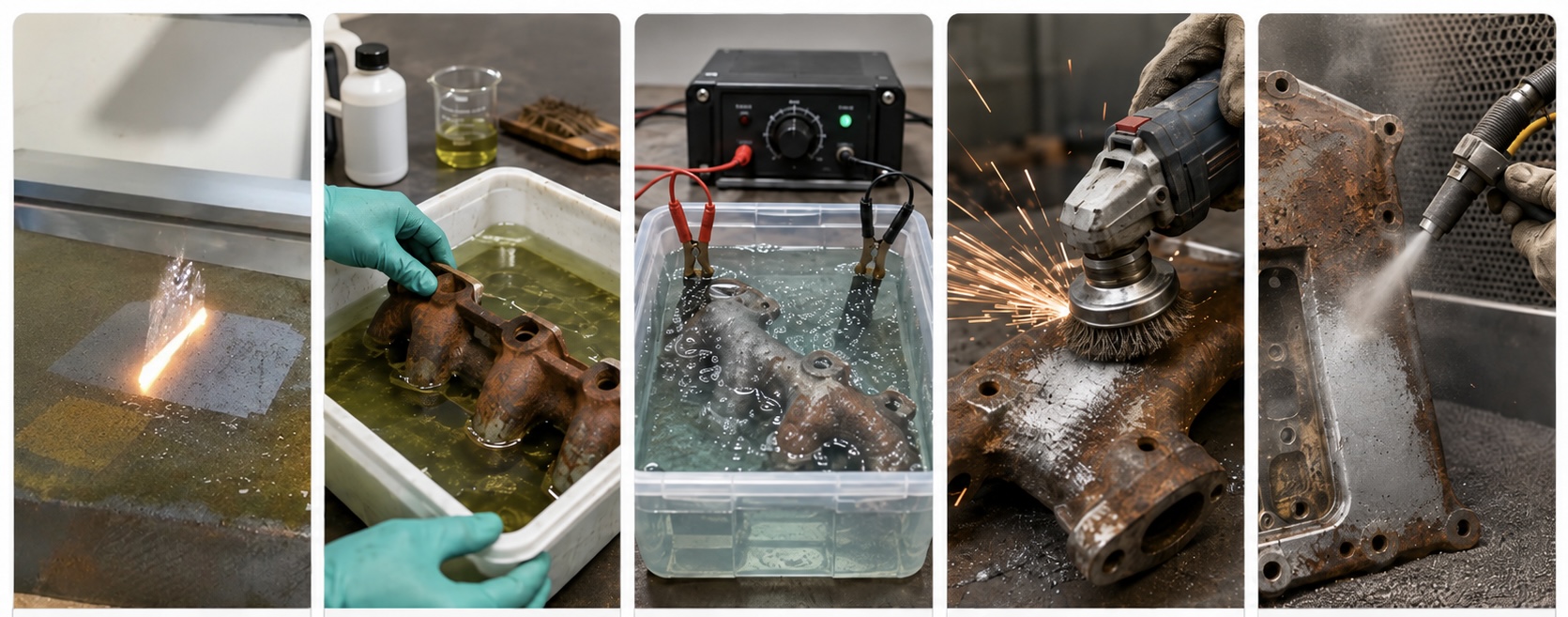
Laser paint removal and chemical stripping can both remove coatings from metal, but they solve the problem in very different ways.
Chemical stripping dissolves or softens the coating so it can be scraped, rinsed, or removed from the surface. Laser cleaning uses controlled laser energy to break down the coating layer without applying liquid chemicals to the part.
For buyers, the practical difference is:
Chemical stripping usually has the lower upfront cost and works well for occasional jobs or complex shapes.
Laser paint removal usually becomes more attractive when cleaning is frequent, precise, repeatable, and minimizing chemicals or secondary cleanup matters.
Neither method is universally safer or cheaper.
The right choice depends on coating type, substrate, surface area, cleaning frequency, required finish, labor cost, and waste-handling requirements.
Laser Paint Removal vs. Chemical Stripping at a Glance
Comparison | Laser Paint Removal | Chemical Stripping |
|---|---|---|
Upfront cost | Higher | Lower |
Recurring consumables | Low | Chemical stripper required for every job |
Labor | Can be efficient after setup | Often includes application, dwell time, scraping and cleanup |
Precision | Excellent for localized removal | Less selective but reaches complex shapes well |
Heat input | Present and must be controlled | Usually little direct thermal input |
Waste | Removed coating becomes fumes/particles that require extraction | Chemical residue, removed coating and sometimes rinse waste |
Surface contact | Non-contact | Chemical directly contacts the substrate |
Best for | Repeated metal cleaning, selective paint removal, precision work | Occasional stripping, recessed geometry, lower-capital operations |
Main limitation | Equipment cost and laser safety requirements | Chemical handling, cleanup and recurring consumables |
The biggest mistake is comparing only the purchase price of the laser with the price of a container of stripper.
The real comparison is cost per completed, acceptable surface.
How Does Laser Paint Removal Work?
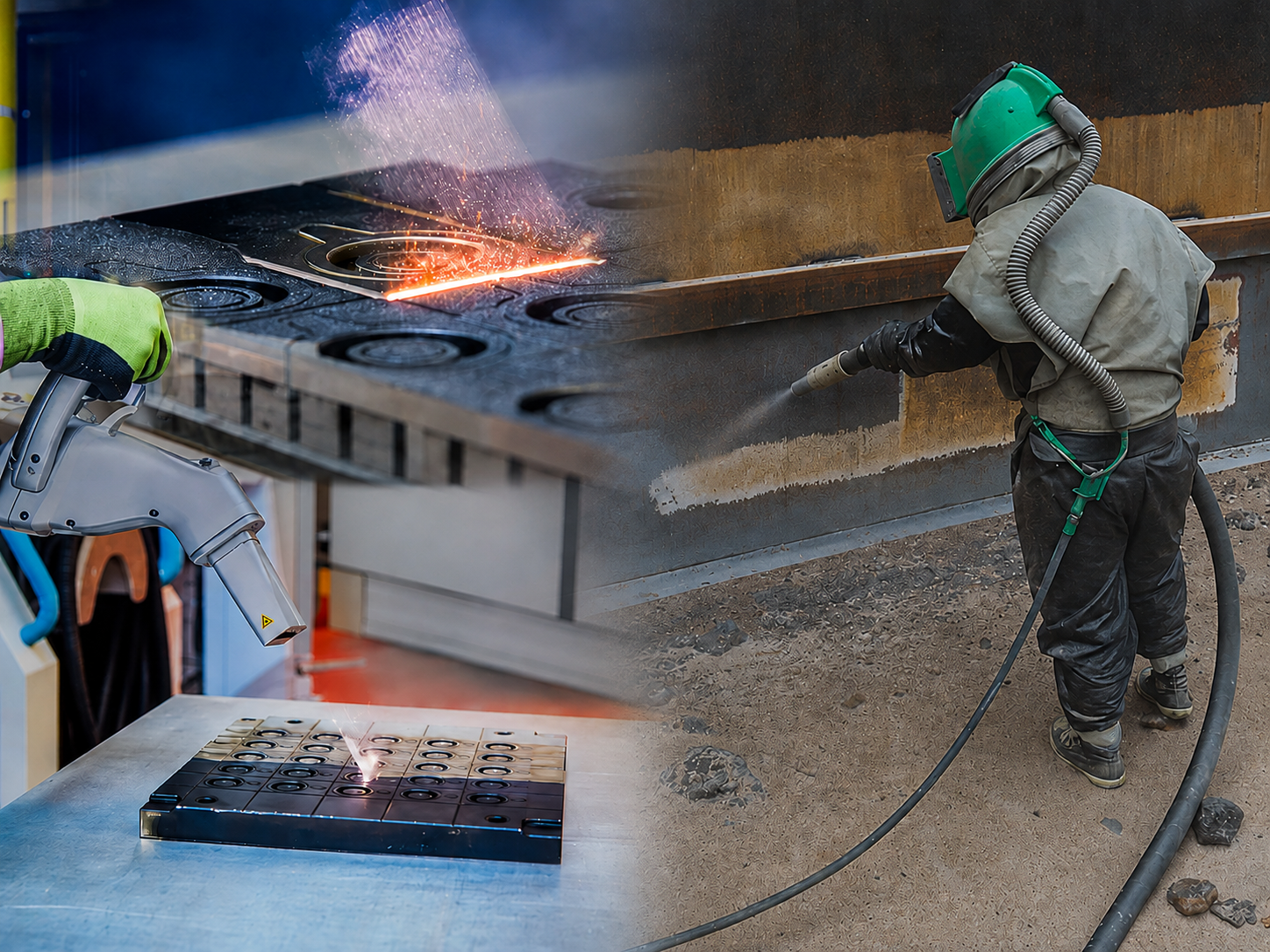
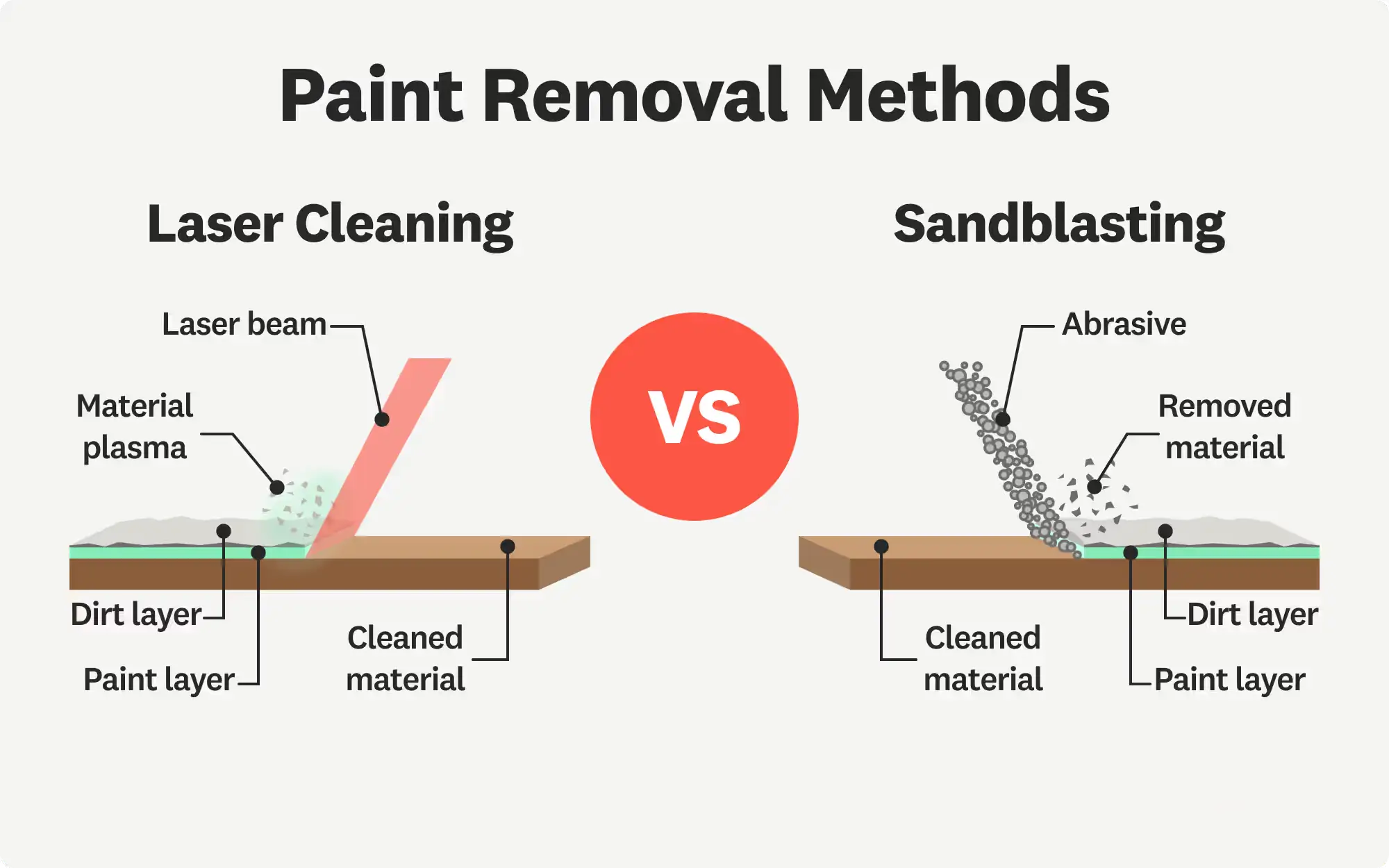
Laser paint removal directs controlled laser energy onto the coating.
The coating absorbs the energy and is removed through rapid thermal and ablation effects, while the operator adjusts parameters to limit the effect on the underlying material.
Pulsed systems are particularly useful when precise control is important because the energy is delivered in short bursts rather than continuously.
This makes laser cleaning attractive for:
Selective coating removal, weld preparation, molds, automotive components, restoration, precision parts, and repeat industrial maintenance.
Higher-power systems can process larger or heavier coatings faster, while lower-power pulsed systems prioritize surface control.
The main limitation is that the laser works primarily where the beam can directly reach.
Deep hidden cavities and complex internal geometry can therefore be less suitable than surfaces with clear line-of-sight access.
How Does Chemical Paint Stripping Work?
Chemical stripping uses a liquid, gel, or paste formulation to weaken the bond between the coating and the substrate.
After application, the chemical usually needs time to act before the coating is scraped, brushed, washed, or otherwise removed.
Depending on the product and coating, the process may also require neutralization, rinsing, drying, and waste collection.
Its biggest advantage is simplicity.
A shop does not need to purchase a laser system to remove paint from occasional parts.
Chemical stripper can also reach recessed areas and irregular geometry that may be difficult to access with a direct laser beam.
The trade-off is that every job consumes more chemical product and creates additional handling and cleanup steps.
Which Method Is Safer?
There is no responsible answer that says one method is automatically safe.
Both require controls, but the hazards are different.
Laser Paint Removal Safety
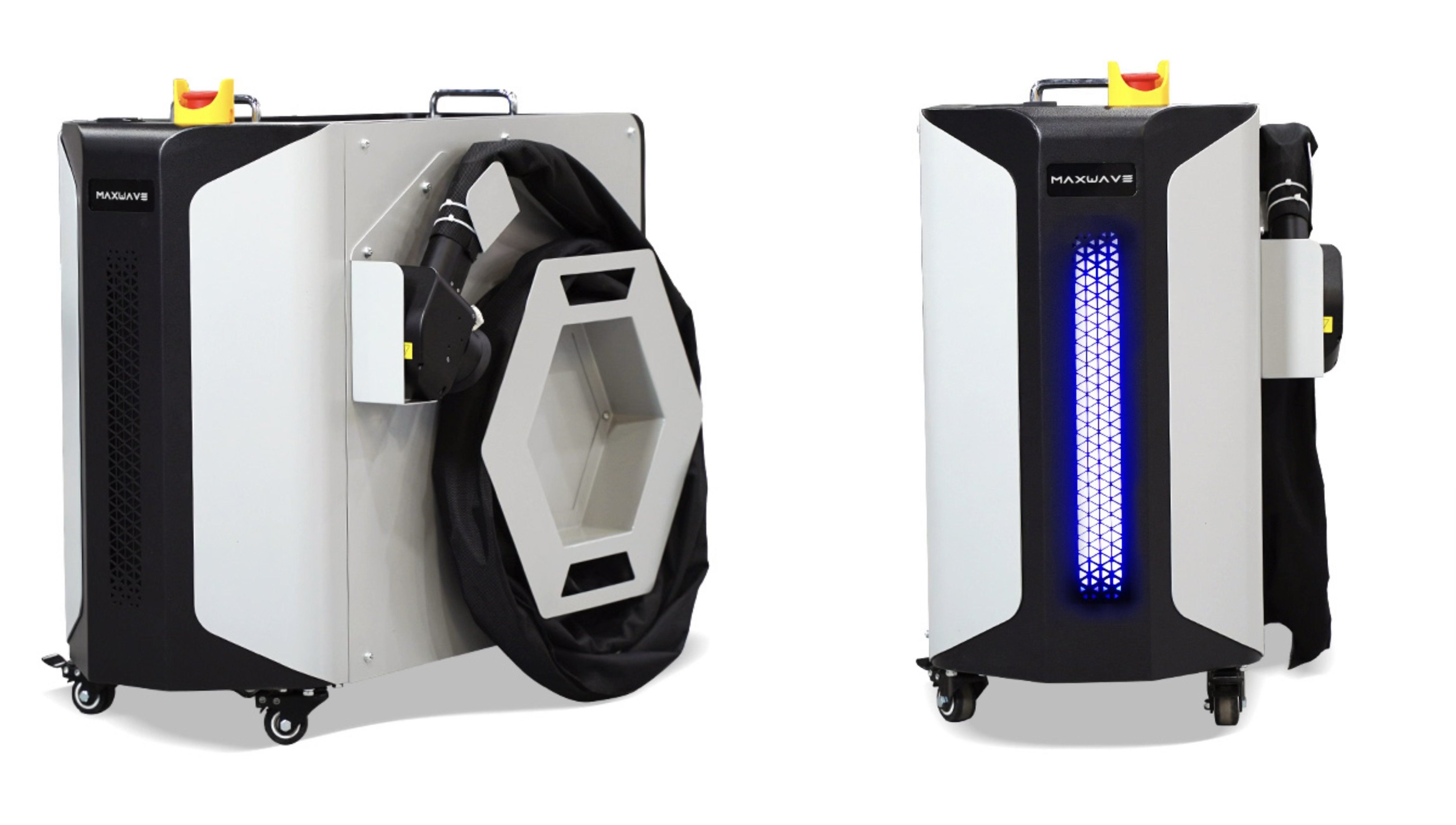
A professional laser cleaning machine requires laser-specific safety procedures.
The beam can create serious eye and skin hazards, so operators need appropriate protection, controlled access, training, and suitable guarding or barriers.
Paint removal also produces fumes and fine particles.
The composition of those emissions depends on what is being removed. Old paint, primers, industrial coatings, and unknown surface treatments may produce hazardous contaminants when ablated.
Effective local extraction and filtration are therefore an important part of the system.
Laser cleaning eliminates direct handling of stripping chemicals, but it does not eliminate exposure risk.
It changes the exposure pathway from liquid chemical handling toward laser and airborne-contaminant management.
Chemical Stripping Safety
Chemical risk depends heavily on the formulation.
Different products can have very different toxicity, flammability, ventilation, PPE, storage, and disposal requirements.
Solvent-based and more aggressive industrial strippers may require significant exposure controls.
The process also involves direct chemical handling during application, scraping, transfer, cleanup, and waste disposal.
Therefore, when comparing safety, ask:
What chemical formulation would I otherwise use?
and:
What coating will the laser actually be removing?
Those two answers matter much more than simply labeling one process “safe” and the other “dangerous.”
Which Is More Cost-Effective?
This is where usage frequency changes the answer.
Chemical Stripping Has the Lower Entry Cost
For occasional work, chemicals are difficult to beat on initial investment.
A shop can buy stripping products and basic application equipment without committing substantial capital to machinery.
If paint removal happens only several times per year, purchasing a laser may be financially difficult to justify.
Laser Cleaning Has Lower Recurring Consumable Dependence
Once the machine is purchased, laser cleaning does not require a new quantity of stripping chemical for every square meter processed.
Operating costs still exist—electricity, extraction filters, protective optics, maintenance and eventually replacement components—but the consumable structure is very different.
As cleaning volume increases, this becomes more important.
Chemical stripping continues requiring:
Stripper, application labor, dwell time, scraping, cleanup, neutralization or rinsing where required, PPE and waste handling.
Laser cleaning concentrates more of the investment upfront.
This leads to the practical rule:
Low-frequency use tends to favor chemical stripping.
Frequent and repeatable paint-removal work makes laser economics increasingly attractive.
Do Not Ignore Labor When Comparing Cost
Chemical stripper may look inexpensive when the calculation stops at the price per gallon.
But the real job often includes more than applying the product.
An operator may need to prepare the surface, apply the stripper, wait for it to react, scrape the softened coating, repeat the process, clean the substrate, and manage the residue afterward.
The original comparison correctly identifies labor and cleanup as major hidden costs in chemical stripping.
Laser removal usually eliminates dwell time.
The operator scans the beam across the surface and can immediately evaluate the result.
That does not mean laser is always faster.
Very thick coatings may require multiple passes, and setup or safety controls can make laser inefficient for extremely small one-off jobs.
Compare total operator time per finished part—not only active stripping time.
Which Method Gives Better Surface Control?
Laser generally has the advantage when selective removal matters.
The operator can control where the beam travels and adjust power, pulse parameters, scan speed, overlap, and working distance.
This makes it possible to remove paint from a specific weld seam, bonding area, repair zone, or precision surface without stripping the entire component.
That can be particularly valuable when adjacent coatings need to remain intact.
Chemical stripping is less spatially selective because the product acts wherever it is applied.
However, this can also become an advantage for complicated shapes.
A gel or liquid can reach recessed geometry, corners, cavities, and irregular surfaces that are difficult to approach with a laser scanning head.
So:
Precision and localized removal → laser.
Complex inaccessible geometry → chemical may be more practical.

Which Is Better for the Substrate?
The answer depends on the material.
Laser cleaning introduces energy into the surface.
If power, focus, pulse settings, or scan speed are incorrect, thin or sensitive materials can experience discoloration, roughness changes, or thermal effects.
Pulsed laser systems generally provide better control for sensitive work than high-power continuous-wave systems.
Chemical stripping introduces another type of compatibility problem.
The chemical must be suitable for both the coating and the substrate underneath.
An aggressive formulation that removes paint effectively may also react with certain metals, plastics, composites, sealants, or adjacent materials.
Always test the process on the real substrate before full production, regardless of which method you choose.
Which Is Faster?
There is no universal winner.
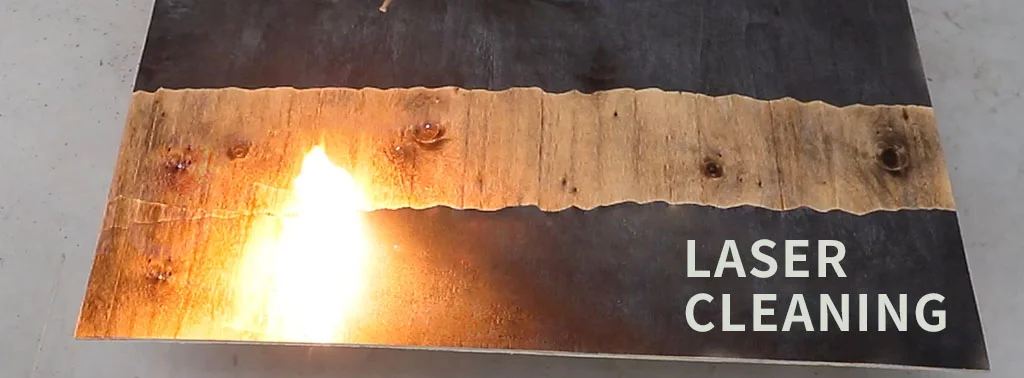
Laser cleaning can be very efficient for localized areas because there is no chemical dwell time.
It is particularly useful when you want to clean a weld seam, repair zone, tool, mold, or repeated production part and immediately move to the next operation.
Chemical stripping can become competitive when large areas can be coated simultaneously and allowed to dwell while the operator performs another task.
But the complete process still includes coating removal and cleanup.
Coating thickness also matters.
Thin paint and selective coating removal may favor laser.
Very thick coating buildup can require several laser passes, reducing the productivity advantage.
The correct comparison should measure:
Setup → Removal → Cleanup → Surface ready for next process
not just how quickly paint first begins to separate.
What About Waste and Cleanup?
The two methods create very different waste streams.
Laser stripping does not leave blasting media or spent chemical stripper behind.
But the removed coating does not disappear.
It becomes airborne particles, fumes, and captured residue that must be handled through suitable extraction and filtration.
Chemical stripping creates a mixture of coating residue and chemical product that must be collected and managed according to the material involved and local requirements.
Some processes may also create rinse or neutralization waste.
This is one reason recurring industrial cleaning can favor laser: the workflow can reduce liquid chemical handling and secondary cleanup.
But describing laser cleaning as “zero waste” would be inaccurate.
Both processes still require management of the removed contamination.
When Does Laser Paint Removal Make More Sense?
A laser cleaner becomes particularly attractive when paint removal is a repeated part of the production or maintenance workflow.
Examples include:
Automotive restoration, weld preparation, tooling and mold maintenance, industrial equipment repair, selective coating removal, precision components, and production lines where the same area is cleaned repeatedly.
Laser is especially valuable when:
The substrate is high value.
Surface damage must be minimized.
Only part of the coating should be removed.
Chemicals create significant handling or disposal problems.
Cleaning is repeated frequently enough to justify the capital investment.
When Does Chemical Stripping Make More Sense?
Chemical stripping still has an important role.
It can be the more practical choice when the work is occasional and the business cannot justify the purchase of dedicated laser equipment.
It also makes sense when:
The component contains recesses or hidden areas that the laser cannot easily reach.
Several surfaces can be treated simultaneously while the chemical dwells.
The substrate is compatible with the selected stripper.
The shop already has suitable chemical handling and waste-management procedures.
The job is too small to justify laser setup.
A small furniture restorer removing paint from several intricate pieces each month may therefore reach a very different conclusion from a fabrication company cleaning welded steel every day.
The best process depends on workflow, not technology preference.
What About Large-Area Paint Removal?
Large surface area does not automatically mean laser or chemical.
High-power laser systems can process substantial industrial surfaces, but capital cost and required power increase quickly.
Chemical methods can coat large areas at relatively low equipment cost, but labor, dwell time, removal, and waste increase with scale.
For extremely large areas where the substrate can tolerate abrasion, blasting may also need to be included in the comparison.
This is why the decision should not be reduced to only two technologies when another process better fits the job.
How to Compare the Two Methods for Your Business
Before choosing, take one representative project and calculate the complete cost using both methods.
For chemical stripping, include:
Chemical consumption, labor, dwell time, scraping, cleanup, PPE, waste handling, and any post-stripping preparation.
For laser removal, include:
Equipment depreciation, electricity, labor, extraction filters, protective optics, maintenance, setup, and financing if applicable.
Then divide the total by the number of finished parts or square meters processed.
That gives you a much more useful figure:
Cost per acceptable finished surface.
Also calculate how often the process occurs annually.
A machine with higher upfront cost can still be cheaper over several years if utilization is high enough.
A low-cost chemical process can remain the better financial decision when utilization is very low.
Always Run a Sample Test Before Buying a Laser
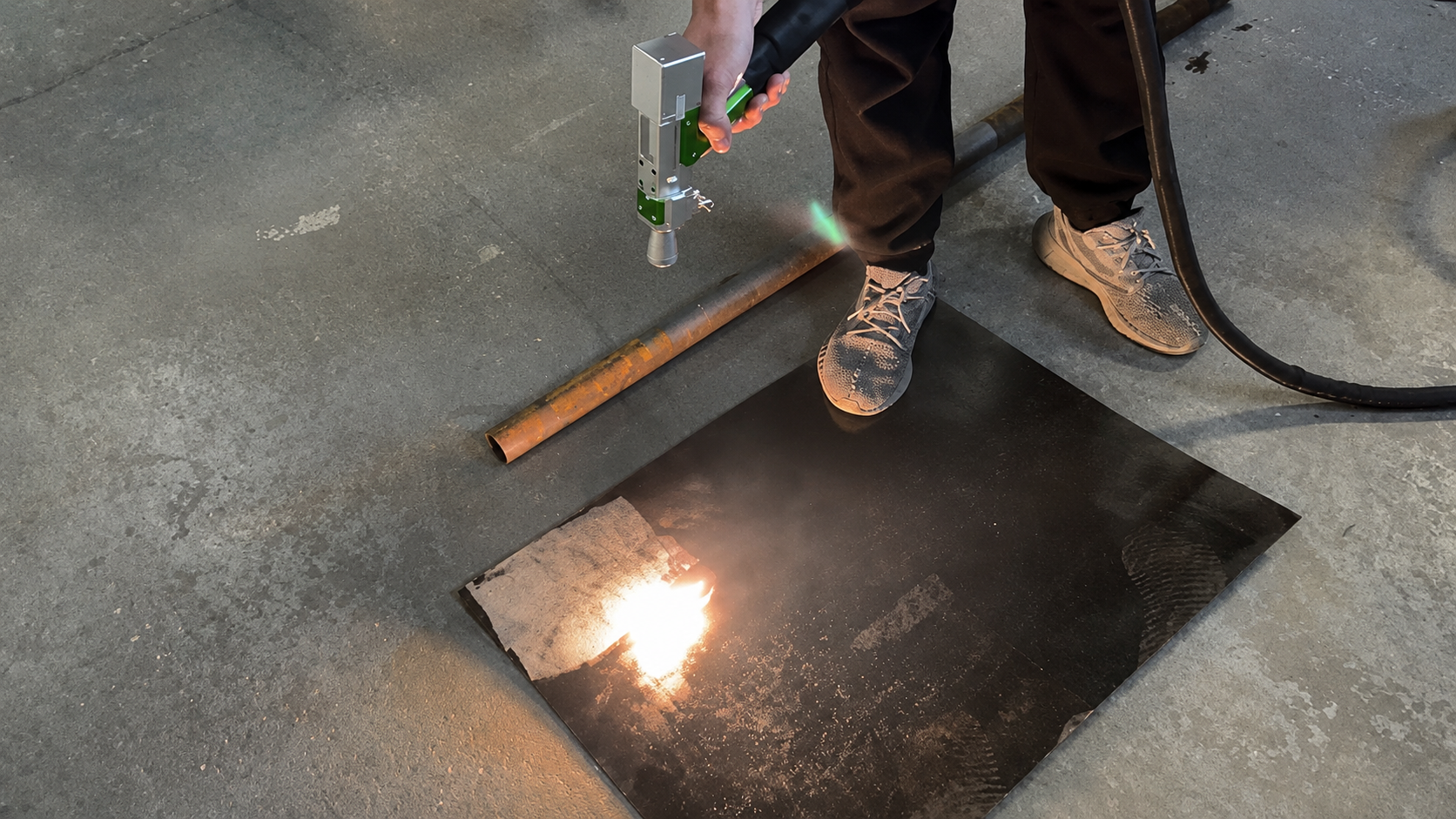
Do not purchase a laser paint removal system based only on wattage or a supplier's demonstration video.
Send the supplier actual coated parts.
The sample should match your real:
Substrate.
Paint or coating.
Layer thickness.
Geometry.
Required surface condition.
Then evaluate:
Removal speed.
Number of passes.
Remaining coating.
Heat discoloration.
Surface roughness.
Ability to preserve nearby coatings.
Amount of post-cleaning work.
Ask the supplier to record the settings used.
A real application test is the fastest way to determine whether laser paint removal actually improves your process.
Conclusion
Laser paint removal and chemical stripping are both effective coating-removal methods, but they solve different business problems.
Chemical stripping offers the lower upfront cost and remains practical for occasional work, complicated geometry, and shops that already have appropriate chemical-handling procedures.
Laser paint removal requires a larger initial investment but can provide better precision, faster targeted cleaning, lower dependence on recurring chemicals, and a cleaner workflow for repeated industrial applications.
Safety also needs to be evaluated realistically.
Laser systems require controlled beam safety and fume extraction. Chemical processes require careful attention to formulation, worker exposure, handling, ventilation, and waste.
So the right question is not:
“Which technology is safer and cheaper?”
It is:
“Which process reaches my required surface condition with the lowest total risk and cost at my actual production volume?”
For occasional stripping, chemical methods may still win.
For repeated, precision-focused paint removal where labor, consumables, and cleanup accumulate over time, laser cleaning becomes increasingly compelling.
Considering a laser paint removal machine for your application? Send LaserCleanerPro photos or samples of your parts, along with the substrate, coating type, approximate layer thickness, cleaning area, and expected workload. The engineering team can arrange an application test and help you compare the real cleaning result and operating requirements before you invest.