Should you hire a laser cleaning service or buy your own machine?
Outsourcing is usually more cost-effective for occasional or one-time cleaning jobs. Buying becomes more attractive when cleaning is recurring, predictable, and frequent enough to justify the equipment investment.
For businesses that regularly remove rust, paint, oxide, or industrial coatings, owning a machine can reduce repeated service charges and give operators more control over production schedules.
However, buying is not automatically cheaper. The answer depends on your actual workload, local service prices, cleaning speed, and total ownership costs.
If you are considering purchasing a laser cleaner, this quick comparison can help narrow your decision.
Your Situation | Better Starting Choice | Main Reason |
|---|---|---|
One-time cleaning project | Outsource | No equipment investment |
Occasional maintenance | Outsource | Avoid underused equipment |
Recurring weekly cleaning | Compare costs | Ownership may reduce recurring expenses |
Daily production cleaning | Consider buying | Better scheduling and process control |
Seasonal or mixed workloads | Hybrid approach | Own regular capacity and outsource unusual jobs |
The key is to compare the cost of completing the same cleaning work, rather than simply comparing an hourly service rate with a machine's purchase price.
1. How Much Does a Laser Cleaning Service Cost?
Laser cleaning service prices depend on the material, contamination, project size, and required surface finish.
Removing light rust from a small metal component is very different from stripping thick paint from industrial machinery or cleaning a large steel structure.
How Laser Cleaning Services Charge
Most service providers use one of three pricing methods: hourly rates, fixed project prices, or charges based on cleaning area.
Hourly pricing is common when the amount of work is uncertain. Fixed project pricing is useful when the cleaning requirements are clearly defined. Area-based pricing may work well for repetitive surfaces with consistent contamination.
However, an hourly quote alone does not reveal the complete cost.
A contractor using a high-power machine may finish a large job much faster than a provider using a smaller system.
For example, a service charging $250 per hour and completing a job in four hours costs $1,000. Another charging $150 per hour but requiring eight hours costs $1,200.
The lower hourly rate does not always produce the lower project cost.
What Is Included in the Service Quote?
Before comparing providers, confirm whether the quote includes travel, mobilization, equipment setup, operator labor, and any required safety or extraction equipment.
Difficult access, hazardous coatings, or special surface requirements may also affect the final price.
A useful comparison should include the required finished condition.
For example, removing visible rust is not necessarily equivalent to preparing a surface for a specified coating or welding procedure.
Ask the provider to quote the complete job based on the same cleaning requirements.
When Service Costs Add Up
Outsourcing becomes more expensive over time when the same cleaning tasks repeat.
A fabrication shop that needs rust removal every week may pay a contractor repeatedly for work that could potentially be performed in-house.
But if the business only needs cleaning a few times each year, those service charges may still be much lower than the cost of purchasing and maintaining equipment.
That is why frequency and predictability matter more than one expensive invoice.

2. What Does Owning a Laser Cleaning Machine Cost?
Buying a laser cleaning machine replaces recurring contractor charges with an initial investment and ongoing internal operating costs.
The machine price is important, but it is not the full ownership cost.
Initial Equipment Investment
Laser cleaning equipment varies in price depending on the laser source, power, cooling system, portability, and intended application.
A pulsed laser cleaner designed for precise oxide removal, mold cleaning, or sensitive surfaces may require a different investment from a high-power continuous-wave machine intended for heavy rust removal.
Before comparing quotations, determine which cleaning technology your applications actually require.
The total initial investment should account for the machine, delivery, installation, required laser-safety controls, extraction equipment, and operator training.
A machine with a lower advertised purchase price may become more expensive if essential components or support are excluded.
Ongoing Operating Costs
Even though laser cleaning does not continuously consume abrasive media, it still has operating expenses.
These generally include operator labor, electricity, protective optics, extraction filters, maintenance, and cooling-system servicing where applicable.
Some parts require periodic replacement, while other expenses depend on how frequently the machine operates.
Operator labor is especially important.
A machine that uses little electricity can still be expensive to operate if it requires many hours to complete a cleaning job.
Machine Selection Affects Cleaning Cost
Cleaning speed can vary significantly between machines and applications.
A low-power pulsed system may be ideal for removing oxidation from delicate components but inefficient for cleaning extensive heavy rust.
Conversely, a high-power CW cleaner may handle large steel surfaces efficiently while being unsuitable for certain heat-sensitive applications.
For a business considering an industrial laser cleaner, the relevant question is:
Can this machine achieve the required surface condition at a practical cleaning speed?
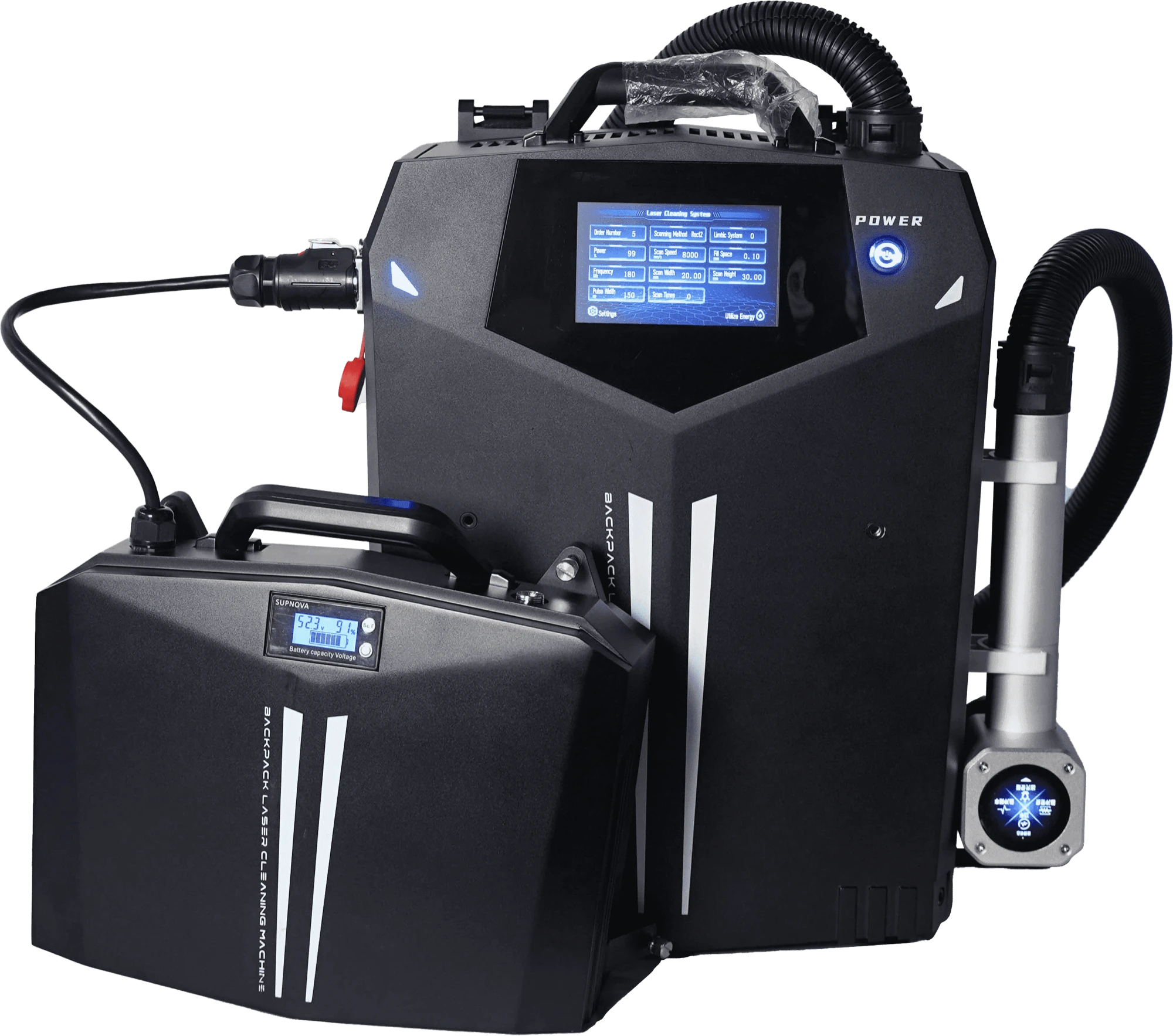
The wrong equipment can produce higher labor costs, slower production, and unexpected rework—even if the purchase price appears attractive.
3. How Do You Calculate the Real Break-Even Point?
The break-even point is where the cost of owning and operating a machine becomes lower than continuing to outsource equivalent cleaning work.
There is no universal threshold based on a fixed number of monthly hours or square meters.
The calculation should use your actual costs and production requirements.
Compare the Same Cleaning Job First
Before calculating payback, make sure both options can complete the same cleaning task to an acceptable standard.
Consider a company currently outsourcing heavy rust removal to a contractor using a high-power CW machine.
If the company plans to purchase a much smaller pulsed cleaner, its internal cleaning time may be significantly longer.
Comparing the contractor's hourly rate with the smaller machine's hourly operating cost would therefore be misleading.
Instead, compare:
Total cost per acceptable completed job.
Both options should be evaluated against the same material, contamination level, cleaning area, and required surface finish.
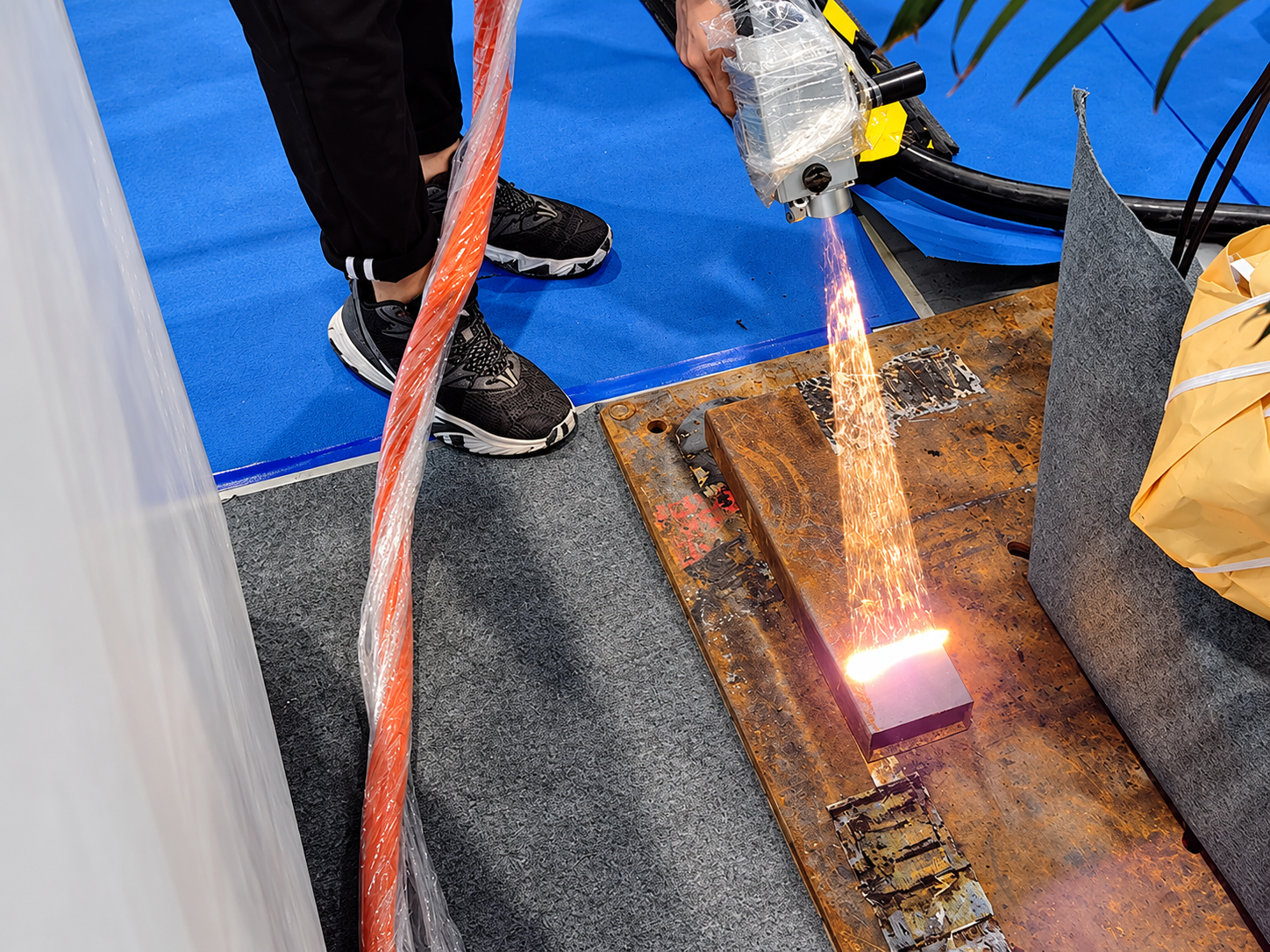
A sample test on the machine you intend to buy can help establish realistic internal cleaning time.
Calculate Annual Savings
Once the cleaning result and productivity have been established, use:
Annual Net Savings = Annual Outsourcing Cost − Annual In-House Variable Cost − Annual Ownership Fixed Cost
Then calculate:
Simple Payback Period = Total Initial Investment ÷ Annual Net Savings
This works when annual net savings are positive.
The estimate should be understood as a simplified cash-payback calculation, not a guaranteed investment return. Financing, taxes, equipment replacement, and unexpected downtime may change the outcome.
Example: A Shop With Regular Cleaning Jobs
Suppose a fabrication shop has the following estimated costs:
Cost Factor | Illustrative Amount |
|---|---|
Total installed machine investment | $12,000 |
Outsourced cost per completed job | $300 |
In-house variable cost per completed job | $70 |
Recurring fixed ownership cost | $1,000/year |
Annual cleaning workload | 40 jobs |
Annual outsourcing cost:
40 × $300 = $12,000
Annual in-house variable cost:
40 × $70 = $2,800
Including $1,000 in recurring fixed costs, annual ownership operating expenses become $3,800.
Estimated annual savings:
$12,000 − $3,800 = $8,200
Simple payback:
$12,000 ÷ $8,200 = approximately 1.5 years
Under these illustrative assumptions, purchasing the machine may be financially attractive.
However, if the shop only completes 20 similar jobs annually, estimated savings fall to $3,600 per year and simple payback extends to approximately 3.3 years.
The same machine can be a good investment for one company and a poor investment for another.
The difference is how much suitable, recurring work the company actually has.
4. When Should You Buy, Outsource, or Combine Both?
Once the costs are clear, the final decision should be based on how cleaning fits into your business.
Occasional Industrial Maintenance: Outsource
Consider a company that only needs laser cleaning during annual equipment maintenance or occasional restoration projects.
The cleaning work may involve rusted machinery, old coatings, or specific components that are repaired infrequently.
In this situation, buying a machine creates an asset that could sit unused for long periods.
The company would still need suitable safety arrangements, trained operators, and maintenance support.
Outsourcing is often the better starting choice because the provider supplies both the equipment and cleaning expertise when needed.
It can also be useful for testing unfamiliar applications before committing to a purchase.
Daily Metal Fabrication: Consider Buying
Now consider a metal fabrication shop that regularly prepares weld joints, removes surface rust, or cleans components before painting.
Cleaning is part of the normal production process.
Outsourcing may introduce scheduling delays and repeated service charges.
Owning a suitable laser cleaning machine allows the shop to perform work when parts are ready rather than waiting for a contractor.
The potential benefits include lower recurring cleaning expenses, greater scheduling control, and more consistent internal procedures.
However, these benefits should be measured against equipment investment, operator time, and actual cleaning productivity.
For this type of business, purchasing becomes more attractive when recurring work provides enough utilization to recover the investment.
Seasonal or Mixed Workloads: Use Both
Some businesses have regular small cleaning jobs but occasionally receive much larger projects.
For example, a company may perform localized mold cleaning or machinery maintenance every week but only occasionally need to strip heavy rust from a large steel structure.
Buying one machine to handle every possible job may not be economical.
A hybrid approach can work better.
The company can own equipment for its normal recurring applications while hiring specialized contractors for unusually large or demanding projects.
This helps keep internal equipment productive without investing in additional machines that may remain idle.
Verify the Decision With a Real Test
Before purchasing, review your recent service invoices and estimate how much similar cleaning work you expect over the next one to three years.
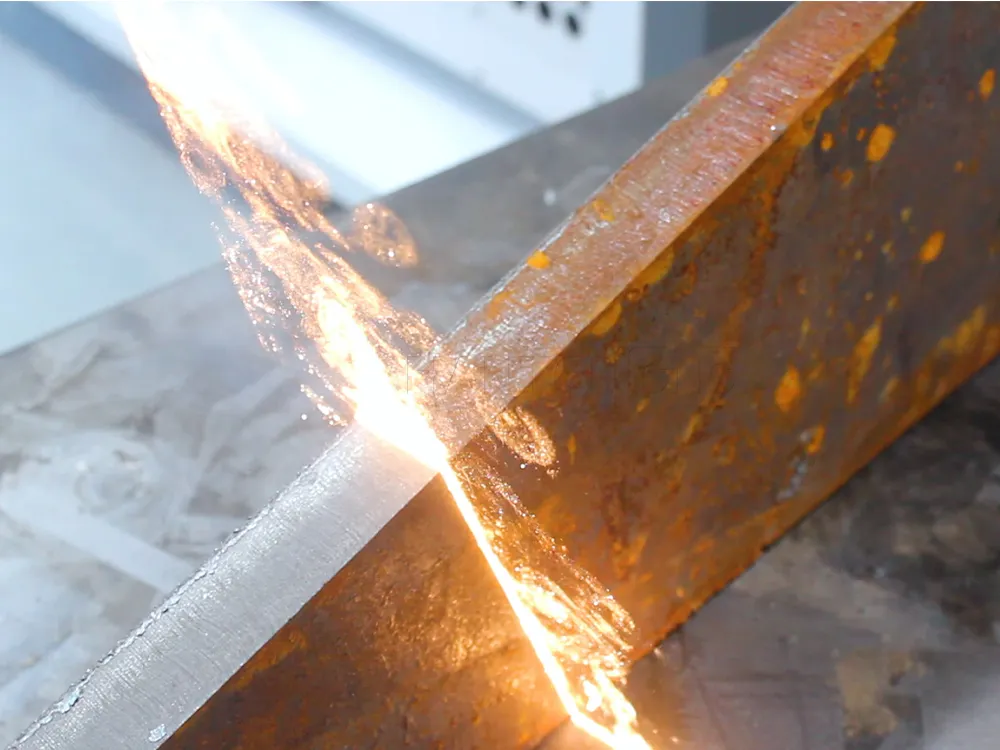
Then request a sample test using your actual material and contamination.
Record the cleaning time, finished surface quality, and any preparation or extraction requirements.
Use those results to update the break-even calculation.
The best buying decision is based on measured cleaning performance and realistic workload—not a supplier's fastest advertised cleaning rate or promised payback period.
Conclusion
Laser cleaning service vs buying a laser cleaning machine—which is more cost-effective?
Outsourcing is usually the better option for occasional, unpredictable, or highly specialized cleaning.
Buying becomes more attractive when cleaning is recurring, the workload is consistent, and in-house production can achieve a lower total cost.
For businesses with both regular and seasonal cleaning requirements, combining ownership with outsourced services may provide the best balance.
There is no universal number of hours or square meters that guarantees a machine will pay for itself.
The most reliable approach is to compare the same cleaning task, calculate the full cost of both options, and estimate payback using actual production data.
Before purchasing a laser rust removal machine, confirm that the equipment can achieve the required cleaning result on your material.
If you are currently outsourcing rust removal, coating removal, mold cleaning, or industrial surface preparation, send LaserCleanerPro your material, contamination type, typical cleaning area, expected monthly workload, and current service quotation.
Our team can help recommend a suitable pulsed or CW configuration and arrange sample testing so you can compare the cost of equipment ownership with continued outsourcing before making an investment.