What do you need to install a laser cleaning machine in your workshop?
Before installation, confirm four things: the correct electrical supply, a suitable cooling system, effective fume extraction, and enough space for safe operation and maintenance.
These requirements depend on the machine's design, cooling method, cleaning application, and workshop environment.
A compact air-cooled pulsed cleaner may need a relatively simple electrical connection, while a larger water-cooled industrial system may require additional electrical capacity, cooling arrangements, and dedicated installation space.
For businesses purchasing a laser cleaning machine, checking these requirements before delivery can prevent installation delays and unexpected facility modifications.
Installation Requirement | What to Confirm |
|---|---|
Power Supply | Voltage, phase, frequency, maximum input power, grounding |
Cooling | Air-cooled or water-cooled, ventilation clearance, coolant requirements |
Fume Extraction | Contaminants, extraction equipment, filtration, exhaust arrangements |
Workshop Space | Machine footprint, maintenance access, work area, laser safety zone |
The manufacturer's installation manual and machine nameplate should determine the final electrical and cooling requirements. Laser output power alone cannot reliably determine the required power connection, chiller capacity, or extraction airflow.
This guide explains how to prepare your facility and what to check before operating the machine.
1. What Power Supply Does a Laser Cleaning Machine Need?
The first step is to verify whether your existing electrical supply matches the specific machine you plan to install.
Laser cleaning machines are available in different electrical configurations, even when their advertised laser output powers are similar.
Check Voltage, Phase, and Input Power
A common mistake is using the laser's advertised wattage to estimate its electrical requirements.
For example, a 200W pulsed laser cleaner does not necessarily consume only 200W of electricity.
The entire system also requires power for its control electronics, scanning head, cooling equipment, and other components.
The actual electrical input depends on system design and efficiency.
Some air-cooled pulsed laser cleaners use single-phase 220V power, while other configurations may require different voltages or three-phase connections.
Higher-power industrial machines also vary by manufacturer.
Before installation, request the following electrical specifications:
Electrical Specification | Why It Matters |
|---|---|
Rated Input Voltage | Confirms compatibility with the facility supply |
Single-Phase or Three-Phase | Determines the required electrical connection |
Frequency: 50/60 Hz | Confirms compatibility with the local power system |
Maximum Input Current | Helps determine circuit and protection requirements |
Rated Input Power | Accounts for actual electrical demand |
Plug and Grounding Requirements | Supports safe connection and operation |
If the chiller or extraction system uses a separate electrical connection, include those loads in the facility planning.
A machine advertised as 1000W, 1500W, or 3000W does not automatically require a particular breaker size or supply voltage.
Always use the actual manufacturer's electrical specifications instead of a generic wattage-to-voltage chart.
Plan Electrical Protection and Grounding
Industrial laser cleaning equipment requires a correctly installed electrical supply and protective grounding.
A qualified electrician should verify that the circuit, conductors, protective devices, and disconnecting arrangements are suitable for the equipment and the applicable electrical code.
In the United States, installations should follow relevant National Electrical Code requirements and workplace electrical safety regulations. Other countries apply their respective national or regional standards.
Avoid using extension cords, improvised adapters, or unverified voltage converters to connect industrial laser equipment.
Before commissioning, confirm that protective grounding is connected correctly and that the emergency-stop and electrical disconnect functions operate as intended.
Electrical installation work should be completed and inspected before the laser is enabled.

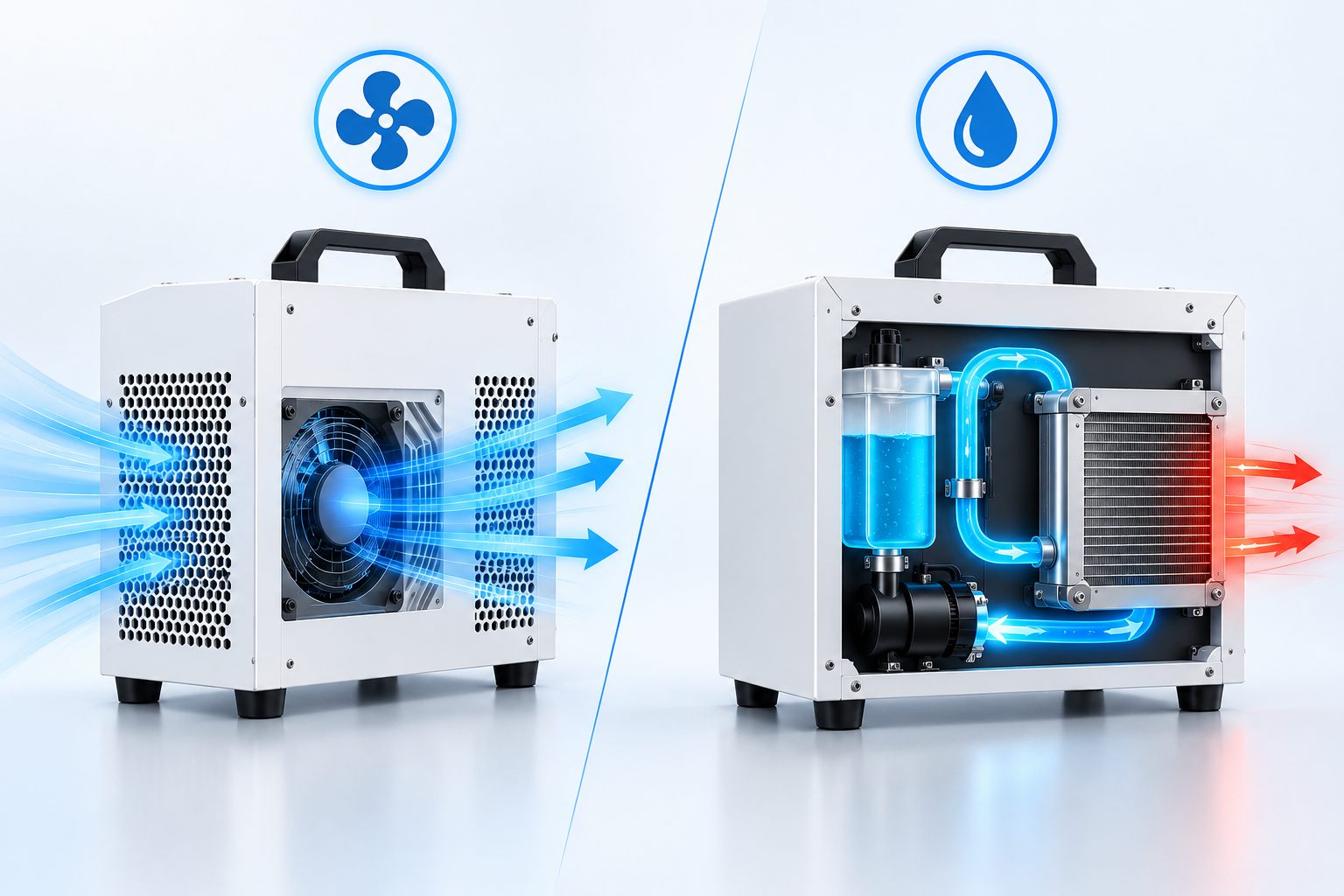
2. Does Your Laser Cleaner Need Air or Water Cooling?
Laser cleaning systems generate heat during operation.
The cooling system removes heat from components such as the laser source and other temperature-sensitive assemblies.
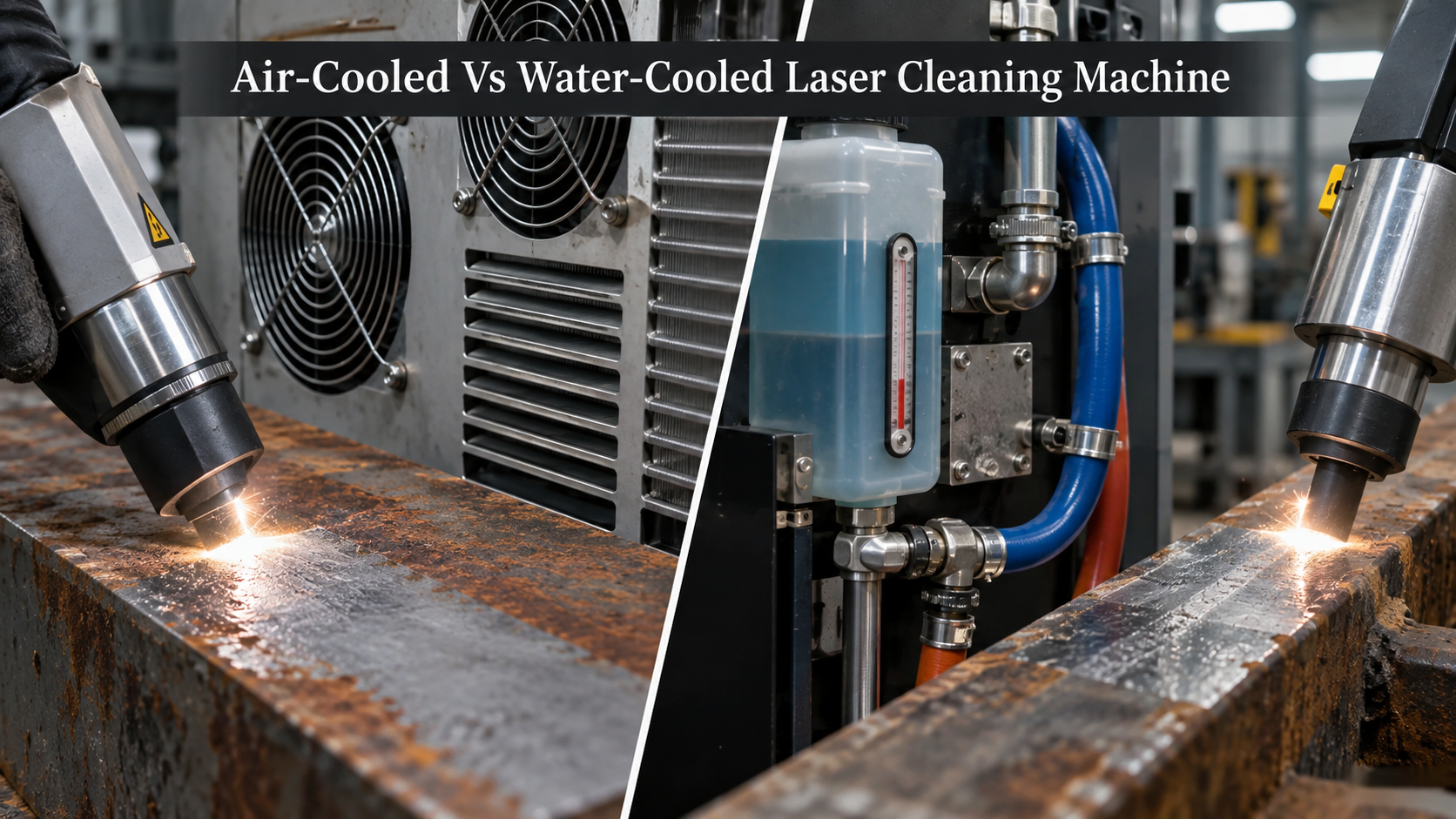
The correct cooling arrangement is determined by the specific equipment design, not simply by its output power, so compare air-cooled vs water-cooled options before choosing a system.
Air-Cooled Laser Cleaning Machines
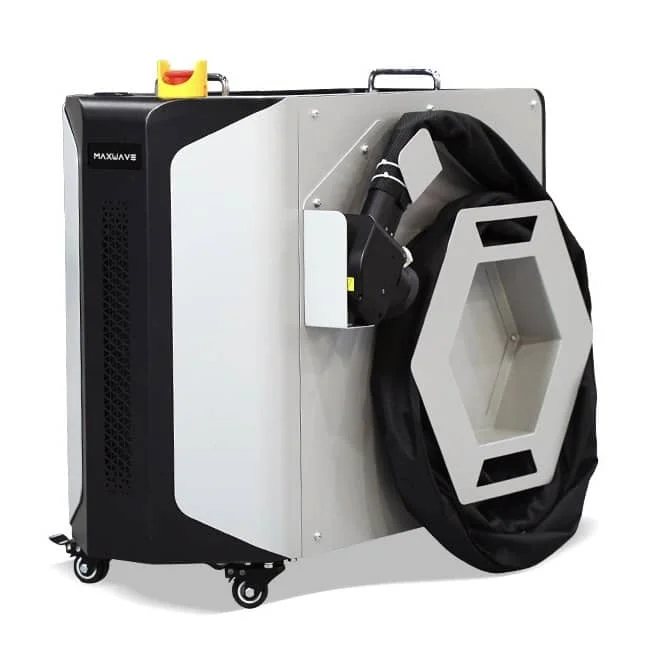
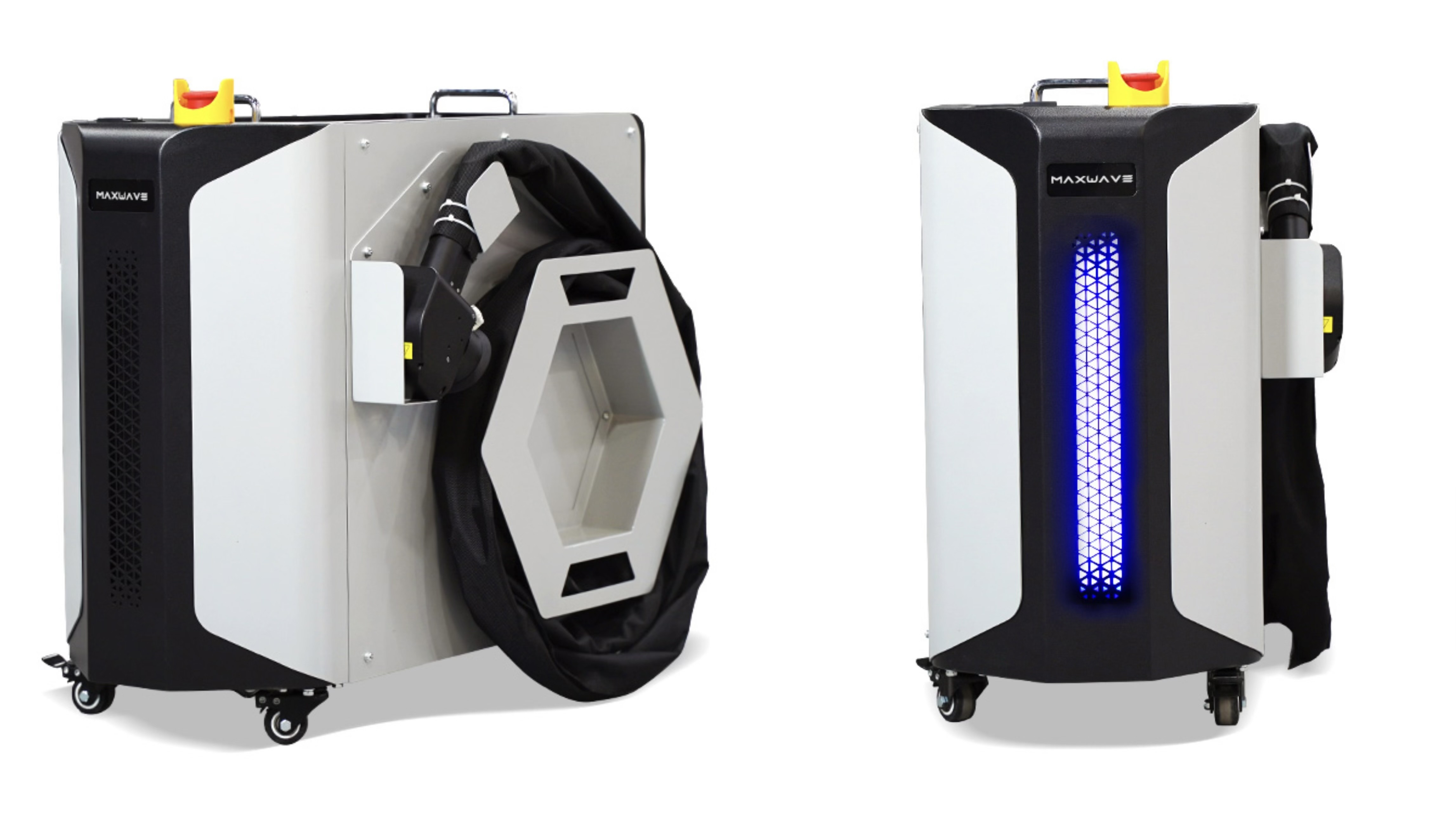
Many compact and portable pulsed laser cleaners use air cooling.
These systems generally do not require an external water chiller, which can simplify installation and reduce routine cooling-system maintenance.
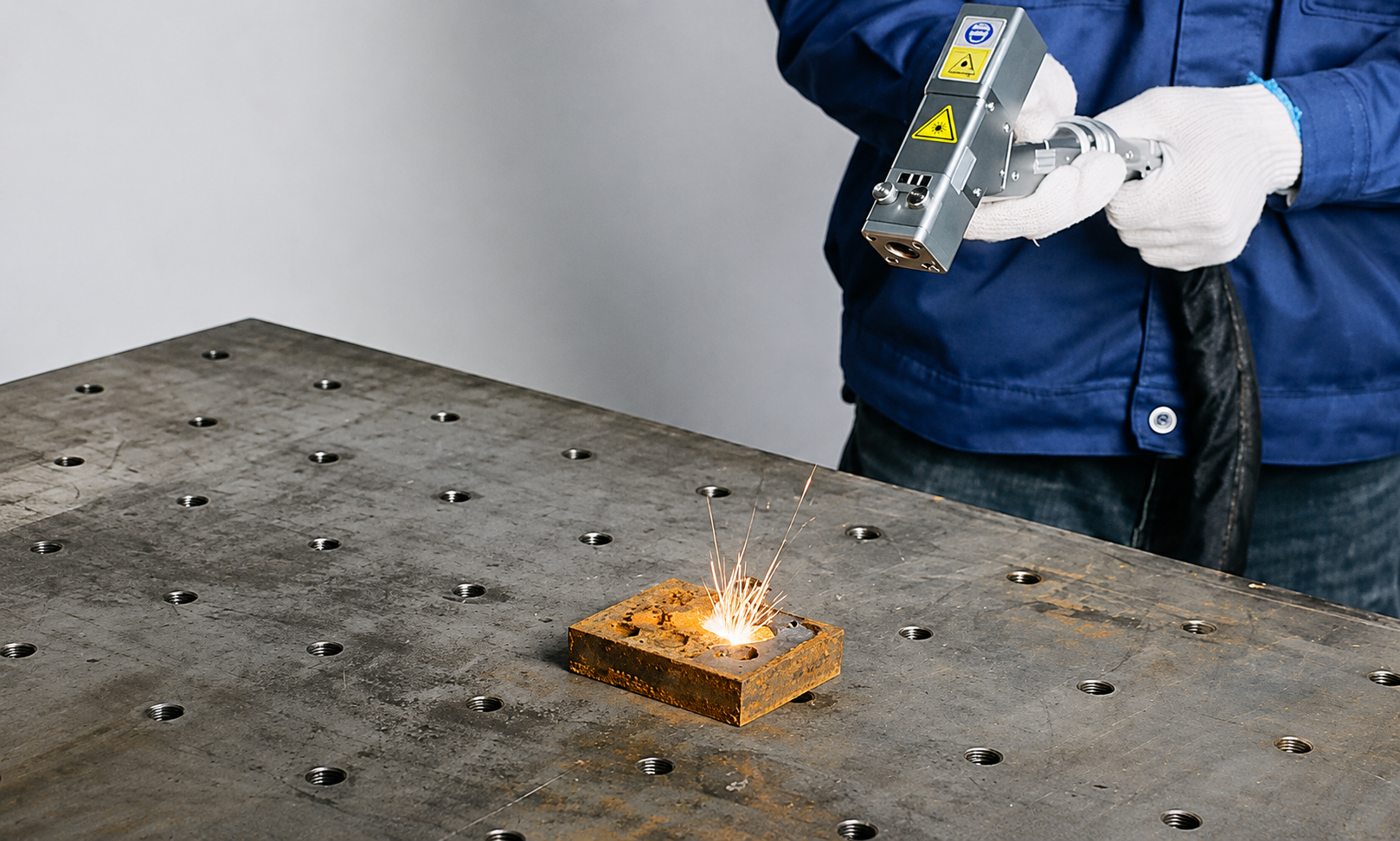
For example, a pulsed laser cleaner used for localized rust removal, mold cleaning, or precision surface preparation may be designed with integrated air cooling.
The installation still needs adequate airflow.
Keep the machine's cooling vents unobstructed and maintain the clearances specified by the manufacturer.
Avoid positioning the machine where hot exhaust air is immediately drawn back into its cooling intake.
High ambient temperatures, heavy dust, and blocked ventilation openings can reduce cooling performance.
For air-cooled equipment, confirm that the workshop temperature and operating environment remain within the machine's specified limits.
Water-Cooled Laser Cleaning Machines
Water-cooled systems use circulating coolant to remove heat from designated machine components.
They are common in many higher-output industrial laser cleaning systems, although cooling design varies by model.
Some machines have integrated chillers, while others require a separate cooling unit.
Before installation, confirm the required cooling capacity, coolant flow, operating temperature, and connection arrangement.
The manufacturer should also specify the approved coolant type and water-quality requirements.
Do not assume that every laser system can use ordinary tap water or that any antifreeze can safely be added.
Use only the coolant and additives approved for the machine.
Before operating the laser, verify that coolant connections are secure, the system has no leaks, and any required flow and temperature alarms are functioning.
Prevent Overheating and Condensation
Workshop temperature and humidity can affect cooling performance.
A chiller operating in a hot workshop may face different conditions from the same chiller in a climate-controlled facility.
However, lowering the coolant temperature excessively is not always the correct solution.
If cooled components fall below the surrounding air's dew point, moisture can condense on or inside sensitive equipment.
This may damage electronics or optical components.
Set coolant temperatures within the manufacturer's approved operating range and account for ambient humidity and dew point.
If suitable cooling cannot be maintained without condensation risk, consider improving the workshop's temperature or humidity control rather than simply lowering the chiller setpoint.
Correct cooling means stable operating temperature without overheating or unwanted condensation.
3. What Ventilation and Fume Extraction Are Required?
Laser cleaning removes material from a surface by interacting with rust, oxides, paint, coatings, and other contaminants.
The process can generate airborne particles, smoke, and potentially hazardous fumes.
These emissions must be considered when planning the installation.
Capture Contaminants Near the Cleaning Area
An industrial laser cleaner should be operated with an extraction arrangement suitable for the material and process.
General room ventilation alone may not adequately capture contaminants before they reach the operator's breathing zone.
A properly designed local exhaust system captures emissions close to the cleaning point.
The extraction inlet should be positioned to collect the plume effectively without interfering with the laser beam or normal operation.
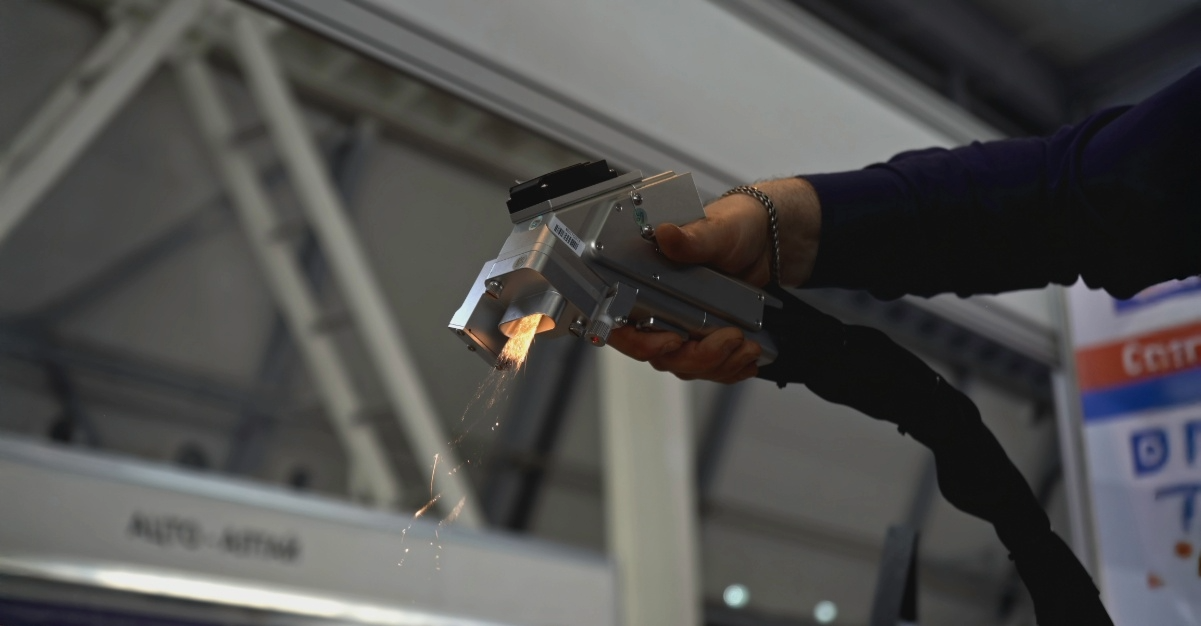
For a handheld laser cleaner, a movable extraction arm or an appropriate integrated collection system may be useful.
Extraction performance depends on several factors, including inlet positioning, airflow, duct resistance, filter condition, and the amount of contamination being removed.
There is no universal extraction airflow requirement based only on laser wattage.
A 200W machine removing paint may produce a different contamination load from a higher-power system cleaning ordinary steel oxide.
Match Filtration to the Cleaning Material
Different cleaning applications can produce different airborne hazards.
Laser rust removal may generate metal-oxide particles.
Paint or coating removal can release additional substances depending on the original coating composition.
Materials containing lead, chromium compounds, zinc coatings, or other hazardous substances require particular attention to exposure assessment and suitable controls.
Before installing the extraction system, identify the material and coating wherever possible.
The filtration or exhaust arrangement should be selected according to the expected contaminants and local workplace requirements.
Particulate filters and gas-phase filtration serve different purposes. A particle filter alone should not be assumed to remove all hazardous vapors.
Do not connect laser-cleaning exhaust to ordinary building ventilation or recirculate filtered air into occupied areas without an appropriate engineering assessment.
Check Extraction Before Production
Before starting normal cleaning operations, confirm that the extraction equipment operates correctly and captures emissions at the work location.
Check the position of the collection inlet, the condition of the filters, and the relevant airflow or filter-status indicators.
A clogged filter or incorrectly positioned extraction arm can reduce collection performance even when the fan is running.
For continuous industrial operations, incorporate filter inspection and replacement into the maintenance schedule.
Effective fume extraction depends on capturing the actual contaminants generated during cleaning, not simply installing the largest available fan.
4. How Much Space Does a Laser Cleaner Need?
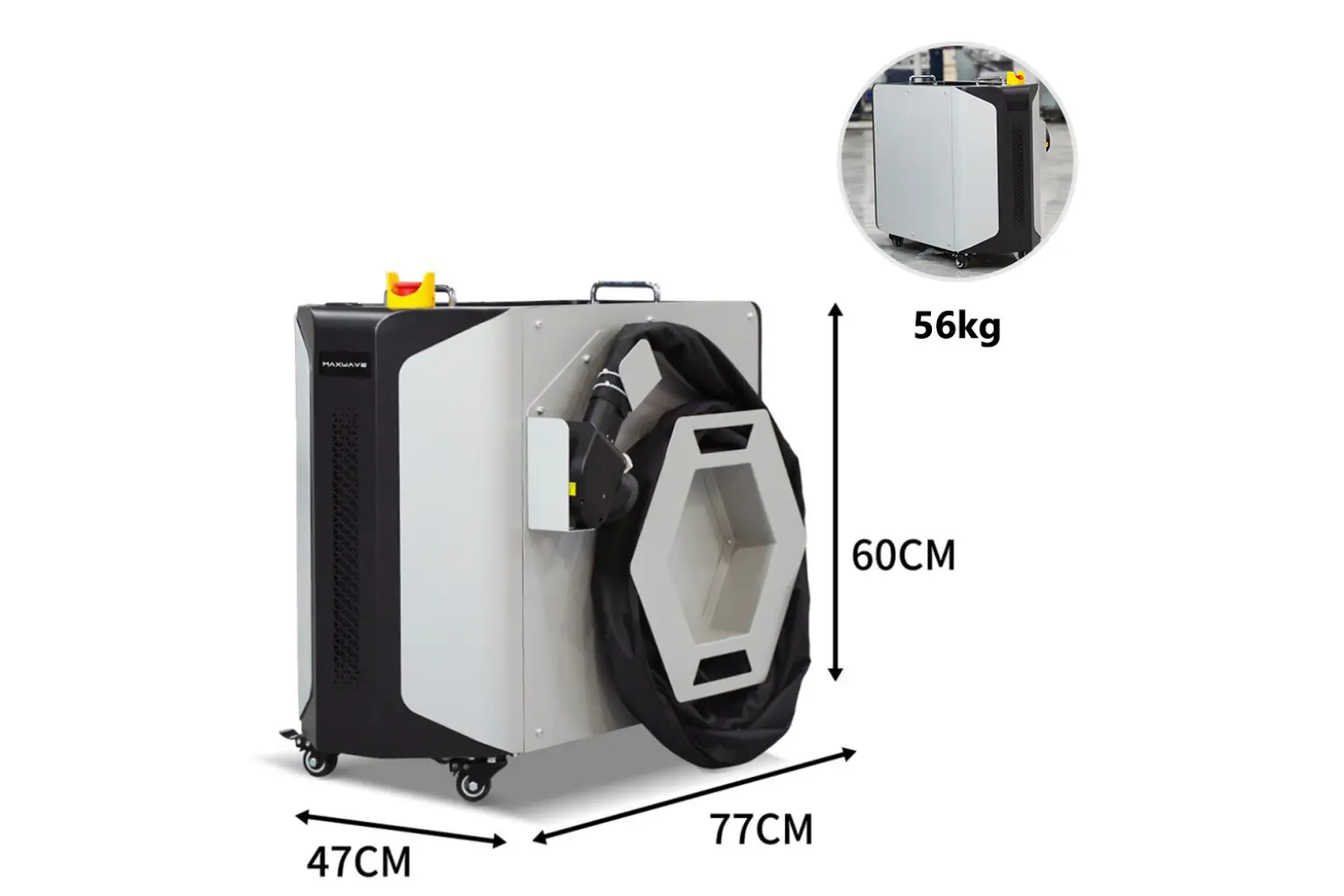
Workshop space requirements extend beyond the physical dimensions of the machine, and can vary depending on what size laser cleaner you need for your application.
The installation must allow adequate cooling, operator movement, material handling, maintenance access, and appropriate laser safety controls.
Allow for the Complete Working Area
A compact laser cleaner may occupy relatively little floor space, but the complete operating area can be substantially larger.
For a handheld system, allow enough space for the operator to position the cleaning head comfortably around the workpiece.
Also account for the fiber cable or cleaning-gun connection, the extraction hose, and the movement of parts or fixtures.
Cable routing should follow the manufacturer's minimum bend-radius and handling requirements.
For cabinet-style equipment, maintain access to electrical panels, cooling openings, filters, and other serviceable components.
The manufacturer's specified clearances should determine the final layout.
A universal minimum such as 600 mm or 1 m cannot be assumed suitable for every model.
Plan a Controlled Laser Work Area
Many industrial laser cleaning systems operate with accessible Class 4 laser radiation.
Direct beams and hazardous reflections can cause serious eye or skin injury, and the process can create fire hazards.
For open-beam equipment, workshop planning should include a properly assessed laser-controlled area with suitable barriers, beam containment, access controls, warning signs, and appropriate protective equipment.
The required safety zone depends on the machine, laser wavelength, beam characteristics, reflection hazards, and operating arrangement.
Laser-rated eyewear must match the wavelength and protection requirements of the specific system, but eyewear alone is not a substitute for suitable engineering controls.
Where possible, use appropriate beam containment and interlocks to reduce the risk of unintended exposure.
Keep unnecessary reflective objects and combustible materials out of the operating area.
Ensure emergency stops, disconnects, and exit routes remain accessible.
Check Workshop Conditions
The machine should be placed on a stable surface suitable for its weight and operating conditions.
Avoid areas exposed to uncontrolled moisture, corrosive atmospheres, excessive dust, or temperatures outside the manufacturer's limits.
A portable machine can be moved between work locations, but each location still needs suitable electrical connections, extraction, and laser safety controls.
For larger systems, consider delivery access, floor loading, equipment handling, and whether additional space is required for an external chiller or extraction unit.
Plan the movement of workpieces before deciding on the final machine location.
Complete the Installation Checklist
Before the first production run, use this checklist to confirm that the installation is ready.
Installation Check | Required Confirmation |
|---|---|
Electrical Supply | Voltage, phase, input current, grounding, and protection verified |
Cooling System | Correct cooling method, clear vents or approved coolant, functioning alarms |
Fume Extraction | Suitable extraction, filtration, and effective capture at the cleaning point |
Workshop Layout | Operator access, maintenance clearances, and safe cable routing confirmed |
Laser Safety | Hazard assessment, barriers, access controls, warnings, and training completed |
Machine Commissioning | Safety devices tested and representative cleaning sample inspected |
Commissioning should follow the manufacturer's specified startup procedure.
Any pre-operation checks, interlock tests, or initial cleaning trials should be performed by trained and authorized personnel.
Do not bypass safety devices to complete a test.
For the initial cleaning trial, use representative material and approved settings. Inspect the surface result and confirm that the machine operates normally before starting production.
Conclusion
Installing a laser cleaning machine requires proper planning of power supply, cooling, ventilation, and working space.
The electrical connection must match the actual machine specifications.
The cooling system must maintain suitable temperatures without overheating or condensation.
The extraction arrangement must control the contaminants produced during cleaning.
The workshop layout must provide adequate operating space and appropriate laser safety protection.
Do not select electrical, cooling, or extraction equipment using laser output wattage alone.
Before delivery, obtain the manufacturer's installation requirements and review them with the qualified personnel responsible for electrical work, ventilation, and laser safety.
If you are planning to install a laser rust removal machine for industrial maintenance, metal fabrication, coating removal, or surface preparation, contact LaserCleanerPro with your preferred machine configuration, country, available electrical supply, and workshop conditions.
Our team can help you obtain the relevant equipment specifications and discuss which pulsed or continuous-wave laser cleaner configuration is suitable for your application before installation begins.