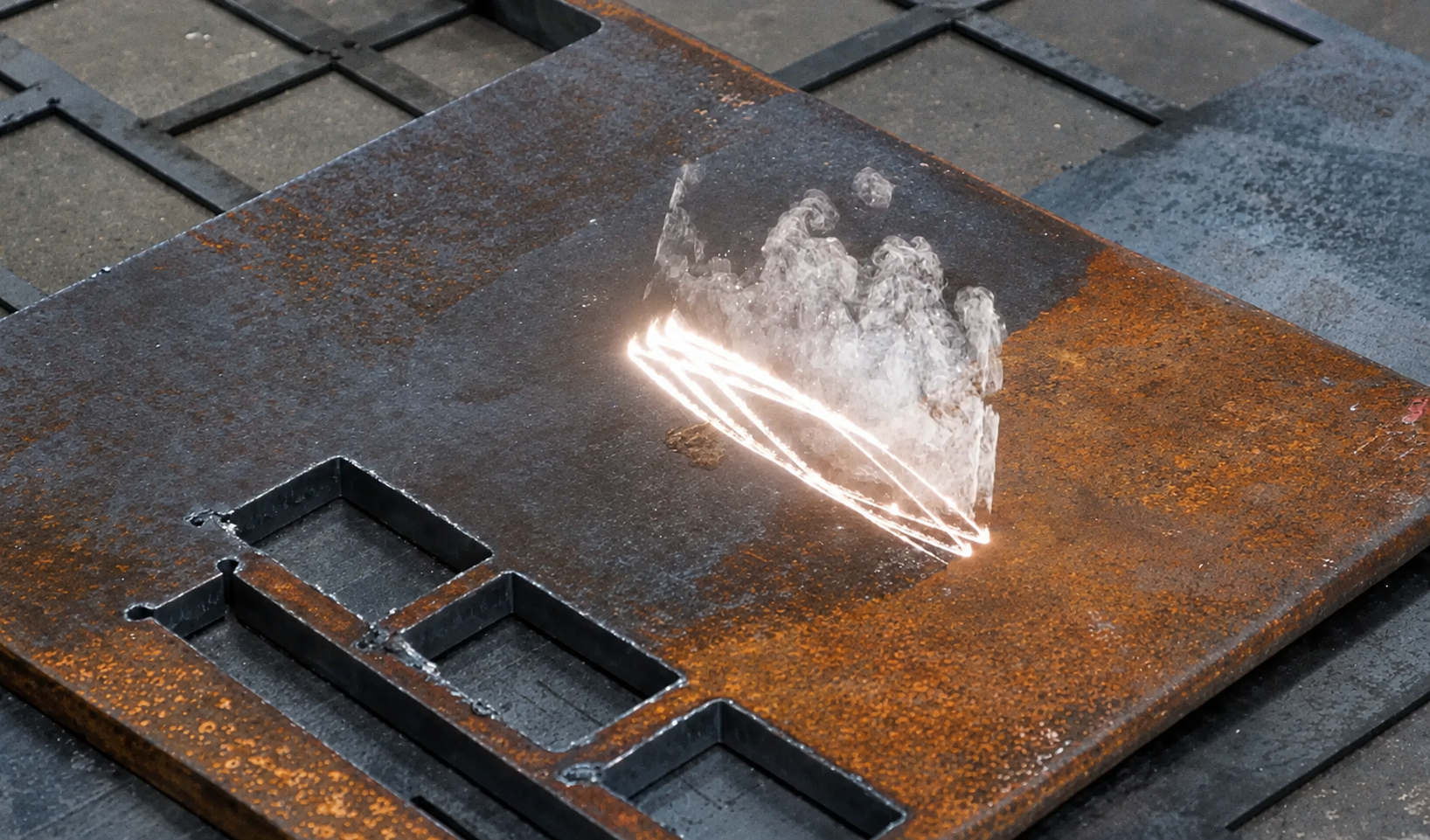
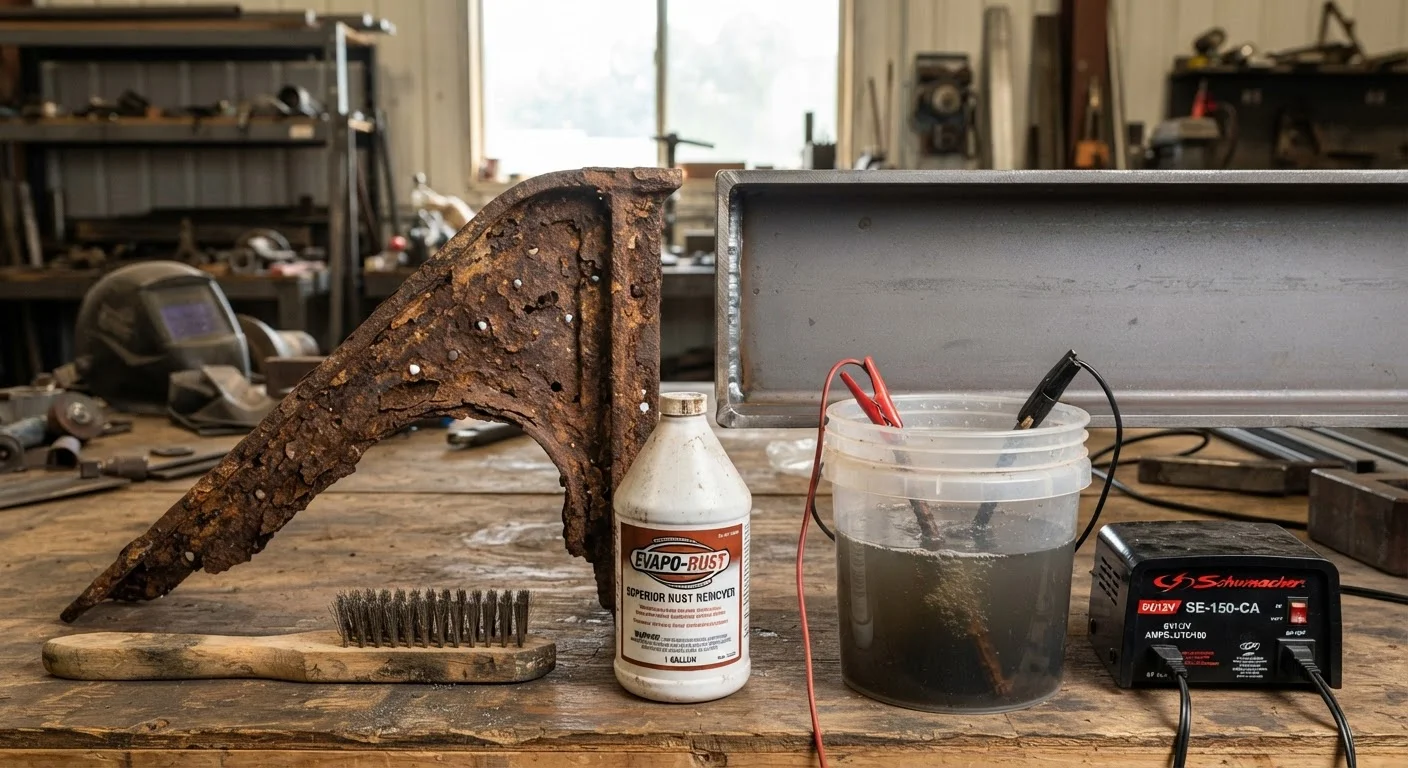
Yes, laser cleaning can damage or change a metal surface if the wrong parameters are used.
But with properly selected settings, laser cleaning can remove rust, paint, oxide, carbon and other contamination while keeping the underlying metal within an acceptable surface condition.
That distinction is important.
A laser cleaner works by delivering enough energy to remove the unwanted surface layer. If too little energy reaches the contamination, cleaning is incomplete. If too much energy is concentrated on the same area, the substrate itself can begin to heat, oxidize, melt or change texture.
In other words, every application has a useful process window:
Enough energy to remove the contamination, but not enough to damage the base metal.
Research on aluminum alloys demonstrates this clearly. Studies have found parameter windows where oxide or paint could be completely removed without damaging the substrate, while excessive laser fluence produced remelting, heat-affected layers, cracking or other surface changes.
So the correct answer is not:
“Laser cleaning never damages metal.”
It is:
“Laser cleaning can be non-damaging when the machine and parameters are matched to the contamination and substrate.”
1. What Kind of Metal Damage Can Laser Cleaning Cause?
Not every visible change after laser cleaning means the part has been ruined.
There is an important difference between cleaning the surface, intentionally modifying the surface, and actually damaging the substrate.
A metal part can experience several different changes.
Surface Change | What It Looks Like | Is It Always Damage? |
|---|---|---|
Color change / discoloration | Yellow, blue, brown or dark areas | No, but it can indicate heat or oxidation |
Roughness change | Surface becomes smoother or rougher | Not necessarily; may affect later coating/bonding |
Gloss change | More matte or more reflective | Usually cosmetic unless finish specification matters |
Oxidation | New oxide layer or darkening | Often undesirable |
Micro-melting / remelting | Glossy streaks, softened texture | Usually a sign of excessive energy |
Pitting / ridges | Small cavities or raised structures | May indicate excessive ablation |
Microcracking | Fine cracks visible under magnification | Substrate damage |
Warping | Thin part changes shape | Significant thermal damage |
Surface Roughness Can Change Without the Part Being “Damaged”
Laser cleaning does not always leave the metal exactly as it was before contamination formed.
Depending on the settings, the process can make the surface slightly smoother or slightly rougher.
For some applications, that change may even be useful.
Research on aluminum alloys has shown that properly controlled laser cleaning machine can remove corrosion while producing surface roughness suitable for subsequent coating repair. When overlap became excessive, however, the same process caused excessive ablation of the base material.
Another study found that laser-cleaned aluminum could show slight surface roughening and oxidation while remaining structurally intact, with the changed surface actually improving wettability and coating adhesion.
This is why “Did the metal change?” and “Was the metal damaged?” are not always the same question.
If the part will later be painted, bonded or welded, a controlled surface change may be acceptable or even desirable.
If the part is a polished mold, precision bearing surface or decorative stainless panel, the same roughness change may be unacceptable.
The required final finish defines what counts as damage.
Discoloration Usually Means Heat or Oxidation Needs Attention
Stainless steel is especially good at showing thermal effects.
If settings are too aggressive, the cleaned area may develop yellow, brown, blue or darker coloration.
Color change does not automatically mean the component has lost structural strength, but it is a warning that the surface has experienced a different thermal or oxidation condition.
If appearance matters, or if the surface is part of a corrosion-sensitive process, the parameters should be reviewed.
Melting, Cracks and Severe Texture Loss Are Different
Once you see visible melting, deep pitting, cracks or erased surface texture, you are no longer discussing a minor cosmetic variation.
Those are signs that the process has moved beyond contamination removal and into substrate modification.
A 2026 study of oxide removal on aerospace aluminum, for example, identified a range where the oxide was removed effectively, while reaching the damage threshold resulted in severe melting and crack formation.
This is exactly why sample testing matters before cleaning a valuable production part.
2. What Causes a Laser Cleaner to Damage Metal?
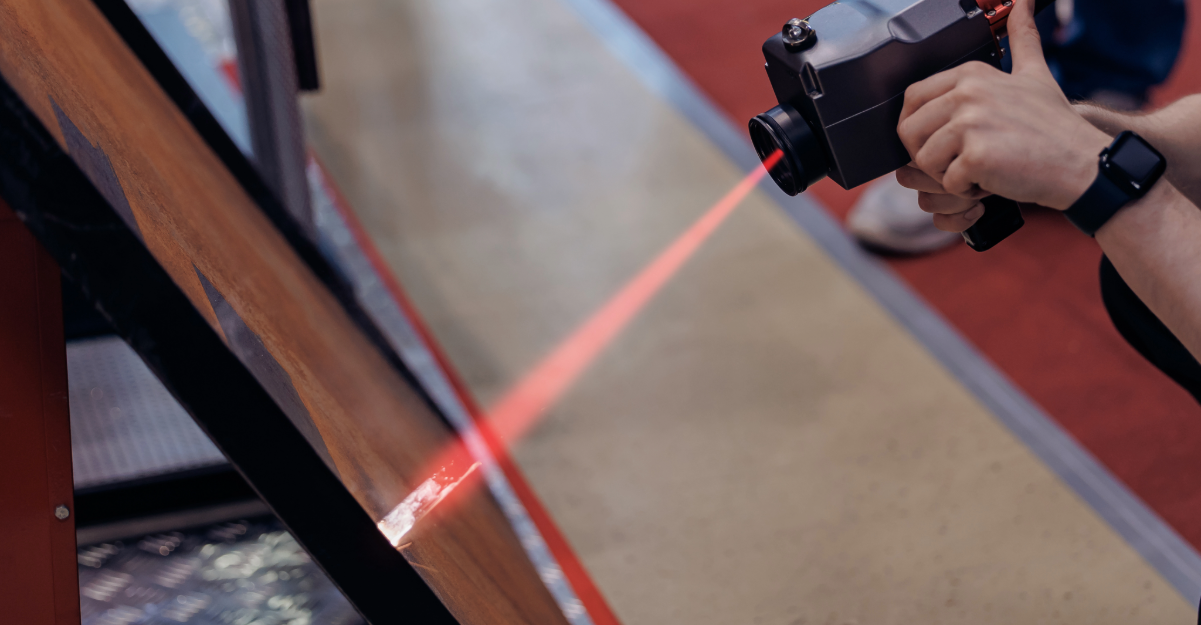
Most damage problems come from too much energy being delivered to the same area.
That can happen in several ways, and maximum wattage is only one of them.
Power Is Only Part of the Equation
A higher-power machine is capable of delivering more energy, but that does not mean high power automatically damages metal.
A professional laser cleaner machine allows the operator to combine power with scanning speed, pulse settings, spot pattern and working distance.
Damage occurs when the overall process delivers more energy than the contamination/substrate combination can tolerate.
This means a powerful system can still perform controlled cleaning when configured correctly, while a lower-power system can damage a sensitive surface if it dwells too long in one location.
Scanning Too Slowly Increases Heat Buildup
If the cleaning head moves slowly, more energy reaches the same area before the beam moves on.
That can improve removal on stubborn rust or coatings—but it also increases thermal accumulation.
This is one of the easiest ways to turn a successful cleaning process into discoloration or surface melting.
Research consistently shows that scanning speed interacts strongly with laser energy and surface integrity. Optimization studies identify scanning speed and pulse-related parameters as key variables affecting both cleaning rate and the final condition of the surface.
Too Much Overlap or Too Many Passes Can Damage the Surface
A single pass may be completely safe.
Repeating that same pass several times does not necessarily remain safe.
Every additional scan places more energy into the same area.
This is particularly important when an operator sees a small amount of contamination remaining and simply keeps scanning instead of adjusting the parameters.
Research on aluminum rust removal found that insufficient overlap left rust behind, while excessive overlap removed the rust but could also cause excessive ablation of the substrate.
So the goal is not:
“Use as many passes as necessary.”
It is:
“Find the lowest-energy process that achieves the required cleaning result efficiently.”
Wrong Focus and Working Distance Affect Energy Density
The laser spot on the surface changes according to focus and working distance.
If the beam becomes more concentrated than expected, energy density can increase significantly.
This is why operators should not casually change focal distance or hold the handheld head at inconsistent distances while using an aggressive recipe.
A stable cleaning technique matters as much as the parameter screen.
Pulsed vs CW Changes the Risk Profile
A pulsed laser cleaner delivers energy in short pulses.
This generally provides better control when working with sensitive substrates, precision components, molds, thin materials and applications where minimizing sustained heat input matters.
Continuous-wave, or CW, cleaners deliver energy continuously and are especially useful for heavy rust, thick coatings and large steel structures where throughput matters.
That does not mean CW automatically damages metal.
It means the thermal input is different, so CW systems require more care when used on thin, polished or heat-sensitive components.
Likewise, high-end pulsed systems can handle much more than light contamination. Pulse energy, scan control and machine design significantly expand the usable application range.
The correct technology should therefore be selected from the workpiece—not from a simple assumption that pulsed is “safe” and CW is “aggressive.”
3. Which Metals Are Most Sensitive to Laser Cleaning?
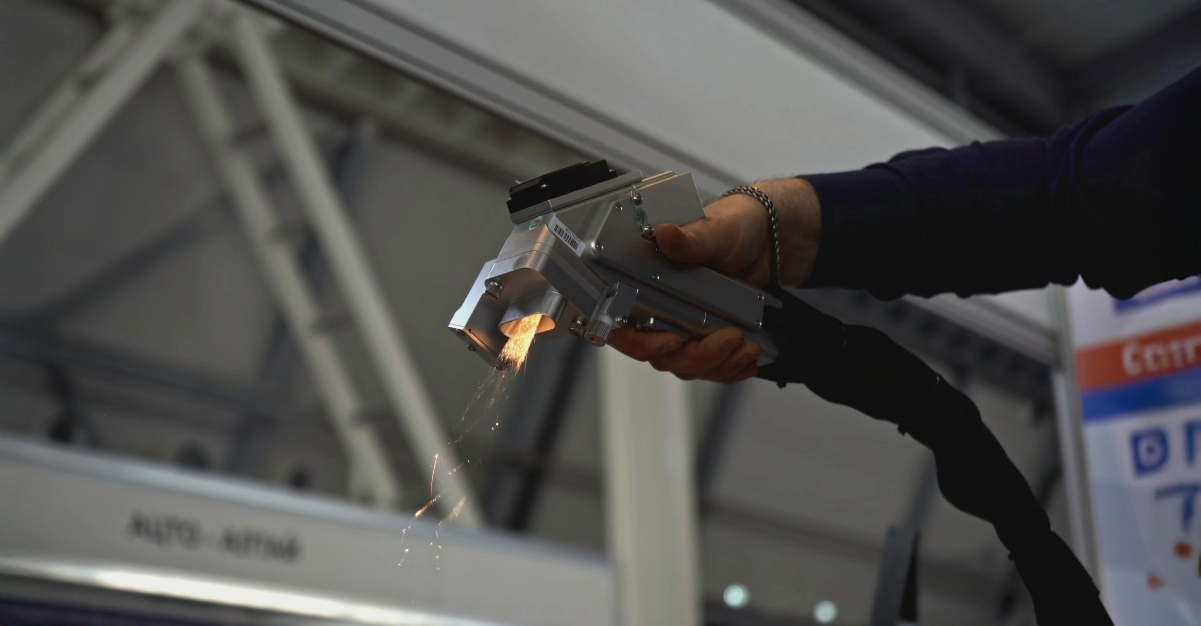
Different metals absorb, conduct and dissipate laser energy differently.
That means a cleaning recipe that works well on carbon steel should not automatically be copied to stainless steel, aluminum or copper.
Carbon Steel
Carbon steel is one of the most common applications for laser rust removal.
It is generally suitable for rust, oxide, paint and weld-area cleaning, particularly because the contamination layer often responds differently from the underlying steel.
However, excessive energy can still cause darkening, oxidation, hardening or changes in surface roughness.
For heavy rust on thick structural steel, these risks may be less important than productivity.
For precision machined steel, they may matter significantly.
Stainless Steel
Stainless steel can be cleaned effectively with laser technology, but visible color changes make overheating relatively easy to detect.
A properly optimized process can remove contamination while retaining good surface quality. Research on stainless steel has shown that suitable parameter combinations can provide effective contaminant removal with improved surface quality, while excessive or repeated irradiation can create defects or increase surface roughness.
For decorative stainless steel, food-processing surfaces or components where appearance matters, sample testing should include both cleaning quality and visual finish.
Aluminum
Aluminum deserves more caution.
Its thermal behavior and relatively low melting point mean aggressive settings can change the surface quickly.
At the same time, current research shows that aluminum can be laser cleaned very effectively when the process window is controlled.
For example, 2026 research on laser paint removal from aluminum found complete removal without substrate damage at an optimized fluence, while higher energy created a remelted and heat-affected layer and reduced some surface mechanical properties.
Other aluminum studies show the same general pattern: there is a useful cleaning window, followed by a region where surface melting, roughness changes or cracks begin to appear.
For automotive panels, aerospace aluminum and precision parts, this makes a controlled pulsed system especially attractive.
Copper and Brass
Copper reflects much of the energy at common fiber-laser wavelengths and also conducts heat extremely efficiently.
That makes process development more complicated.
The operator may need sufficient energy to remove the contamination, while still avoiding excessive repeated heating of the base material.
Copper-rich alloys such as brass can behave differently again because alloy composition changes thermal and optical response.
For copper and brass, use sample testing rather than copying a steel recipe.
Titanium
Titanium can also be laser cleaned successfully, but surface condition and oxidation deserve careful control.
Recent research on titanium alloys found a parameter-dependent transition from effective cleaning to substrate damage as fluence increased, while optimized conditions could reduce oxide and contamination without compromising tensile or yield strength.
That is another example of why there is no universal “safe wattage” for laser cleaning.
The safe parameter window belongs to the material + contamination + machine + desired finish combination.
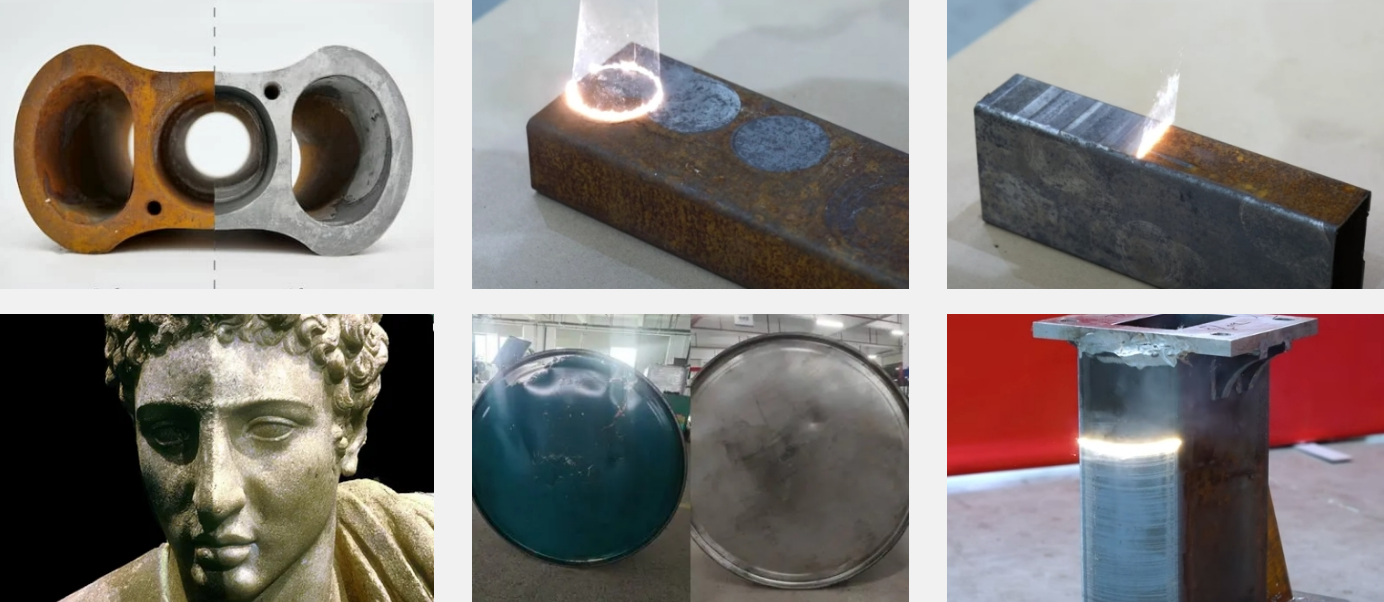
4. How Do You Prevent Laser Cleaning From Damaging the Surface?
The best way to protect the substrate is not simply to turn the power down.
If power is too low, the operator may compensate with slow scanning and repeated passes, which can still increase total heat input.
A better approach is to develop and validate the complete process.
Start With a Sample Test
Before cleaning a high-value production part, test the actual material.
Ideally, the sample should match the real:
Metal grade.
Surface finish.
Contamination.
Layer thickness.
Part thickness.
Required final condition.
Start conservatively and increase cleaning intensity only until the required contamination is removed.
This is especially important for polished, thin, coated or precision surfaces.
A supplier should be willing to demonstrate a laser cleaner for metal on your actual application rather than only showing rust removal from thick steel plates.
Check More Than Whether the Rust Is Gone
A surface can look clean while still having changed.
For critical applications, inspect:
Color.
Gloss.
Surface texture.
Roughness.
Dimensions.
Evidence of melting or pitting.
If the part will later be welded, bonded or coated, verify that the cleaned surface still meets the requirements of the downstream process.
For precision manufacturing, roughness measurement before and after cleaning can provide much more useful information than a simple visual comparison.
Do Not Reuse One Recipe Across Every Metal
A common operator mistake is finding a good rust-removal parameter on steel and then using the same setting on aluminum.
Avoid this.
Save parameter recipes according to material and application.
For example:
Carbon steel rust.
Stainless weld oxide.
Aluminum paint.
Mold contamination.
Heavy steel corrosion.
The exact values will depend on the machine, but the principle is the same.
Different surfaces need different processes.
Choose the Right Laser Type
For precision parts and sensitive surfaces, pulsed cleaning usually offers the strongest starting point.
For thick rust and large heavy-steel surfaces, higher-power CW systems may provide much better productivity.
The right industrial laser cleaner is therefore not automatically the lowest-power machine.
It is the system that gives enough cleaning capacity while still providing an appropriate control window for the substrate.
Watch for Early Warning Signs
Stop and review the process if you see:
Unexpected discoloration.
Glossy melt marks.
Pitting.
Cracking.
Visible loss of texture.
Warping.
Abnormal smoke.
A sudden change in cleaning behavior.
Do not continue scanning because “most of the job is already finished.”
Once substrate damage begins, additional passes normally make it worse.
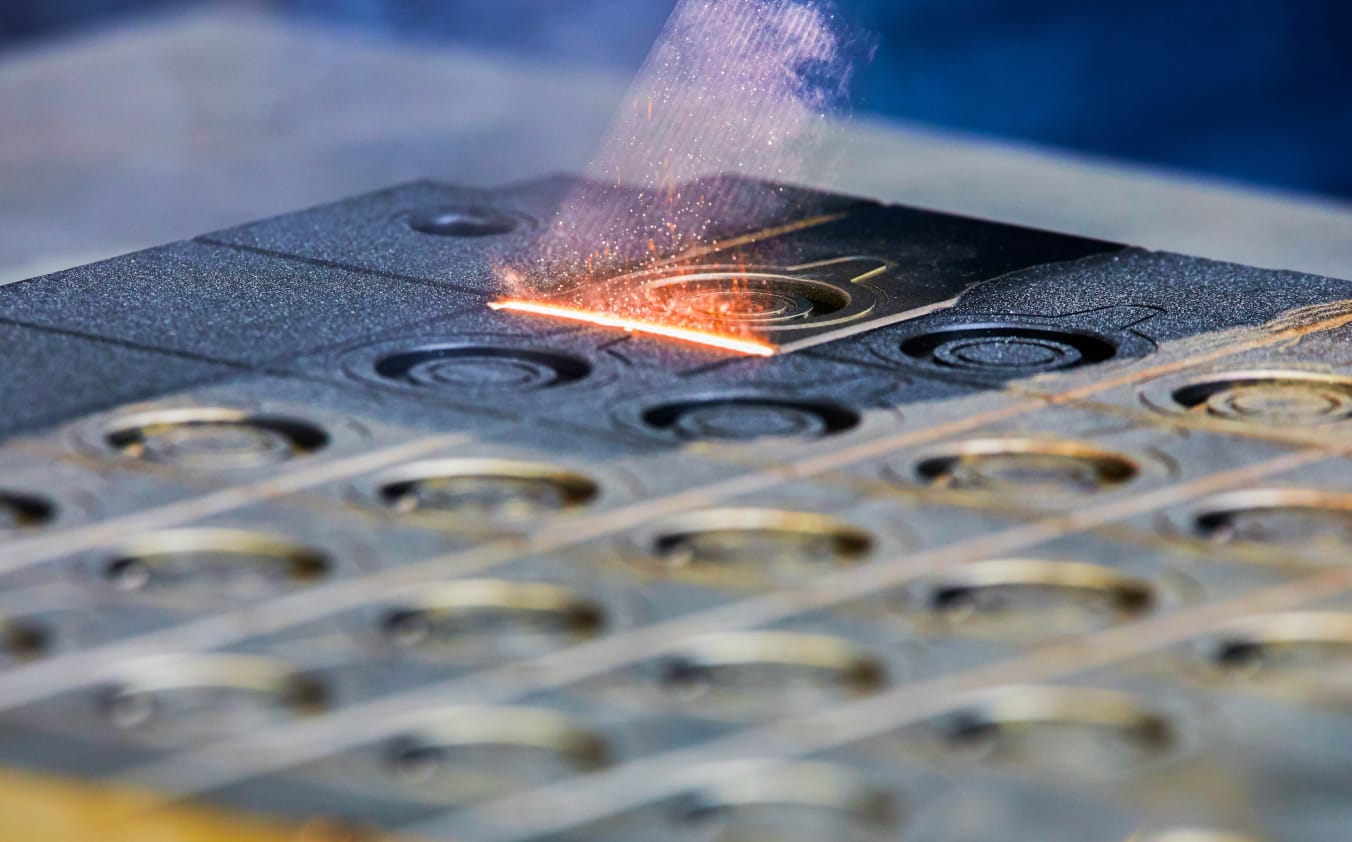
Conclusion
Laser cleaning can damage or change metal surfaces—but that is not the normal goal of a properly developed cleaning process.
The key is maintaining a process window where the contamination absorbs enough laser energy to be removed while the underlying metal remains within the required surface specification.
If energy input becomes excessive, the result can include discoloration, oxidation, roughness changes, melting, microcracks or other surface modification. Research across aluminum, stainless steel and titanium consistently shows this transition from effective cleaning to substrate change as laser energy and repeated exposure increase.
For most buyers, the practical lesson is simple:
Do not ask only whether a laser cleaner can remove the contamination. Ask what the metal looks like after it has been removed.
A good process should be evaluated on both cleaning performance and substrate condition.
For sensitive metals and precision surfaces, pulsed laser cleaning generally provides a wider control window. For heavy corrosion on robust steel, higher-power systems can provide much greater productivity when parameters are correctly matched.
Most importantly, test your real part before purchasing or approving a production recipe.
Send LaserCleanerPro photos or samples of your metal parts, together with the substrate, contamination type, layer thickness and required final finish. The engineering team can arrange an application test and recommend a pulsed or CW laser configuration based on both cleaning efficiency and the surface condition you need to preserve.