Laserax is one of the more industrial-focused names in laser cleaning. Its equipment is aimed less at hobby restoration or occasional mobile rust removal and more at manufacturers that need repeatable surface preparation, automation, short cycle times and integration into an existing production process.
That distinction is important before looking at price.
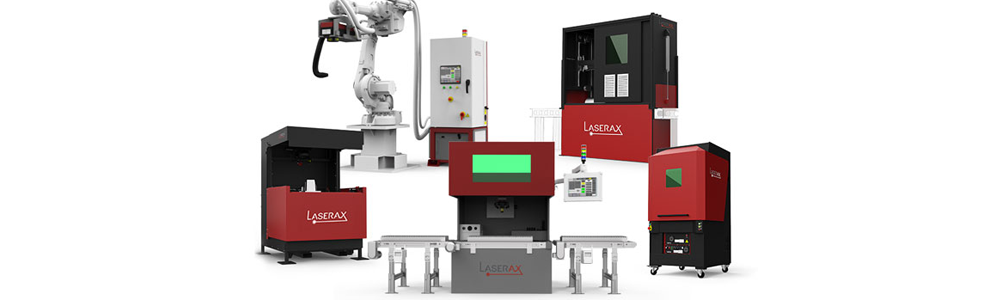
Laserax currently sells manually loaded Class 1 workstations, rotary systems, production-line machines and high-power fiber laser systems. Its LXQ-HP platform reaches up to 1 kW, while the LXQ-UHP range reaches 3 kW of pulsed fiber-laser power for demanding industrial cleaning applications.
So, is a Laserax laser cleaner worth it?
For a manufacturing plant that needs process validation, automation, safety integration and reliable production support, it can be. For a small fabrication shop, restoration business or mobile cleaning contractor, Laserax may provide more machine—and more cost—than the job actually requires.
Here is the quick verdict:
Category | Laserax Review |
|---|---|
Price transparency | Low — new equipment is quote-only |
Industrial build | Excellent |
Automation & integration | Major strength |
Precision cleaning | Strong |
High-power capability | Up to 3 kW pulsed |
Sample testing | Strong |
Technical support | Strong |
Portability | Not its main strength |
Best for | Manufacturing and repeat production |
Less suited for | Low-volume and budget-sensitive manual cleaning |
1. How Much Does a Laserax Laser Cleaner Cost?
The first thing buyers discover is that Laserax does not publish normal list prices for new cleaning machines. Its product pages direct buyers to request a quote because the final system depends heavily on laser power, optics, fixtures, extraction, automation and the part being cleaned.
That means there is no reliable universal answer such as:
“A Laserax cleaner costs $60,000.”
Different Laserax products solve very different problems.
Its Manual Cleaning Workstation uses a Class 1 enclosure and is intended for manually loaded smaller parts. Its rotary system adds a dual-position table for higher throughput. At the other end, the LXQ-UHP is available from 500W to 3 kW and is intended for large surfaces and demanding inline applications.
What Public Price Evidence Is Available?
One useful public reference is a used Laserax LXC-386-0001 system with controls that was listed and sold for $48,000. That is a used-equipment reference—not the current new-machine price—but it confirms that Laserax operates in a very different capital-equipment category from many standalone handheld cleaners.
For a new system, you should therefore request an itemized quotation rather than rely on online estimates.
Ask what the price includes:
Laser source.
Cleaning optics.
Workstation or enclosure.
Fume extraction.
Fixtures.
Vision system.
Automation.
Software.
Installation.
Training.
Safety integration.
Preventive maintenance.
A buyer comparing Laserax with a simpler laser cleaning machine should make sure the two quotations actually include the same functions.
A $10,000 standalone cleaner and an integrated Class 1 robotic cell are not equivalent products simply because both remove rust.
Why Is Laserax More Expensive Than Many Handheld Machines?
You are largely paying for production engineering around the laser.
Laserax describes its machines as turnkey solutions that can incorporate automation, fume management, process development, laser safety, remote support and performance optimization.
For a production line, those features have real value.
For a small shop that only needs an operator to clean parts manually, they may not.
That is the first question to ask yourself before requesting a Laserax quote:
Do I need an industrial cleaning system, or do I simply need a laser cleaner?
2. What Are the Main Pros and Cons of Laserax?
Pro: Strong Industrial Integration
This is probably Laserax's biggest advantage.
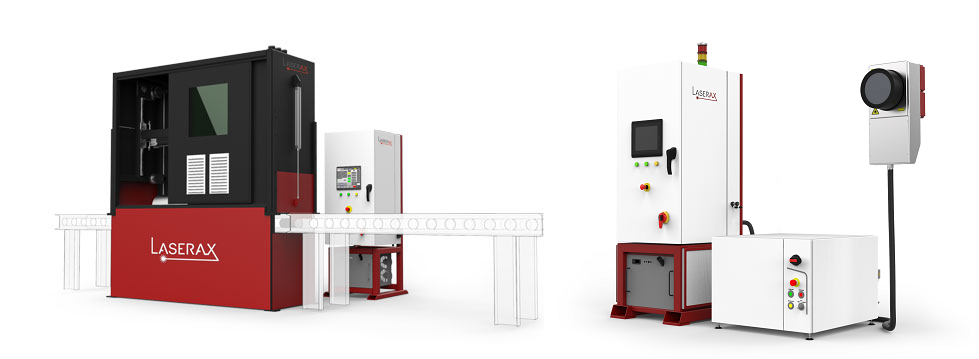
Its current range includes manual, rotary, conveyor and other automation-oriented machines rather than focusing only on portable guns. Laserax also offers high-power OEM cleaning systems for integration into robotic or production environments.
That makes Laserax particularly relevant for automotive, battery, casting, extrusion and other manufacturing environments where the cleaning process needs to repeat accurately hundreds or thousands of times.
If your main requirement is:
“Clean this exact area on every part before welding, at this cycle time, every shift,”
Laserax is operating in its strongest territory.
Pro: Application Testing Before Purchase
Laserax also has a strong process-development approach.
The company states that it can test different laser configurations on customer parts or coupons and provide a report including videos, measurements, processing speeds and recommended laser systems.
This matters more than a long specification sheet.
For example, instead of guessing whether you need 100W, 500W or 1 kW, you can test:
Your actual aluminum oxide.
Your actual coating.
Your actual rust layer.
Your required cleaned width.
Your required cycle time.
Then choose the equipment from the result.
That same principle should apply when buying any professional industrial laser cleaner: test your real contamination before choosing power.
Pro: Very Wide Power Range
Laserax is not limited to low-power precision cleaning.
Its LXQ-HP platform currently covers 200W–1 kW single-mode systems, while LXQ-UHP covers 500W–3 kW multimode pulsed cleaning. The 3 kW platform is specifically designed to process larger surfaces and meet short industrial cycle times.
That gives manufacturers room to scale from localized precision treatment to much higher-throughput cleaning without moving to an entirely different process technology.
Pro: Serious After-Sales Support
Laserax currently advertises worldwide 24/7 troubleshooting support along with remote and on-site technical assistance, staff training, preventive maintenance and spare parts.
That matters more to a production plant than it may to a small contractor.
If a laser-cleaning cell stops a welding or coating line, the real cost is not the broken protective window.
It is lost production.
Con: The Cost Can Be Hard to Justify at Low Volume
The same industrial engineering that makes Laserax attractive for factories makes it difficult to justify for occasional cleaning.
If you remove rust a few hours each week, you may never use the automation, integration or production capability you are paying for.
A smaller portable laser cleaner may be a better fit for automotive restoration, field maintenance, fabrication shops and mobile cleaning services where equipment needs to move to the workpiece rather than remain integrated into a production cell.
Con: It Is Not Primarily a Lightweight Mobile Platform
Laserax's Manual Cleaning Workstation, for example, is an enclosed industrial machine, not a compact device designed to be carried between jobs. Its purpose is safe, repeatable cleaning of parts loaded into the workstation.
If your normal day involves moving between:
Construction equipment.
Vehicles.
Pipelines.
Customer factories.
Outdoor steel structures.
then portability deserves much more weight in the purchase decision.
Con: New-Machine Price Comparison Is Difficult
Quote-only pricing is normal in custom industrial equipment, but it does make early-stage comparison harder.
A buyer cannot simply look at three websites and compare delivered prices.
That means you should request the same information from each supplier:
Actual part → actual contamination → target cleaning result → required throughput → complete installed price.
Without those four things, price comparisons are not meaningful.

3. Who Is Laserax Actually Best For?
Laserax makes the strongest business case when laser cleaning is a repeatable manufacturing process rather than an occasional maintenance tool.
Laserax Makes Sense for a Manufacturing Plant
Consider Laserax seriously if you need:
Repeated cleaning of identical parts.
Pre-weld or pre-bond preparation.
Automated oxide removal.
Consistent surface preparation.
Short production cycle times.
Robot or conveyor integration.
Class 1 enclosed operation.
Process validation and documentation.
Integrated fume handling.
Industrial technical support.
The current Laserax product lineup is clearly designed around these requirements. Its rotary workstation can clean while the operator loads another part, while its conveyor and high-power systems target automated production environments.
That is very different from buying a basic laser rust removal machine for manual maintenance.
Laserax Is Harder to Justify for Small Shops
If your business mainly handles:
Occasional rust.
Automotive components.
Mold maintenance.
Small batches.
Weld discoloration.
Repair work.
On-site cleaning.
Mobile service jobs.
then your first priority is probably cleaning result + portability + purchase cost, not production-line integration.
In that case, a simpler standalone or pulsed laser cleaner may achieve the same required surface result without the cost of a full Laserax workstation.
That does not make Laserax worse.
It means it was built around a different buyer.
What About Large-Area Heavy Rust Removal?
This also needs nuance.
Laserax offers very high-power pulsed systems, including the 3 kW LXQ-UHP, specifically for larger surfaces and short cleaning cycles.
But if your job is simply large areas of heavy rust on robust steel, compare several technologies and machine architectures.
A high-power laser cleaner for rust removal may provide a different balance of capital cost, portability and throughput.
The question should not be:
“Which brand has the biggest laser?”
It should be:
“Which system gets this surface to the required condition at the lowest practical cost per job?”
4. Is Laserax Worth the Money?
For the right application, Laserax's premium can be justified.
The strongest case is when the buyer values repeatability, industrial integration, safety engineering, documented process development and uptime.
Laserax also states that its sealed fiber laser sources require limited maintenance, with routine service focused more heavily on fume extraction, protective windows and lenses. Preventive maintenance plans are also available.
But this does not mean every Laserax installation automatically delivers good ROI.
Utilization determines ROI.
Imagine two businesses.
Business A buys a premium automated system but cleans only a few small batches per month.
Business B runs the machine across two production shifts, replacing recurring abrasive media, manual labor and cleanup every day.
The exact same machine can be a poor investment for Business A and a very good investment for Business B.
A useful starting formula is:
Payback Period = Total Installed Investment ÷ Annual Net Savings
Annual savings should include more than consumables. Consider labor, abrasive or chemical costs, waste disposal, masking, cleanup, rework and any additional production capacity created by faster cleaning.
What Should You Compare Before Buying?
If Laserax is on your shortlist, compare these five items:
Question | Why It Matters |
|---|---|
Can it clean my real part? | Proves technical suitability |
How long does one cleaning cycle take? | Determines actual productivity |
What does the complete installed system cost? | Prevents misleading equipment-only comparisons |
What support is included? | Determines downtime risk |
Do I actually need automation? | Determines whether the premium is worthwhile |
Then compare the Laserax quote with a lower-complexity laser cleaner for metal using the same sample and the same acceptance criteria.
If both produce the required surface condition in an acceptable time, the less complicated system may provide better value.
If only the integrated Laserax system meets your takt time, automation or validation requirements, its higher price becomes much easier to defend.
Conclusion
Laserax is a strong industrial laser-cleaning supplier, particularly for manufacturers that need more than a handheld tool.
Its biggest advantages are industrial build quality, automation options, process testing, high-power pulsed systems and a substantial support infrastructure. Laserax currently supports everything from manually loaded workstations to production systems and fiber-laser platforms reaching 3 kW.
Its main disadvantages are equally clear: new-machine pricing is not transparent, the systems can represent a substantial capital investment, and many smaller businesses simply do not need the automation and production engineering they are paying for.
So, is a Laserax laser cleaner worth it?
For high-volume manufacturing: often worth serious consideration.
For small repair shops and mobile contractors: compare lower-cost standalone systems first.
For occasional rust removal: the economics may be difficult to justify at all.
Do not decide from brand reputation or wattage.
Send the same actual part to the suppliers you are considering, measure cleaning quality and cycle time, and compare the complete installed cost.
If you do not need an automated production cell, a professional laser cleaning machine configured specifically for your rust, paint, oxide or coating application may provide a much lower entry point.
The machine worth buying is not necessarily the most sophisticated one. It is the one that produces the surface you need, at the speed you need, with a total cost your workload can justify.